Hammond Epoxy Flooring brings more than 20 years of epoxy flooring in Alsip and the south suburbs to a question we hear in nearly every garage we walk into: is the floor paint on the store shelf good enough? Sometimes it is not, and the reason is chemistry rather than brand loyalty. The rest of this page explains that difference so a homeowner can make the call with the facts in front of them.
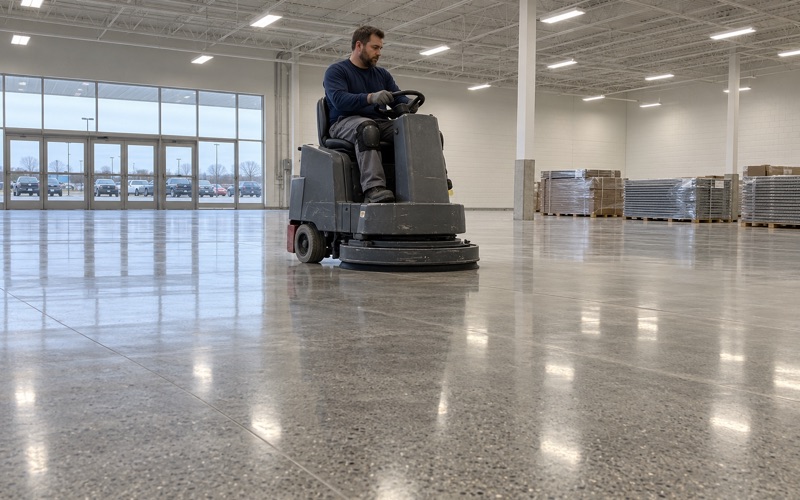
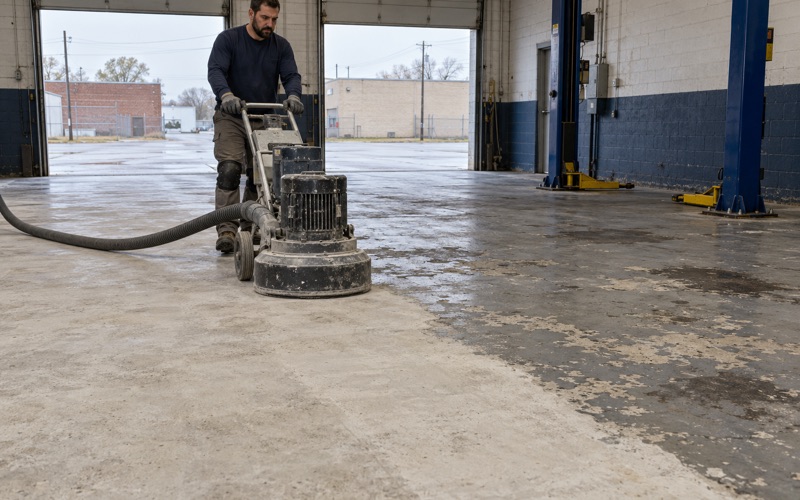
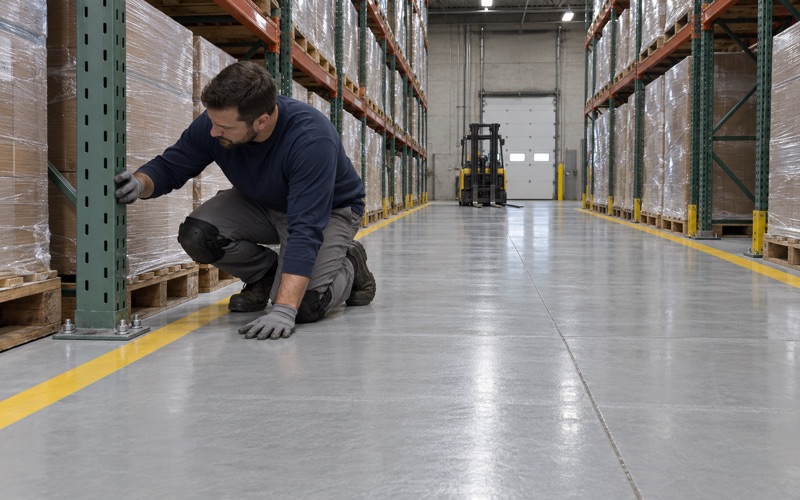
Our own work starts below the coating. We open the slab by diamond grinding or shot blasting, never by acid etching, so the first coat grips a measured profile instead of a rinsed surface. Before the price is final, the scope names the moisture test we will run and the reading the slab has to meet, because moisture is the failure most coating warranties leave out.
Every proposal we write names the product line, the number of coats and the finished thickness, so the floor on the ground can be checked against the paper. We read the warranty exclusions out loud before anything is signed. And we will not sell a floor coating as waterproofing, radon reduction or flood protection, because it is none of those things.
Fifty Years of Latex on South Pulaski Road
Alsip has a better teaching aid for this subject than most towns, and it sits at 12840 South Pulaski Road. Arkema’s plant there manufactures latex emulsions, the water-based polymers that serve as the binder in many paints, and its own fact sheet says it has celebrated 50 years of continuous operation.
What the Plant on Pulaski Makes
According to Arkema’s November 2023 fact sheet, the Alsip plant turns out a range of latex emulsion products for coatings, adhesives, building and construction, and transportation infrastructure. The end uses it names include architectural paints, industrial coatings, road markings, construction adhesives, sealants and caulks. The site lists 49 employees, and the Metropolitan Water Reclamation District still carries it on its 2026 list of significant industrial users as Arkema Coating Resins.
We mention the plant as an example, not a partner. Arkema makes binders for other companies’ products, not floor coatings, and we have no relationship with it. Nobody should read this page as a claim that any particular retail can holds latex made in Alsip.
Why the Binder Tells You How a Floor Behaves
The binder is the part of a paint that holds everything else together and grips the surface. Pigment gives color and fillers give body, but when a floor finish fails under a car, it is the binder that let go. Knowing what kind of binder is in the can tells you more about how a garage floor will hold up than the word printed on the front of it.
A latex emulsion is a milky dispersion of tiny polymer particles in water. That design is why it cleans up with soap and water, why it smells mild, and why it rolls on easily over a porch or a basement floor. Those same traits are the clue to how it forms a film, which is where the garage question begins.
Looking for epoxy-flooring closer to Matteson? See Epoxy-Flooring Services in Matteson.
Dries Versus Cures: One-Part Latex and Two-Part Coatings
The difference between a paint that dries and a coating that cures is the whole argument in one line. Everything else on a garage floor follows from it.
How a Latex Paint Forms Its Film
A one-part latex paint dries as its water leaves. As the film thins, the polymer particles crowd together and fuse into a continuous layer, and no further chemical step needs to happen. That is why the can needs no mixing and why the label gives drying and recoat times rather than a pot life.
Because it forms by drying, that film can soften with heat and firm up again as it cools. On a porch or a basement floor that rarely matters. In a garage, warmth and pressure arrive together every time a car pulls in, and that is where a dried film is tested hardest.
How a Two-Part Epoxy or Polyurethane Cures
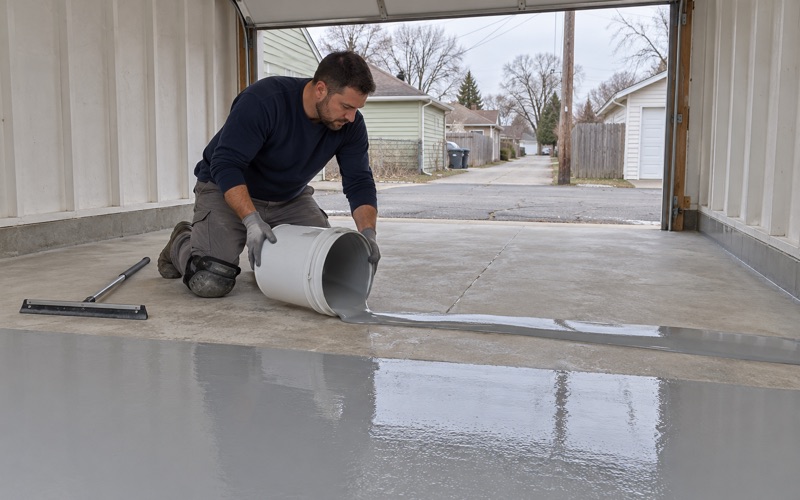
A two-part epoxy or polyurethane works differently. The resin and the hardener come in separate containers, and once they are mixed, they react chemically and build a cross-linked network rather than a layer of fused particles. The installer has a limited working time after mixing, and the coating keeps gaining hardness for days after it feels dry.
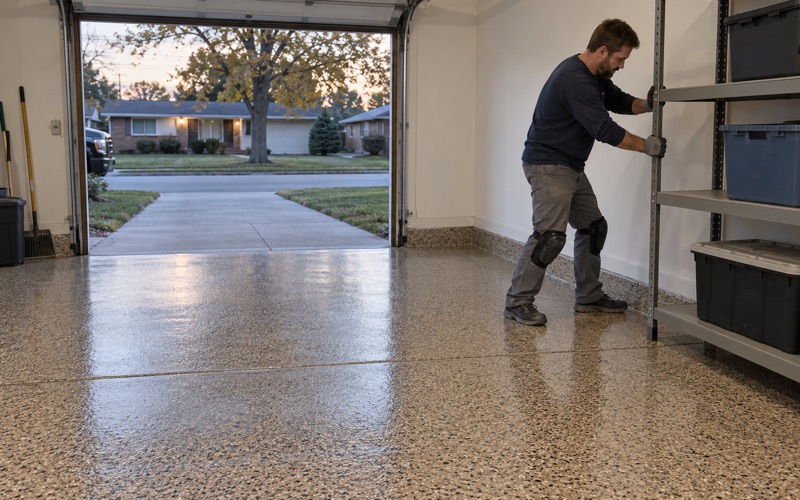
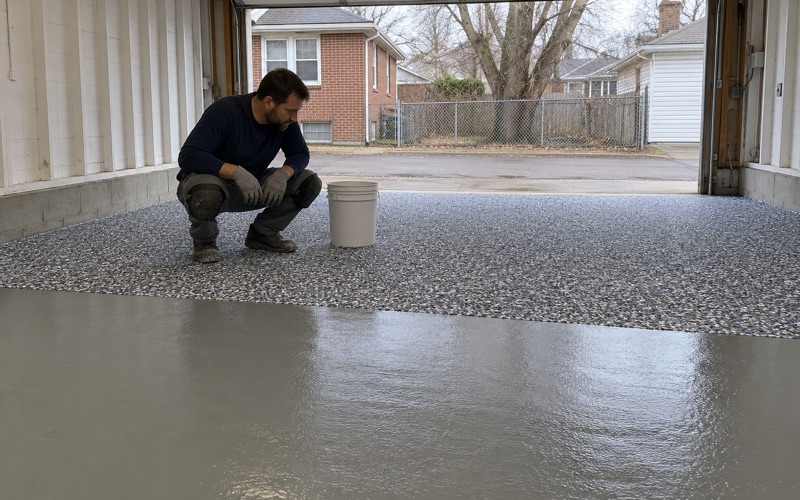
In our garage systems that reactive chemistry runs through the whole build, from the primer to the topcoat. Depending on the floor, that may mean 100% solids epoxy under a polyaspartic or polyurea topcoat, with a vinyl flake or quartz aggregate broadcast between them. Slip resistance comes from the broadcast media and topcoat we specify, and the proposal names both.
What the Difference Means Under a Parked Car
Tires coming in off the road are warm, and they press into whatever is under them while they cool. With a softer dried film, the coating can stick to the tread and lift when the car backs out, a failure the trade calls hot tire pickup. It is the usual reason paint makers give for keeping some porch and floor paints out of garages.
A cross-linked coating resists that pull because the film does not soften the same way, and because it is bonded to a ground profile rather than laid over a smooth slab. Rock salt and brine tracked in from December to March add to the load on a garage floor, so we pick our systems with those winter months in mind.
What the Paint Makers’ Own Labels Say
The most persuasive evidence on this subject does not come from coating contractors. It comes from the companies that sell one-part floor paints, printed on their own product pages and data sheets.
Valspar’s Porch, Floor and Patio Paint
Valspar describes its Latex Porch, Floor & Patio Paint as an acrylic coating for properly prepared wood, concrete and primed metal, aimed at porches, patios, breezeways and basement floors. In the same listing, it states the product is “Not for use on exterior wood decks, garage floors or other automobile parking areas.” That sentence is the maker’s own, and it covers the garage plainly.
The listing gives other label data worth reading: dry to the touch in 1-2 hours and recoat in 4-6 hours at 77 degrees and 50 percent humidity, applied between 50 and 90 degrees. Those numbers describe a paint built for quick, easy coats. They do not describe a film built to carry a parked car.
When Vehicle Tires May Lift the Paint
Cloverdale’s porch and floor sheet makes the same point in different words. It says the product is not recommended for garage floors or heavy industrial use, and it warns that vehicle tires may lift this product on garage floors. A maker prints a warning like that because it expects some customers to try it anyway.
None of this makes porch and floor paint a bad product. On a basement floor, a covered porch or a laundry room, a one-part paint can be a sensible, low-cost finish that recoats easily. The mistake is moving it into a room it was never meant for.
Not Every Can Says the Same Thing
It would be wrong to say all latex floor paints fail in a garage. Drylok’s latex concrete floor paint sheets list garage floors as a use and claim the product resists hot tire pick-up, the opposite position from the two labels above. The word “floor” on the front of a can settles nothing either way.
So the rule we give Alsip homeowners is short: read the label of the specific product before you buy it. If the label excludes garage floors or automobile parking areas, believe it. If it lists garages, check what preparation it requires, because the label sets the terms of any warranty.
Choosing a Finish for an Alsip Garage or Basement
The Slabs We Usually Find Here
Census estimates count 7,881 housing units in Alsip, and the 1970s were the busiest building decade, with 2,211 of them. Only 15 units were added between 2010 and 2019, and none since. A garage or basement floor in the village is nearly always a retrofit over a slab that has lived through decades of salt, oil, patching and earlier finishes.
That history shapes the first visit more than the finish does. Old paint, a past sealer or a patched crack each affect how a new coating bonds. A floor that was rolled with porch paint years ago has to be ground back to sound concrete before any two-part system goes down.
What We Check Before We Price
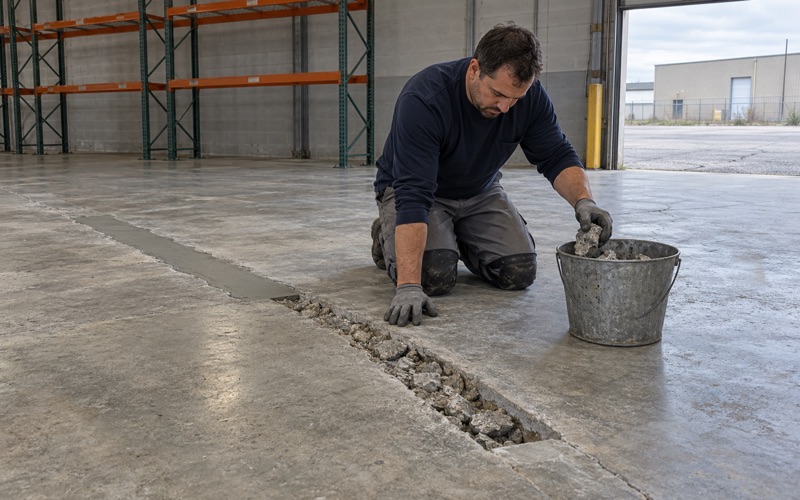
We map cracks, spalls, old paint and patched areas before we write a number, and if a slab should be repaired or replaced rather than coated, we say so first. Moisture testing goes into the written scope, whether that is an ASTM F2170 in-situ relative humidity probe, an ASTM F1869 calcium chloride test or the simpler ASTM D4263 plastic sheet test, with the reading the slab must meet.
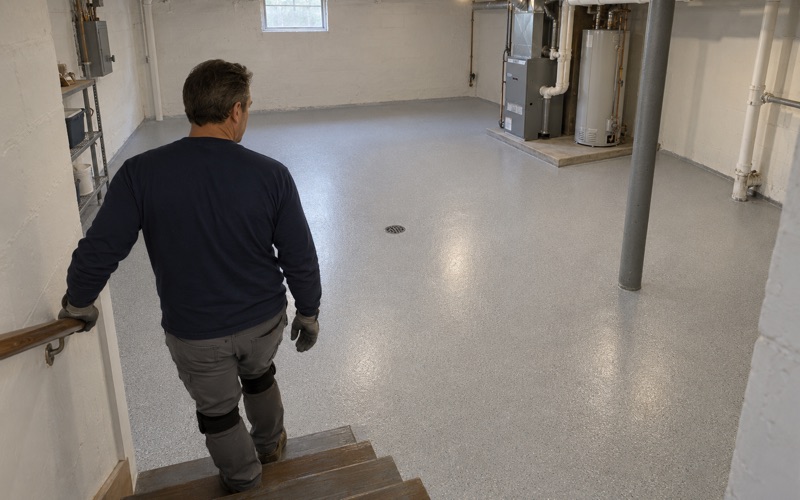
Grinding dust is vacuumed at the machine rather than washed toward a floor drain. In a basement that matters twice: the slab stays dry for testing, and nothing goes down the drain that should not be there. Where a basement needs a moisture-mitigation primer, the proposal says so before the job is sold.
Who You Deal With in the Village
Alsip runs its own Building Department, and the village adopted its building code by ordinance in 2007 on an International Building Code basis. The village also collects a contractor license fee, so we confirm what it requires of us before a job is booked rather than after. Illinois itself licenses no general, flooring or coatings contractor.
Home jobs get a written contract, signed before any grinding starts, and the coatings we choose stay inside the VOC limits of 35 Ill. Adm. Code Part 223, which bind the applicator as well as the maker. If an Alsip garage needs a floor that holds up under a car, we will tell you which chemistry fits and show you on the label why.
- 20+ Years on Concrete
- Moisture Test in Every Scope
- Free Written Estimates