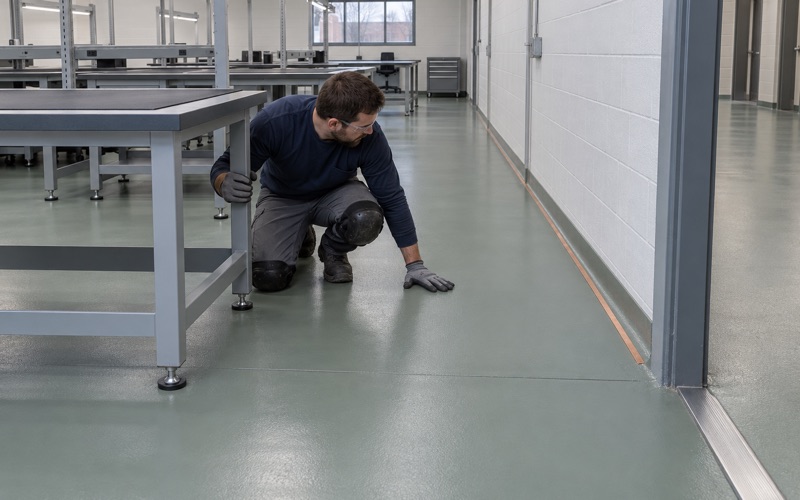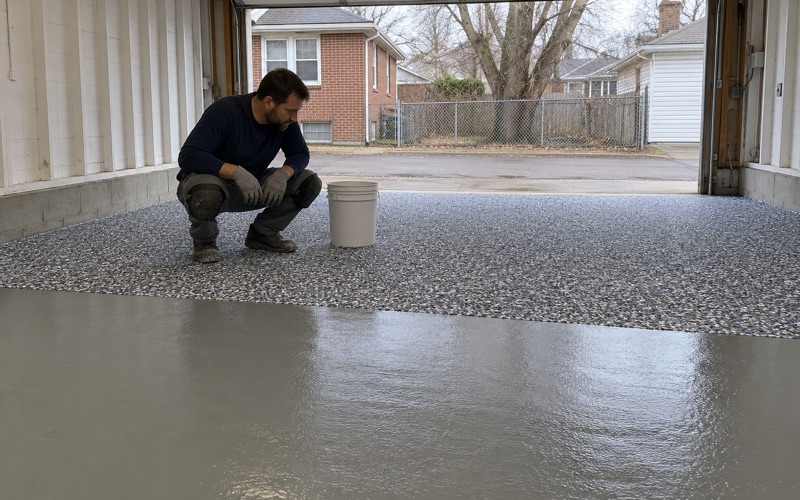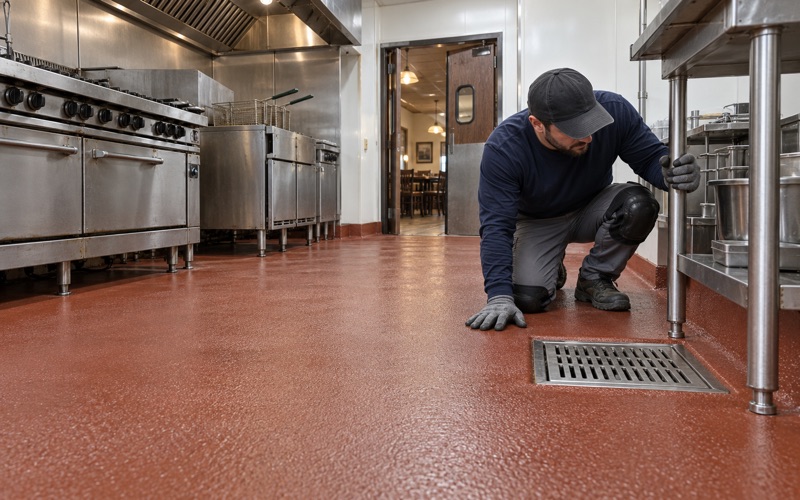
Hammond Epoxy Flooring plans epoxy-flooring in Burr Ridge around the liquids a floor will actually meet, drawing on more than 20 years of grinding and coating concrete, and here that list includes one that surprises people: wine. Wine is acidic, and red wine carries a pigment that settles into anything porous. A floor where it is poured every day, at a commercial bar or in a basement, has to be built for both of those traits.
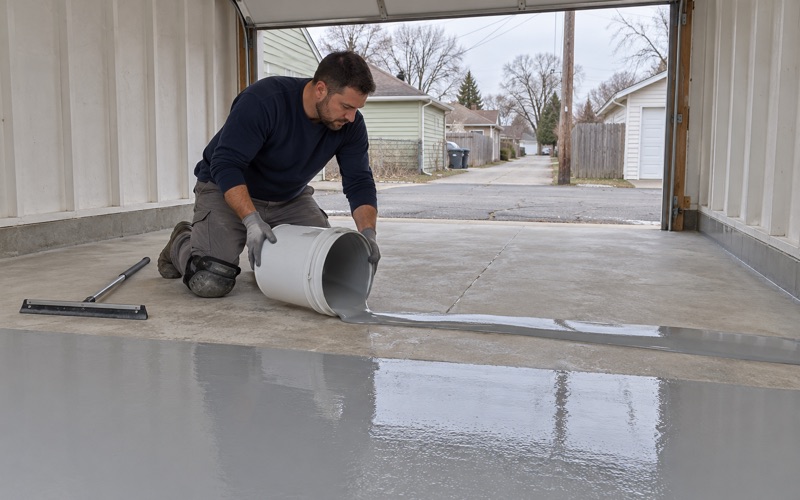
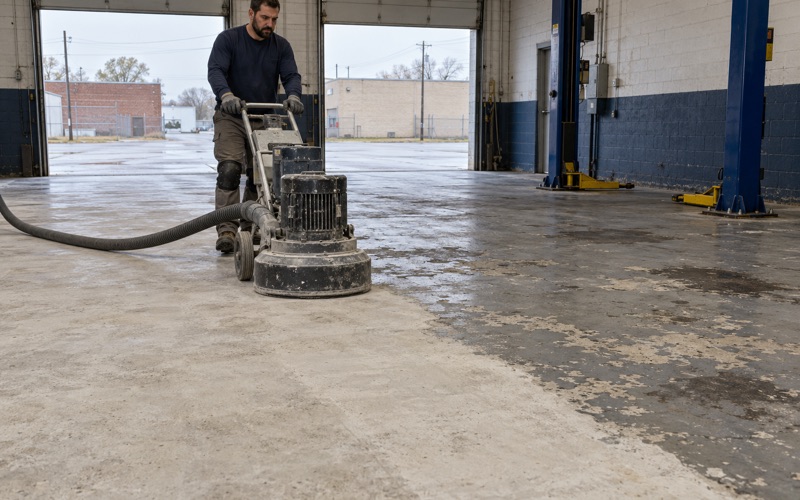
We open every slab by diamond grinding or shot blasting, never by acid etching, so the coating grips a measured profile rather than a chemically scrubbed one. Before a price is final, the proposal states which moisture test we will run and the reading the concrete must meet. It also names the product line, the number of coats and the finished thickness, which gives you something definite to check the installed floor against.
The sections below cover how wine attacks bare concrete and cement grout, why red wine stains what it soaks into, and what a floor along a pouring bar needs. They finish with home wine cellars and basement bars, where the same chemistry shows up on a smaller scale. Where a slab should be repaired or replaced before any coating, we say that first.
A Tasting Room in Burr Ridge Village Center
Cooper’s Hawk at 510 Village Center Drive
Burr Ridge Village Center has a winery’s tasting room inside a restaurant. Cooper’s Hawk Winery & Restaurant at 510 Village Center Drive is listed with a Napa-style tasting room and a retail gift store, all under one roof. The company makes its wine at its own private winery, not at this address, and its first location opened in Orland Park in 2005.
The address sits on the Cook County side of the village, in Lyons Township. We have not worked there, Cooper’s Hawk is not a customer, and we have not seen its floor. We name it because a tasting bar is the clearest picture in town of a floor that takes wine in the same few feet, every day it is open.
Where the wine lands
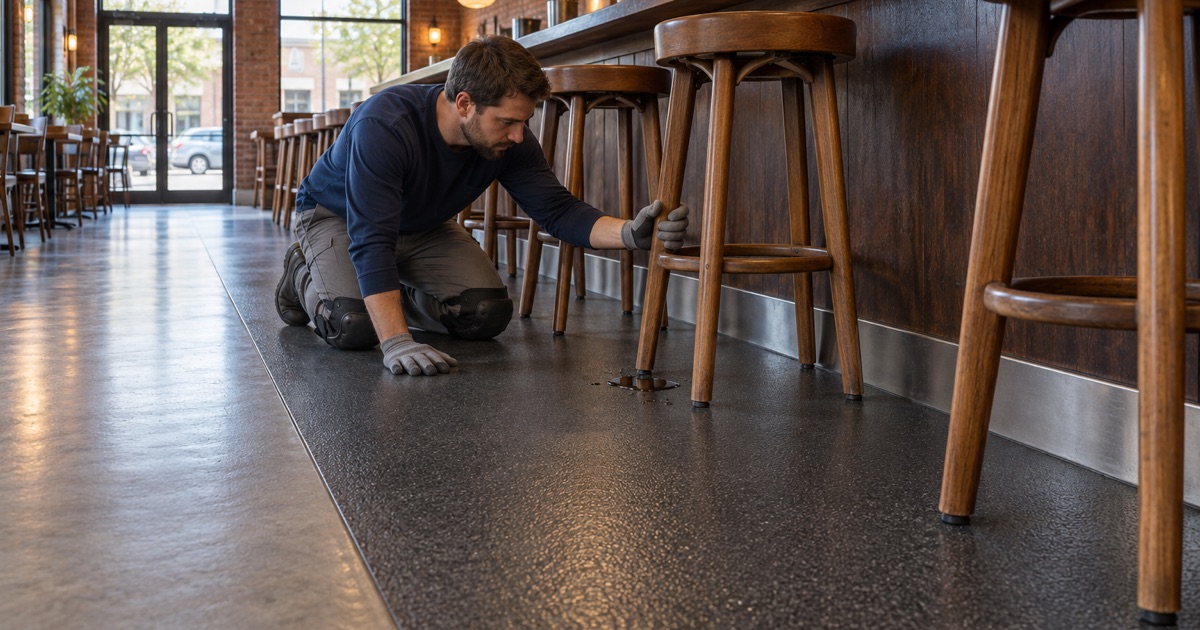
At a standing bar, wine reaches the floor in small, steady amounts rather than one big flood. There are drips from pours, splashes when a dump bucket is emptied, a glass knocked over during a busy tasting and, now and then, a dropped bottle. Most of it tends to land along the front of the bar and in the wet zone behind it.
That concentration matters more than the volume. A floor can shrug off an occasional spill in the middle of a room and still wear through in a narrow strip that gets wet, dries, and gets wet again all day. The bar line and the back-bar wet zone behave like a separate floor, and we treat them that way when we plan the work.
A front-of-house floor, not a production floor
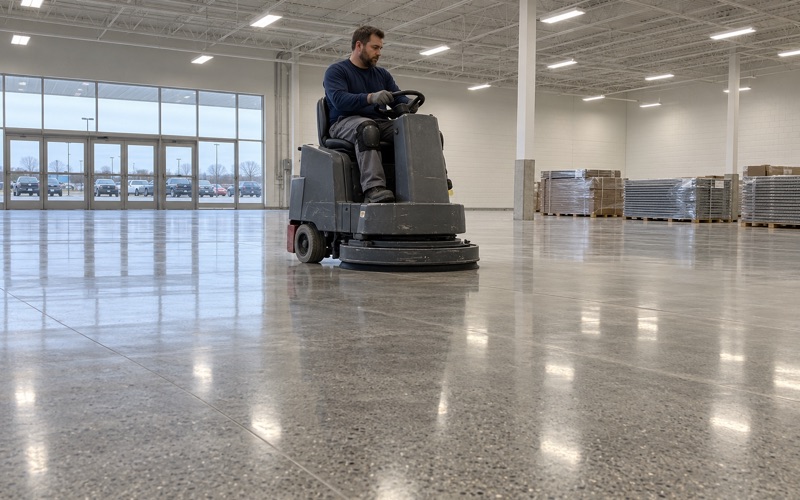
A tasting room is not a winery cellar. Production floors take tank washdowns and whole batches of juice, while a tasting bar sees guests, glassware and a steady trickle of poured wine. That difference shapes the system: a front-of-house floor needs to look finished and clean up fast, rather than to carry the heavy linings a production cellar is built with.
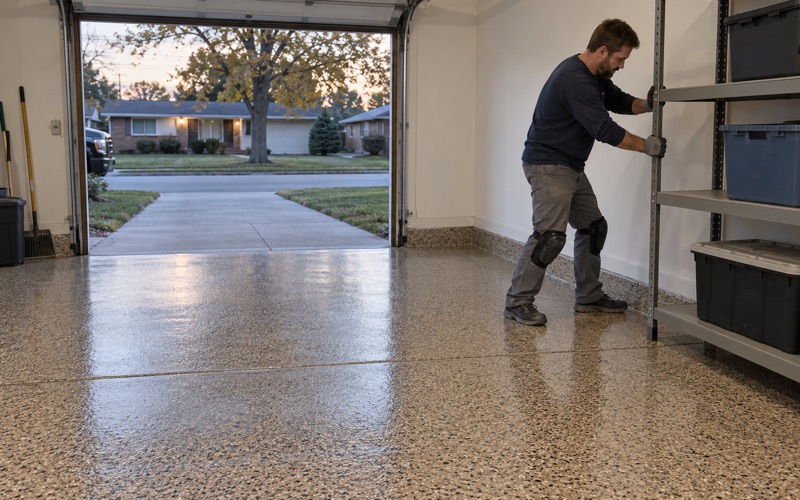
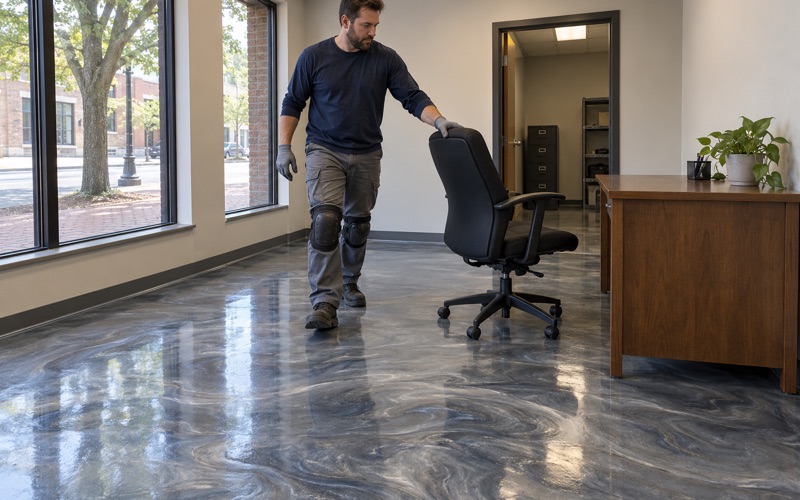
It also means the floor is visible to customers, so color and finish matter alongside chemistry. A resin floor can be built in a solid color or with a vinyl flake broadcast, and the topcoat sets the sheen. We choose those with the owner before anything is priced, so the finish is part of the written scope rather than a surprise.
Looking for epoxy-flooring closer to Forest Park? See Epoxy-Flooring Services in Forest Park.
Wine Is an Acid, and Concrete and Cement Grout Are Not
What acid does to cement paste
Portland-cement concrete is highly alkaline, and it is not very resistant to acids. Engineering course material describes acids reacting with the cement’s hydration products to form soluble calcium compounds that leach away. In plain terms, the paste that holds the sand and stone together slowly dissolves where acid sits on it, leaving a rougher, weaker surface behind.
Wine carries several acids, and one study of concrete at wine and fruit-and-vegetable plants in Moldova describes malic acid forming calcium malate, a salt that dissolves readily. The coatings maker Sika states it more generally: ‘Concrete is an alkaline material and over time, contact with any acidic substance will result in chemical damage.’ The damage builds with repeated wetting in the same spot, which is exactly what a pouring bar delivers.
Cement grout is the weak line in a tile floor
Many bar floors are tile, and the tile itself is often the least of the worry. Ordinary cement grout is made from the same alkaline paste as concrete, so wine attacks it the same way. The grout lines are also the lowest point of the floor, which is where spilled wine collects and sits after the tile faces have been wiped.
Eroded grout lets liquid under the tile edges, holds red stain, and can loosen tiles over time. Burr Ridge’s permit page lists tile replacement as finish work that needs no permit, so retiling a bar is simple to start, but new cement grout brings back the same weak line. A seamless resin floor removes the joints altogether, which is the main reason we suggest one where wine is poured.
Why wineries line their production floors
Wineries line their production floors for a reason: wine sitting on bare concrete eats into it. Some winemakers also report that untreated concrete raises a wine’s pH and changes its taste, and that the concrete is acid-rinsed before use. Those reports come from forums rather than tests, but they point the same way as the engineering sources: wine and cement react.
The tasting bar borrows the principle, not the lining: keep wine off the cement. On a bar floor that means a sealed resin system over properly prepared concrete, with no exposed cement paste or grout left for the wine to find. It also means preparing the slab mechanically, since acid etching opens concrete with the same chemistry we are trying to keep off it.
Red Wine Pigment and the Tasting-Bar Strip
Pigment goes where the surface is open
Red wine stains anything porous, and bare concrete is porous. Countertop fabricators warn that red wine stains unsealed concrete, and the same holds for a floor: the color is carried into the pores and the open grout before anyone reaches it with a towel. Once acid has roughened the surface, there is even more open texture for pigment to settle into.
That is why the two problems arrive together on a bar floor. The acid opens the surface and the pigment fills what the acid opened, so an unsealed floor along a red-wine bar can darken in a band that mopping does not lift. Sealing the surface takes away both the acid’s target and the pigment’s hiding place.
Sealed, seamless and wiped while wet
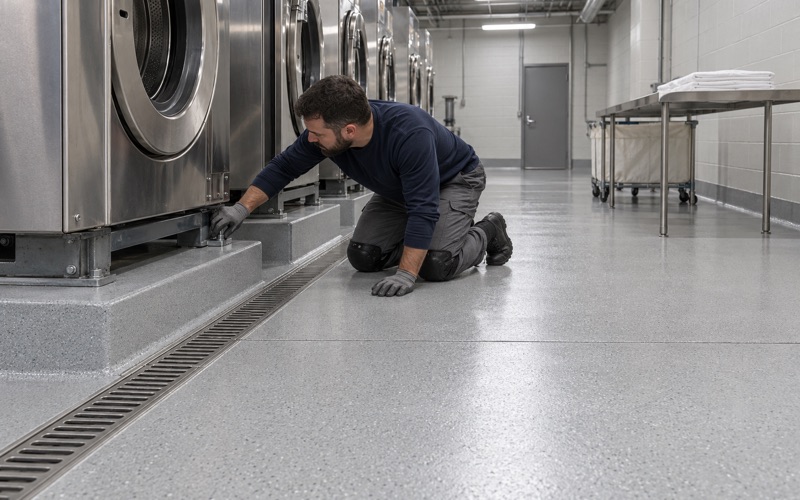
The floor we would put along a pouring bar is a sealed, seamless resin system finished with a stain-resistant topcoat, often a 100% solids epoxy base under a polyaspartic or urethane topcoat. A stain-resistant topcoat lowers the risk; it does not remove it, and we do not promise that any coating will never mark. No wine-specific stain test of a coating sits behind our recommendation, so we describe it as resistance, not immunity.
What makes the system work is timing. Wine wiped up while it is still wet stays on the surface, where it comes off with a cloth; wine left to dry overnight is harder to clear from any finish. A seamless floor also gives spills nowhere to run, so a dropped bottle becomes a cleanup on one surface rather than a soak into joints.
Texture where staff stand
Behind a bar, staff stand and turn on a floor that is often wet, so the strip needs grip as well as chemistry. We build that grip with a fine quartz aggregate broadcast locked into the topcoat, and we specify it by the media and the topcoat used rather than promising a slip rating as a slogan. The front of the bar, where guests stand, can stay smoother.
Many bars also lay rubber bar mats behind the counter, and a textured resin floor works with them rather than replacing them. Mats lift for cleaning, and the sealed floor underneath should be wiped and dried before they go back down, so wine is not trapped against the surface. Grit under a mat wears a topcoat faster, which is one more reason to rinse both.
Wine Cellars, Bars and Spills in Burr Ridge Basements
The home bar and cellar floor
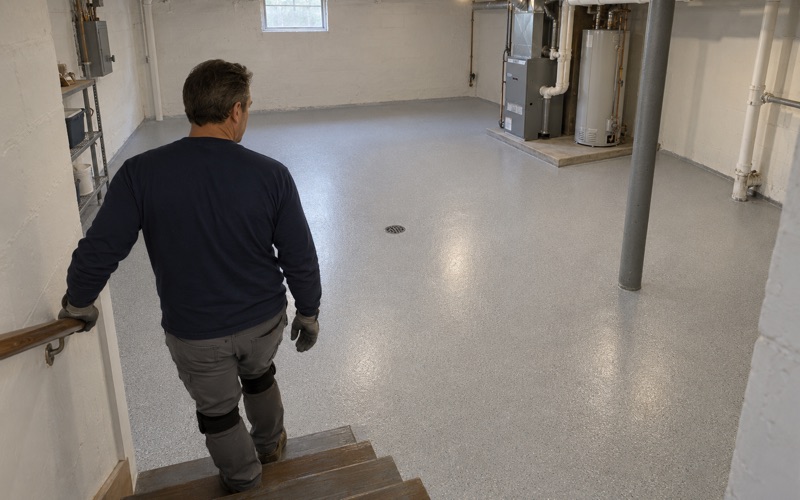
The same chemistry follows wine home. Burr Ridge is mostly owner-occupied houses, with 94.0 percent of households owning, and a basement bar or a wine cellar puts acid and pigment on concrete just as a commercial bar does, only less often. A bottle that breaks on a bare basement slab can leave a mark that outlasts the cleanup.
In a cellar, the floor also takes racking loads and the occasional leak from a cooling unit, and in a basement bar it takes the same drips and glass that a commercial counter does. We look at where bottles are opened and poured, then build the sealed, textured strip there and a smoother finish across the rest of the room.
Testing the slab before we price it
Most Burr Ridge housing dates from 1980 to 2009, and whether a slab of that era was poured over a vapor retarder is not recorded anywhere we can check. So we test rather than assume. The test we name, such as ASTM F2170 in-situ relative humidity probes or an ASTM F1869 calcium chloride test, depends on the slab and the system.
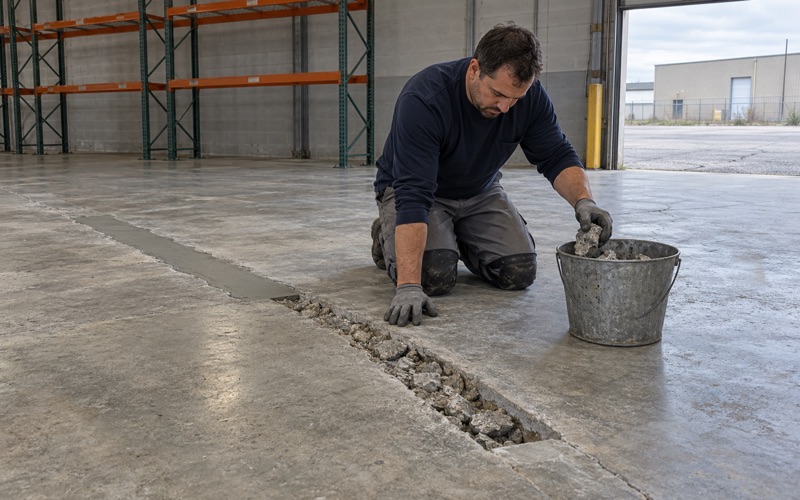
We also read the warranty exclusions aloud before the job is sold, starting with moisture, because it is the failure most coating warranties leave out. Cracks, spalls, old paint and patches are mapped before pricing as well. A basement coating is never sold as waterproofing or radon reduction; it is a wearing surface over a slab that has to be dry enough to hold it.
Contracts, licensing and the village
Burr Ridge licenses every contractor and subcontractor on a permitted job, with a $10,000 surety bond naming the village and at least $1,000,000 aggregate in liability insurance listing it as additional insured. We check those requirements, and the work’s permit status with Community Development, before a job is booked. Home jobs run on a written contract signed before any grinding starts.
Coatings are chosen inside Illinois’ VOC limits for floor and industrial maintenance coatings, which bind whoever applies them. Grinding dust is vacuumed at the machine rather than washed toward a floor drain or a storm inlet. Cure timing follows slab temperature and the dew point spread at the surface, so the schedule waits on the slab, not the calendar.
- 20+ Years on Concrete
- Moisture Test in Every Scope
- Free Written Estimates