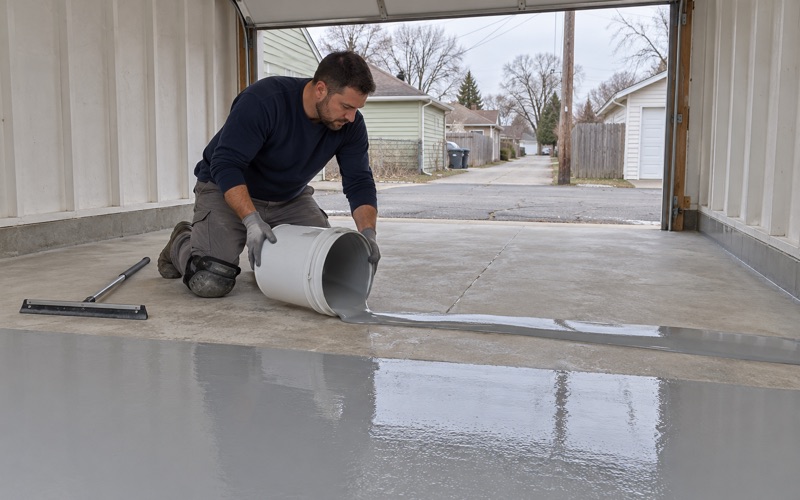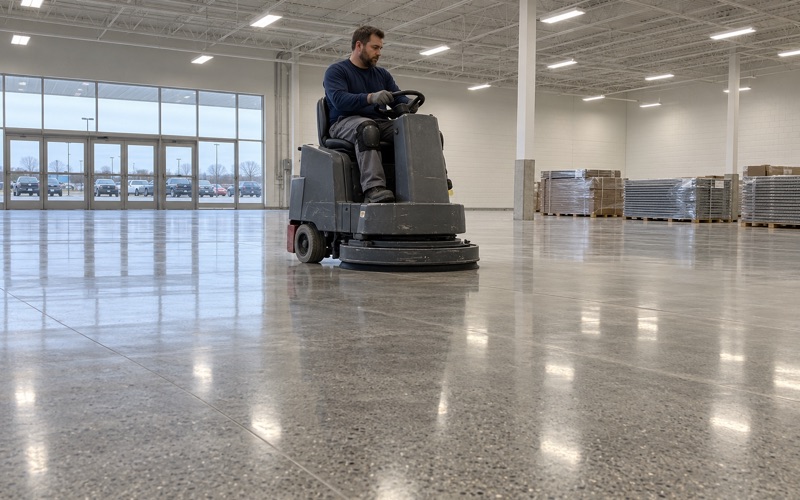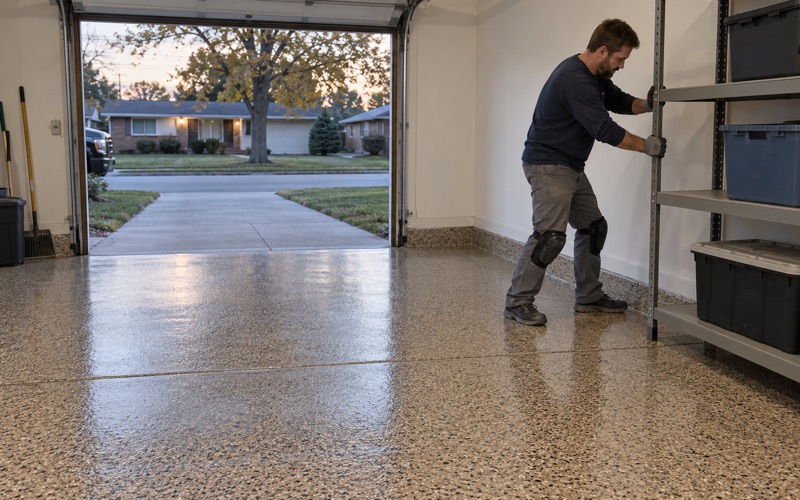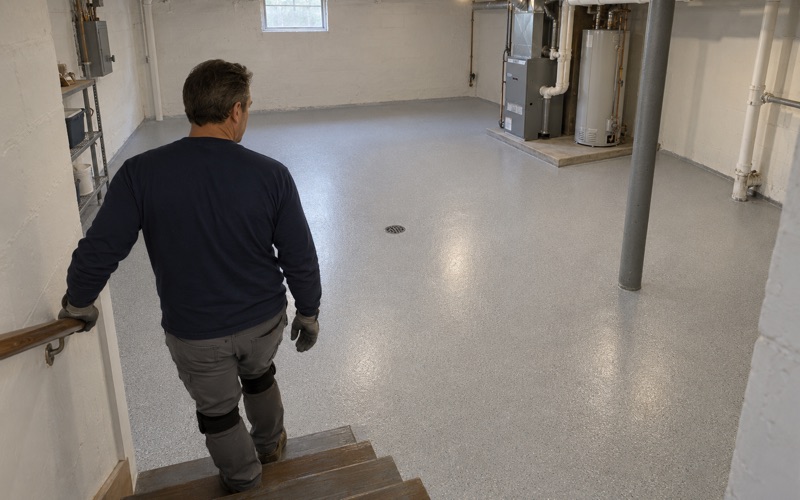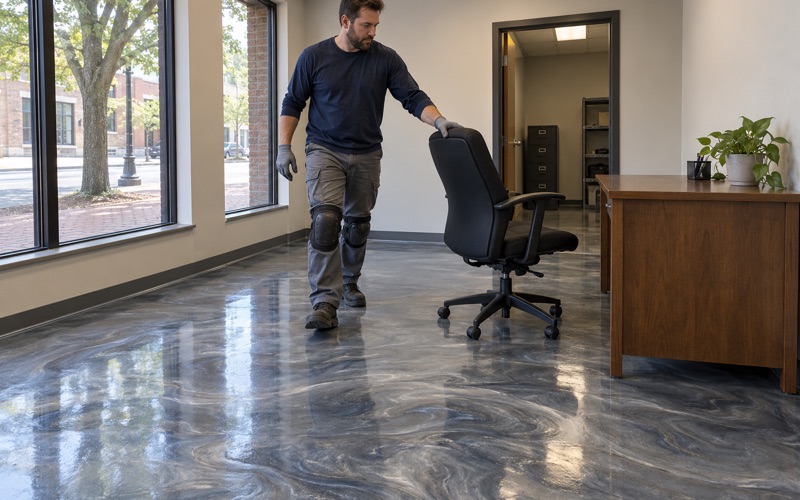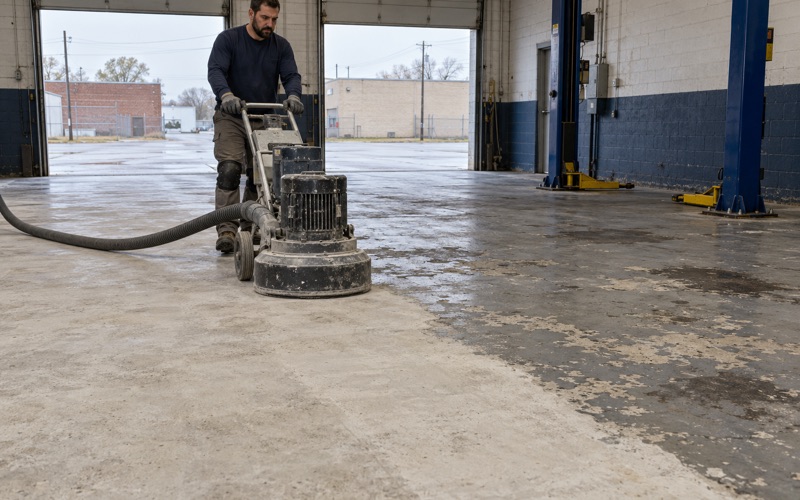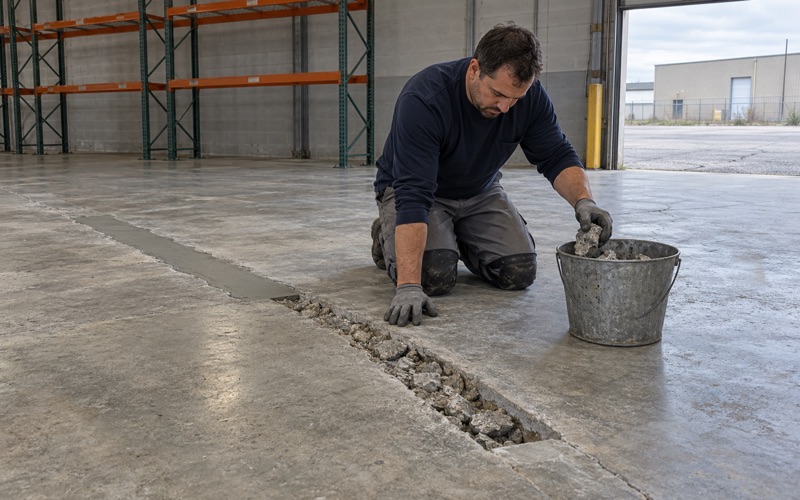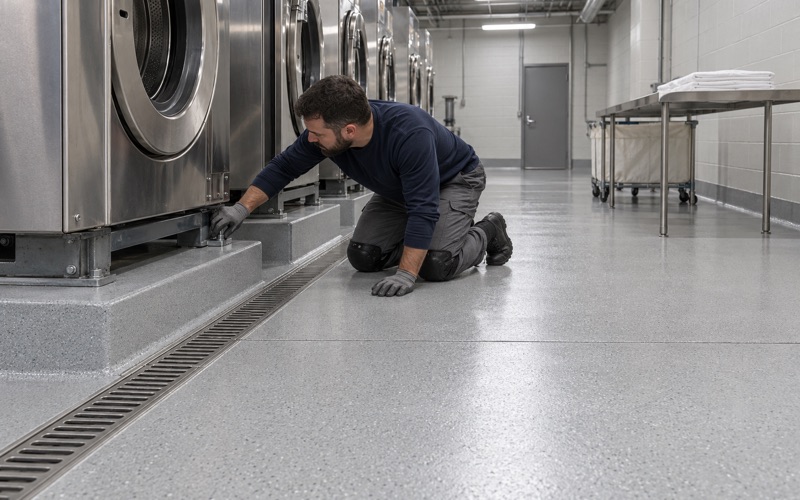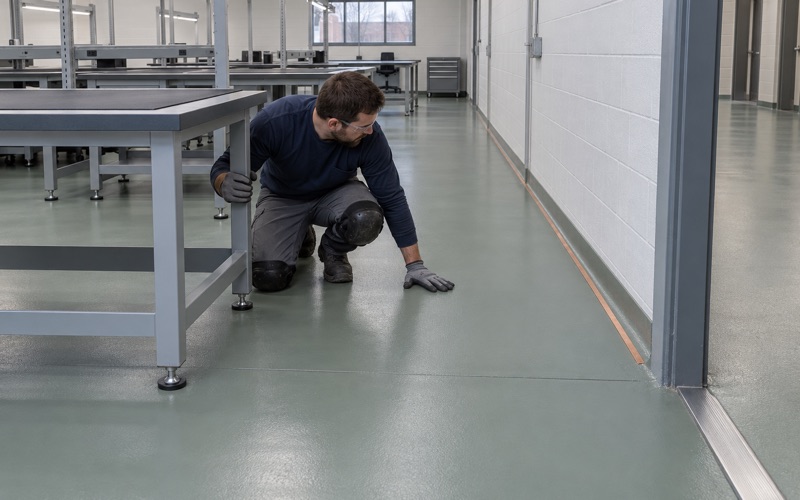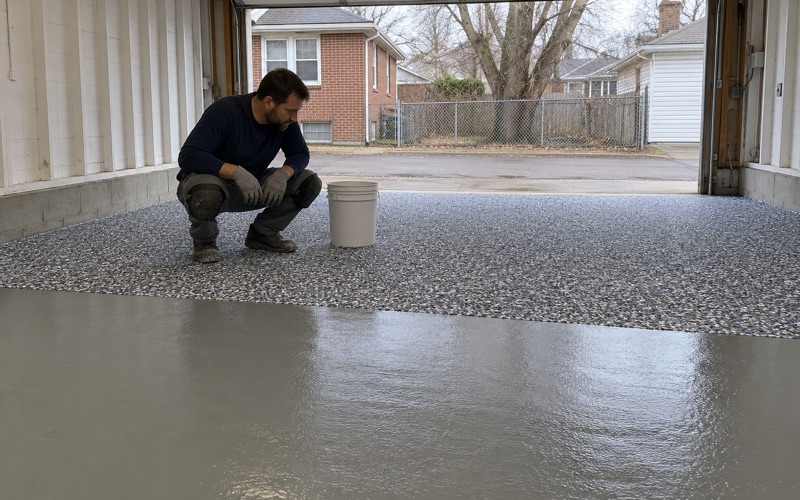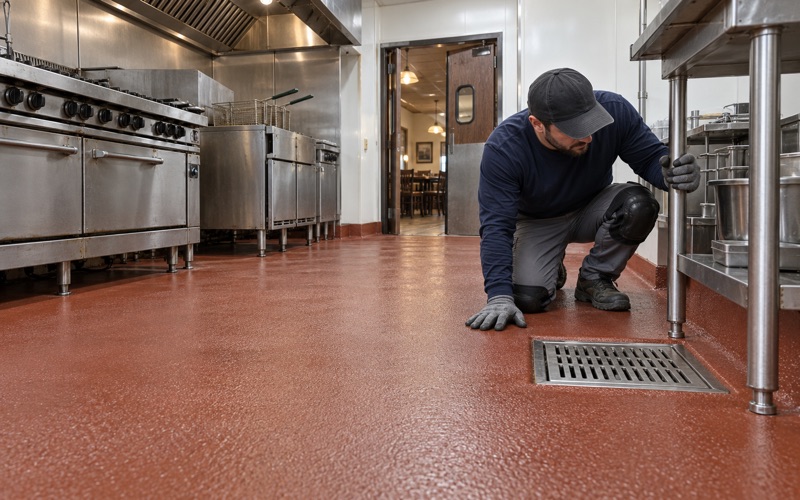
Hammond Epoxy Flooring brings more than 20 years of epoxy flooring work to Cedar Lake, and this page is about one job a floor does that rarely makes the brochure: getting through a leak. When water reaches a room, the finish underfoot decides whether cleanup is an afternoon with a squeegee or days of fans and lifted material. We build sealed, jointless resin floors for the spots where water tends to arrive, and we say plainly what they will and will not do.
A coating is not waterproofing, flood protection or mold remediation. It will not stop a pipe from bursting, a roof from dripping or groundwater from pushing through a crack in a foundation wall. What a sound, sealed floor changes is the work after the water shows up, because there is no pad, backing or seam underneath it to hold moisture out of reach.
That idea has a sharp local test in schools, where Indiana puts a deadline on leak response, and it carries straight into homes. The sections below walk through that rule, compare carpet with a sealed floor once water is on it, cover the rooms where water lands first, and finish with basements and mudrooms in Cedar Lake, IN houses. Every proposal we write names the product line, coat count and finished thickness, so the result can be checked against it.
Half a Million Square Feet and a 48-Hour Clock
The Operations Department on Wicker Avenue
Hanover Community School Corporation keeps its administration building on Wicker Avenue, inside the town limits of Cedar Lake. Its Operations Department page lists 22 full-time custodial, operations and maintenance staff, more than half a million square feet of facilities, and about 1,400 maintenance requests a year. Those numbers describe a compact crew responsible for a great deal of floor.
The same page lists an indoor air quality reporting line, with a phone number and an email address for raising concerns, though it does not describe an IAQ program behind it. We have not read the district’s floor finishes or any leak history, and the corporation is not our customer. We use it here because it shows how a building owner working against a deadline has to think about water.
What 410 IAC 33-4-6 Requires
Indiana’s school indoor air quality rule, 410 IAC 33, includes a section on allergens and irritants. Subsection (c) says that when a water leak or intrusion is discovered, corrective action shall be taken within 48 hours. Subsection (d) applies the same 48-hour window when mold or mold-contaminated material is discovered, and mold is not to be growing in the school.
Forty-eight hours is not long once a leak is found at the end of a week. Every hour spent pulling wet material, running equipment and checking what is still damp counts against that window. The rule sets the deadline, and the building’s surfaces decide how much work has to fit inside it.
What the Rule Leaves to the Building
The rule names no floor material, and nothing in it requires epoxy or any other coating. It applies to Indiana schools, not to homes or shops. Reading it as a product endorsement would be a mistake, and we never sell a floor that way.
What the rule does is make the cost of a slow-drying surface visible. A floor that holds water underneath turns a 48-hour deadline into a race, while a floor that sheds water at the surface leaves time for the real repair. That difference is the subject of the next section.
Looking for epoxy-flooring closer to Palos Hills? See Epoxy-Flooring Services in Palos Hills.
Carpet Versus a Sealed Floor When Water Gets In
What the EPA School Guide Has Carpet Go Through
EPA’s guide, Mold Remediation in Schools and Commercial Buildings, has a table of water damage responses framed around the first 24 to 48 hours. For carpet and backing, it lists removing water with a water extraction vacuum, reducing humidity with a dehumidifier and speeding the drying with fans. That is three pieces of equipment and a waiting period for one wet room.
Carpet also hides what is happening beneath it. Backing or pad may stay damp after the face fibers feel dry to the hand, and that hidden layer is where a mold deadline gets uncomfortable. Checking it means lifting, probing or waiting, all of which take hours a crew may not have.
Concrete, Tile and Sealed Resin
For concrete or cinder block surfaces, the same EPA table lists a water extraction vacuum and drying with dehumidifiers, fans or heaters. For hard surface flooring such as vinyl or ceramic tile, it lists vacuuming or damp wiping, then checking that the underflooring is dry. Seams and joints are where water can slip beneath a hard surface, which is why that second step is there.
A sealed, jointless resin floor bonded to a sound slab has no underflooring to check and no seam to wick through. Water stays on top, where it can be squeegeed toward a drain or picked up with a wet vacuum and wiped down the same day. That is our reasoning rather than a line from the EPA table, and it depends on the slab underneath being dry and intact.
A Shorter Cleanup, Not a Stopped Leak
None of this means the floor prevents leaks. A roof drip, a failed supply line or a cracked foundation wall still has to be found and fixed, and a coating does nothing about the source. We say that in writing, and we read out the warranty exclusions, starting with moisture, before a job is sold.
What a sealed floor buys is time and a smaller mess. When cleanup is a squeegee and a wet vacuum instead of extraction, fans and lifted carpet, more of a 48-hour window goes to the actual repair. For a school, a shop or a household, that is the honest case for a hard floor where water arrives.
Hard Floors Where Water Arrives
Entries and Locker Halls
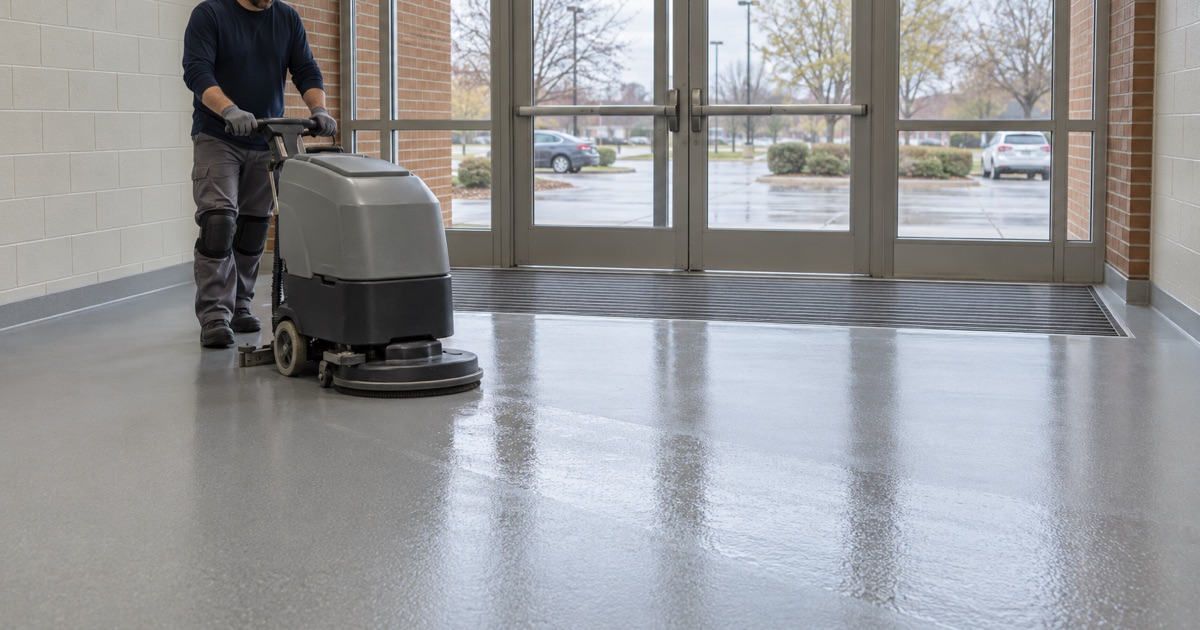
Entrances take whatever comes in on shoes and boots, and a wet entry is one of the first places water reaches an indoor floor. A broadcast system with a sealed topcoat leaves that water on the surface, where a mat and a squeegee can deal with it. We specify slip resistance by the broadcast media and topcoat we use, quartz aggregate or vinyl flake, rather than promising it as a slogan.
Locker halls see spills, wet gear and frequent mopping along a long run of floor. A continuous coating without grout lines or seams gives that water nowhere to collect, and a coved edge at the wall can carry the seal up the base. The goal is a surface a custodian can clear in one pass.
Fountains, Mop Sinks and Custodial Rooms
Drinking fountains, mop sinks and janitor closets are wet by design. The floor around them gets splashed daily and can flood outright when a hose or valve fails. Those are small rooms where a sealed floor with a coved base earns its keep quickly.
Custodial rooms also hold chemicals, buckets and equipment that scrape and drip. For that duty we choose a 100% solids epoxy or a urethane cement system and name the product line, coat count and finished thickness in the proposal. Whoever signs off can then measure the installed floor against what was promised.
Testing the Slab Before Anything Is Sealed
A sealed floor only helps while it stays bonded, and moisture moving up through a slab is a frequent reason coatings let go. That is why moisture testing goes into our scope before the price is final. The proposal names the test, whether ASTM F2170 in-situ relative humidity probes or ASTM F1869 calcium chloride testing, and the reading the slab has to meet.
We open the surface by diamond grinding or shot blasting to a measured ICRI concrete surface profile, never by acid etching. Cracks, spalls, old paint and patched areas are mapped before pricing. If a slab should be repaired or replaced first, we say so before anyone pays for a coating that would fail on it.
Basements and Mudrooms in Cedar Lake, IN Homes
Where Water Reaches a Home Floor
In a house, the water-arrival spots are easy to name: the sump corner, the window well, the laundry, and the mudroom where wet boots come off after a day on the lake. Those floors deserve the same logic as a school entry. A sealed, jointless surface lets a spill or a seep be wiped up instead of soaking into carpet and pad.
A basement coating does not fix hydrostatic pressure, a failed sump pump or a leaking window well, and we never sell one as waterproofing or radon reduction. If water is entering the basement, the source comes first. Once that is handled, a sealed floor makes the next small event a cleanup rather than a carpet replacement.
Cedar Lake Housing and What It Means for Slabs
Cedar Lake’s housing leans young, with 58.1 percent of units built in 1990 or later, including 365 from 2020 on. An older lakeside layer remains, with 14.8 percent of units dating from before 1950. Owners occupy 85.2 percent of homes, so most of these decisions are made by the people who live on the floor.
Age changes what we expect to find under a basement or mudroom floor. A newer slab may sit on a vapor retarder, while an older one may carry patches, paint or no retarder at all. We do not guess: the moisture reading and the crack map decide the system, and the owner of an older slab that needs repair hears that first.
Contracts, Coating Rules and Town Licensing
Every home job gets a written contract with the items Indiana’s Home Improvement Contracts Act requires, signed before any grinding starts. We also check the Town of Cedar Lake’s own requirements before booking, since the town’s building permit application states that all contractors must be licensed with the town. Its Department of Planning, Zoning and Building handles those questions.
Coatings are chosen inside Indiana’s statewide limits under 326 IAC 8-14, which cap floor coatings at 250 g/L and bind whoever applies them. Cedar Lake Town Hall sits outside the Chicago 2015 ozone nonattainment area, but that does not loosen the VOC limit. Grinding dust is vacuumed at the machine rather than washed toward a floor drain.
- 20+ Years on Concrete
- Moisture Test in Every Scope
- Free Written Estimates