Hammond Epoxy Flooring has installed epoxy flooring in Chicago Ridge and across the south suburbs for more than 20 years, and the rooms that teach us the most are the ones where people play. A bar floor or a basement game room gets spilled drinks, dragged stools and shoe traffic in tight loops around a table. Some of those rooms also get a lubricant poured near the floor on purpose, which changes how the finish should be built.
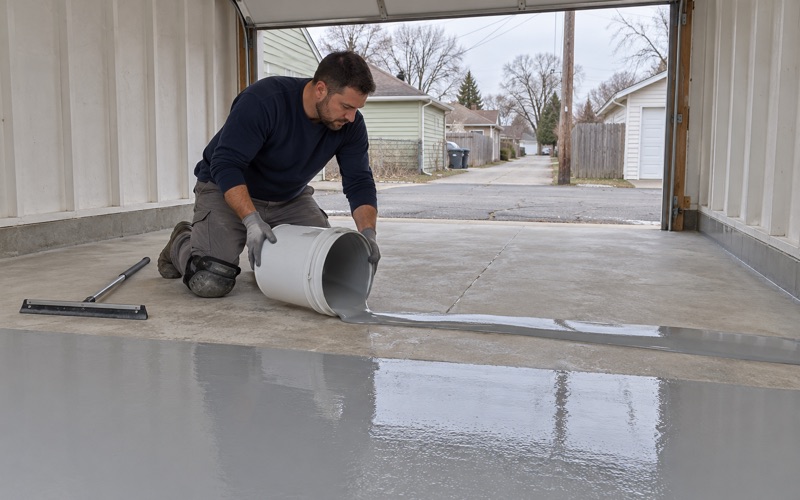
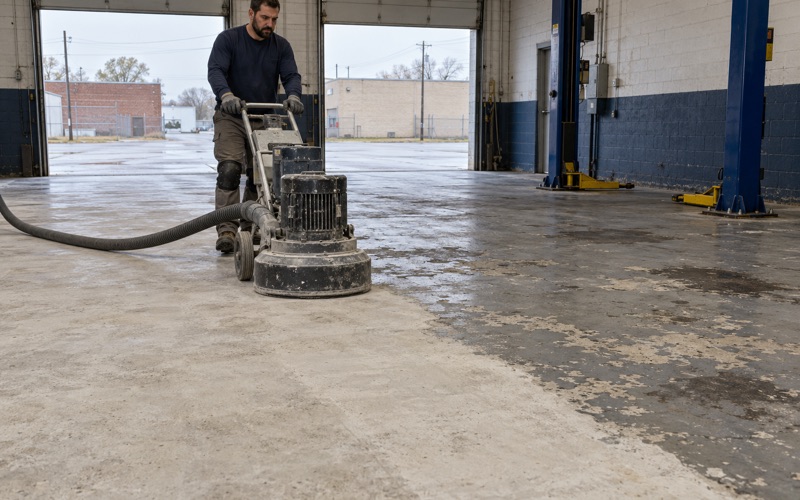
Our starting point never changes. We open the slab with diamond grinding or shot blasting rather than acid etching, so the coating bonds to a measured profile instead of a guess. Every proposal names the product line, the number of coats and the finished thickness, which means you can check the installed floor against the paper once the crew has packed up.
Slip resistance is part of that written scope too. We specify it by the broadcast media and the topcoat we intend to use, not by a slogan on a brochure. Where a floor has a known slip zone, the proposal shows where the texture goes, how coarse it is and what holds it in place, so the owner knows exactly what was bought.
Pool, Darts and a Shuffleboard Table on West 111th Street
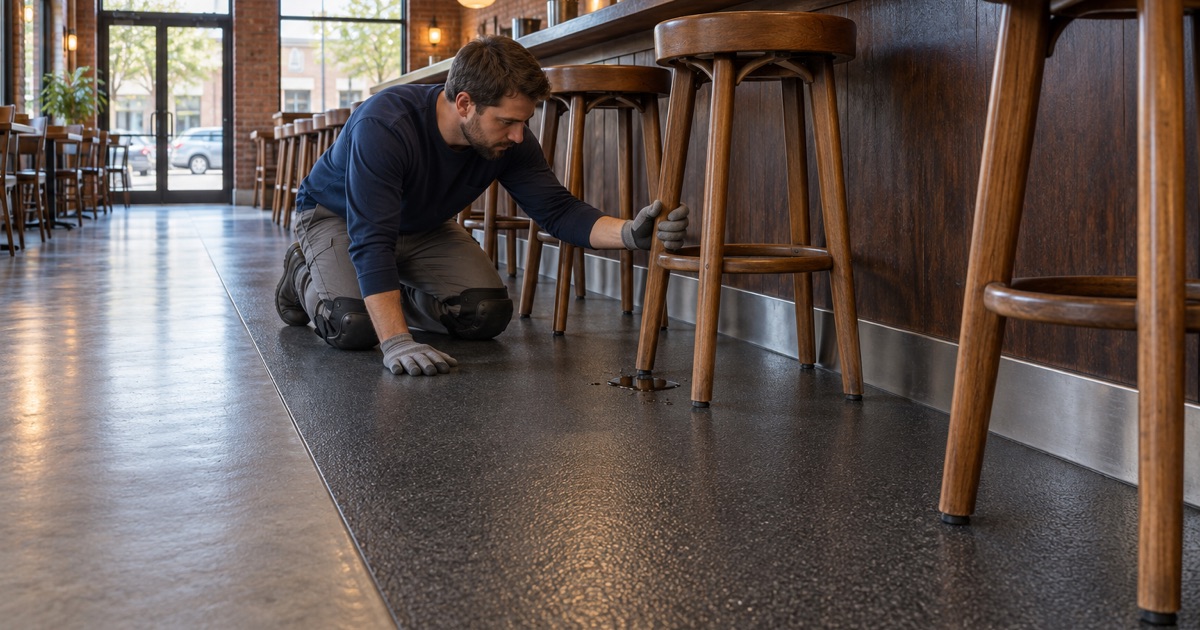
What the Village Directory Lists
The Village of Chicago Ridge business directory lists Brick Tavern at 6030 W. 111th Street with pool, darts, shuffleboard and video gaming. The address sits inside the village, in Worth Township, Cook County. We found no operator website, so the list of games comes from the village directory alone.
We want to be plain about the limits here. Brick Tavern is not a customer of ours, and we have not seen its floor, where its table stands or how it is cleaned. We use it as the local example because a shuffleboard table in a working bar is exactly the setup this page is about.
Why a Game Table Is a Flooring Question
Most bar floors are judged on spills, mop water and chair legs. A table shuffleboard adds something different: a dry lubricant that players sprinkle by hand on a long board, a few feet above a hard floor. Whatever makes the pucks glide on the board does not stop working when it falls off the end.
Pool and darts change foot traffic too, with players standing, leaning and stepping back in the same small patches all night. Put those patterns together and a game room has zones that need different treatment, rather than one finish poured wall to wall and expected to behave the same everywhere.
Registration and Permits in the Village
The village asks for paperwork before anyone touches a slab. Every contractor registers at Village Hall before a permit is issued, and a general contractor pays a $100 registration fee and files a current certificate of insurance and a $10,000 surety or performance bond. We check those rules for each town before a job is booked.
The village permit sheet also says all construction or remodeling work on or in any type of building needs a building permit. The application is completed by the contractor doing the work, with plans the building department has approved, and the sheet does not list floor coating as exempt. We plan that step into the schedule rather than finding out about it later.
Looking for epoxy-flooring closer to Palos Heights? See Epoxy-Flooring in Palos Heights.
Shuffleboard Wax Is Silicone Beads Made to Roll
Pure Silicone and the Slower Cornmeal Blends
What players call shuffleboard wax is not wax at all. Bar Games 101 describes the fastest powders as pure silicone beads and the top grade as pure silicone ball bearings. Other guides describe the beads acting like miniature ball bearings that cut friction between the puck and the board, which is the whole point of using them.
Slower grades mix a little silicone with sand and cornmeal, so the puck travels less far for the same push. Either way, the material is built to roll under weight. A table might use a fast powder one season and a slower blend the next, depending on how the regulars like to play.
The Spray That Goes on the Board
The same guide suggests a light application of silicone spray on the playing surface so the powder spreads easily. That means two silicone products live next to the table: a loose powder in a shaker and an aerosol can that leaves a fine mist wherever it drifts.
Overspray rarely stays on its target. A can aimed at a board a few feet up can settle on the floor beside the table and on the shoes of the person holding it. We treat both the powder and the spray as floor contaminants in our planning, even though neither was meant to reach the floor.
Where the Powder Ends Up
Pucks that slide off the end of the board throw powder with them, and players lean over the table ends to retrieve and reset. Beads and cornmeal land at both ends, then get carried on shoe soles along the walkway past the table and toward the bar or the restroom.
Nothing we have read measures shuffleboard powder on a floor, so we do not quote a number. Our view is an inference: a material made to roll on a hard, smooth board will behave much the same way on a hard, smooth floor. That is enough reason to plan the table ends as a slip zone from the start.
Texture at the Table, Dry Pickup Before the Mop
A Fine Broadcast in a Durable Topcoat
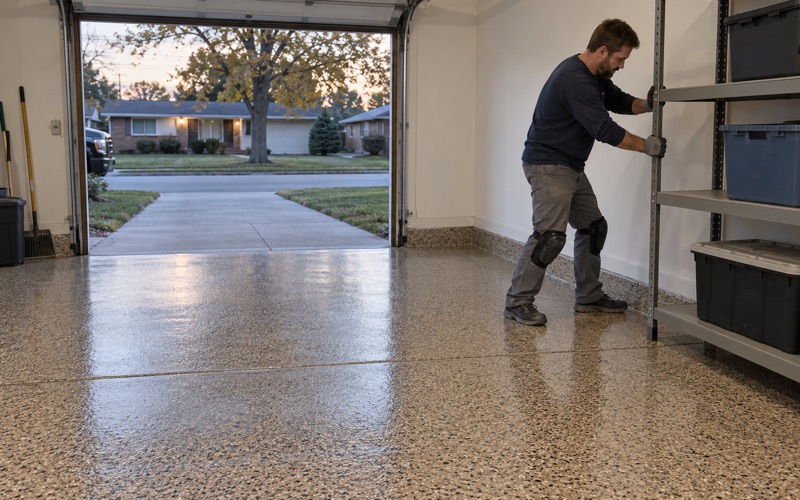
Around the table ends and the walkway beside them, we would build in a fine broadcast texture rather than leave a high-gloss surface. Quartz aggregate broadcast into the base coat and locked down under a polyaspartic or polyurea topcoat gives shoes something to grip without turning the floor into sandpaper.
The topcoat matters as much as the grit. A thin finish wears off the peaks of the aggregate in the busiest lanes, and the texture fades exactly where it is needed. We name the media size, the topcoat and the coat count in the proposal so a worn zone can be measured against what was promised.
Zoning Instead of One Finish
A game room does not need the same texture everywhere. Under the bar stools and in open seating, a smoother finish cleans faster and is kinder to bare elbows and dropped coasters. The textured zone wraps the table ends and the paths players actually walk, laid out from where the table really stands.
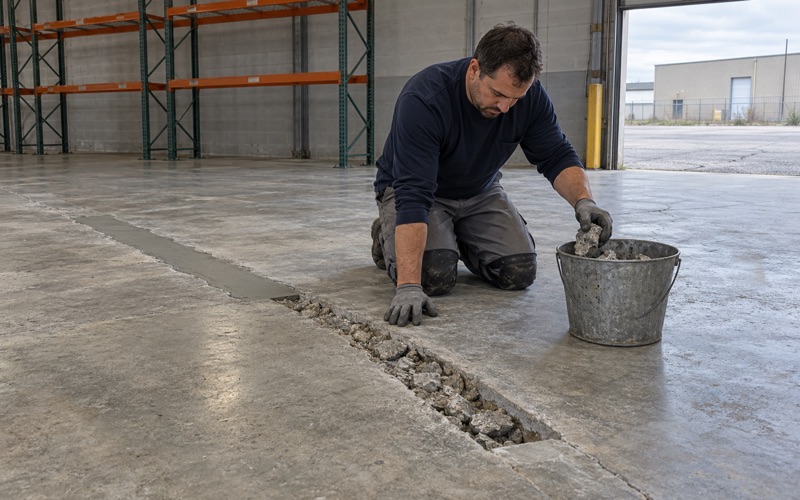
That layout is drawn before pricing, along with cracks, spalls, old paint and patched areas we map across the slab. If the concrete under a busy table end should be repaired before it is coated, we say so first rather than burying it under a fresh layer that will fail at the same spot.
The Dust Mop Goes First
Texture handles the slip, but cleanup decides whether the floor stays clean. Silicone beads that meet a wet mop do not get picked up; they get smeared into a thin, slick film across the coating. The routine we recommend runs dry before wet, every time.
A dust mop or a vacuum collects the loose powder around the table first, especially at both ends and along the walkway. Only after that does a damp mop handle spills and grime. Staff who follow that order keep the texture open and clean instead of slowly filling it with silicone paste that dulls the grip.
Silicone Spray, Recoats and Basement Game Rooms
Keep the Can Off the Floor
The silicone spray deserves a rule of its own: spray the board, not the room. Beyond the slip issue, silicone residue on a floor is what stops the next coat from bonding when the floor is eventually recoated, and it can cause fisheyes in fresh material.
A simple habit helps. Spray the board with the table cover or a towel shielding the ends, and keep the can stored away from the floor. When a recoat does come due, we plan the surface preparation around whatever residue the room has collected over the years, rather than assuming the floor is clean.
Shuffleboard and Pool Tables at Home
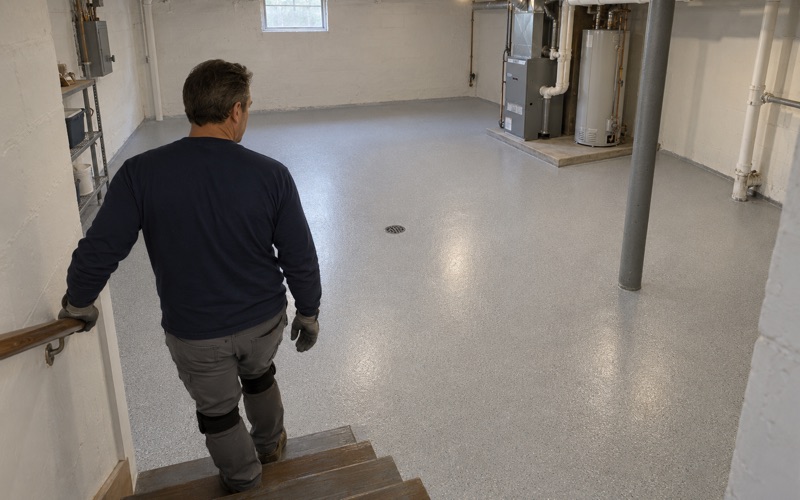
The same physics follow a shuffleboard table into a finished basement or a converted garage. Home game rooms usually see less traffic than a tavern, but the powder still rolls off the ends, and socks and bare feet find it faster than bar shoes do. A textured strip at each end is a modest addition to a basement system.
Pool tables bring weight instead of powder. A heavy slate table sits on a few small feet, so we talk through where it will stand before the coating goes down. Basements also raise moisture, and we write the test into the scope, such as ASTM F2170 in-situ relative humidity probes, with the reading the slab must meet.
What the Proposal Spells Out
Before any game room is sold, we read the warranty exclusions aloud, starting with moisture, the failure most coating warranties leave out. We are also clear that a floor coating is not waterproofing, flood protection or radon reduction, even in a basement that has had water before.
Cure timing follows slab temperature and the dew point at the surface, not the calendar, so a cold space may be told to wait. The finished proposal lists the product line, coat count, finished thickness, broadcast media and the zones where texture goes, giving a Chicago Ridge owner a floor they can check line by line.
- 20+ Years on Concrete
- Moisture Test in Every Scope
- Free Written Estimates