
Hammond Epoxy Flooring provides concrete grinding in Hammond, IN, serving surrounding cities including Griffith, Riverdale, Harvey, Dyer and Homewood. Grinding is the step that decides whether a floor coating lasts, and after more than 20 years on concrete we treat it as the most important part of every job rather than a quick pass before the real work.
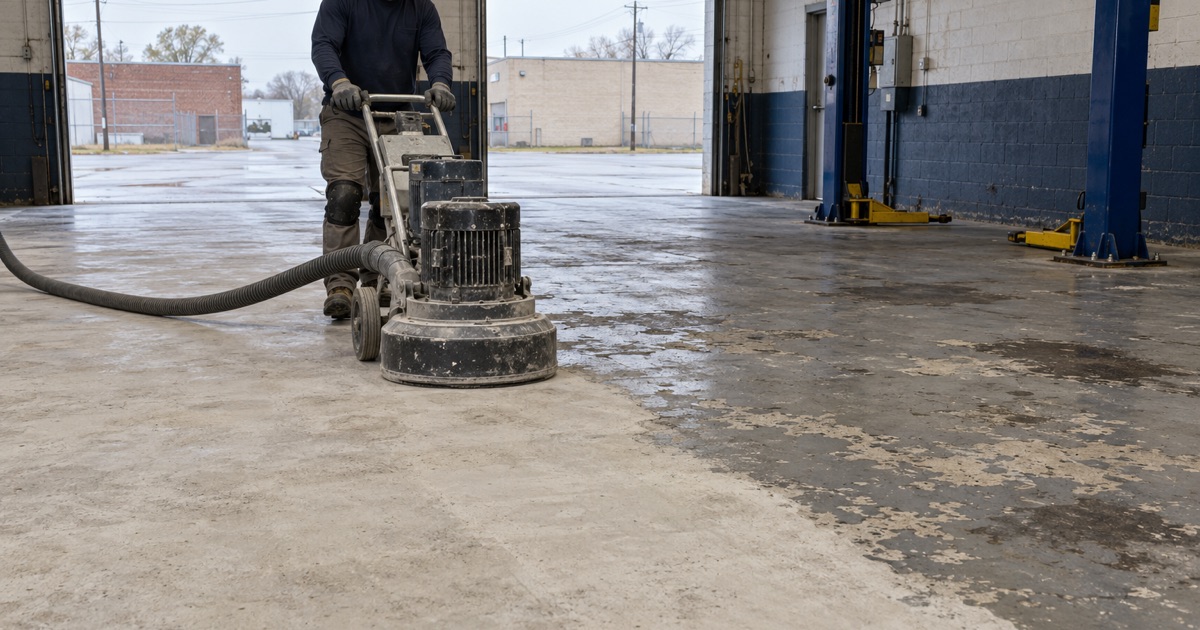
We open slabs by diamond grinding or shot blasting, never by acid etching. The goal is a clean, sound surface with a measured profile that matches the coating going on it, with old paint, sealers, weak concrete and contamination removed. Dust is captured by vacuums at the machine, so nothing is swept or washed toward a floor drain or storm inlet.
Grinding is also a service on its own. We remove failed coatings, take down trip hazards and high joints, strip old adhesives and prepare slabs for other trades, from new flooring installs to overlays.
Concrete Surface Profile and Why It Matters
The ICRI CSP Scale
The International Concrete Repair Institute rates prepared concrete from CSP 1, nearly smooth, to CSP 10, very rough. Each coating system has a profile its manufacturer requires. A thin sealer or polyaspartic topcoat may need a light profile, while a 100% solids epoxy base, a broadcast system or urethane cement needs a heavier one.
Grinding to the wrong profile causes problems both ways. Too smooth and the coating has nothing to grip, so it peels. Too rough and a thin coating cannot fill the texture, leaving pinholes and a patchy finish.
Matching Profile to the System
We choose the tooling, grit and number of passes based on the system in the proposal. Before any coating goes down, the prepared floor is checked against the profile the product sheet calls for, so the floor you get matches the spec you were quoted rather than whatever the grinder happened to leave.
Hard and soft slabs grind differently. A dense, well-cured slab can glaze diamond segments and leave a profile that is too smooth, while a soft or weathered slab cuts fast and can be overground. We adjust segment bond and pressure to the concrete in front of us rather than running every floor the same way.
Diamond Grinding, Shot Blasting and When We Use Each
Diamond Grinding
Diamond grinding uses rotating heads fitted with metal-bond diamond segments. It removes coatings, flattens high spots and leaves a uniform, controllable profile, which makes it our standard method for garages, basements and most commercial floors. Edge grinders and hand tools reach walls, corners and around posts.
Grinding can also flatten lips at control joints and old patches, which matters for metallic and polished floors where every ridge shows.
Shot Blasting
A shot blaster throws steel shot at the slab and vacuums it back up, leaving a rougher profile quickly over large, open areas. It suits warehouses and plants receiving thicker coatings or urethane cement. It can leave track lines if overlapped poorly and does less to flatten a slab, so we often pair it with grinding at edges and transitions.
Why Acid Etching Is Off the Table
Acid etching is the method in most retail coating kits because it is cheap and needs no equipment. It does not remove sealers, paint or oil, gives an inconsistent profile, and can leave salts that hurt bond if not neutralized and rinsed perfectly. Rinse water also has to go somewhere, often a drain. We do not use it.
Removing Old Coatings, Adhesives and Contamination
Failed Epoxy and Paint
Peeling garage paint, failed kit coatings and worn epoxy are removed down to bare, sound concrete. A new coating bonds no better than the layer it sits on, so leaving patches of old coating under a new one is a common cause of early failure.
With most of Hammond’s homes built before 1980, many garage and basement floors carry several generations of paint and patching. Grinding through them also reveals what the slab underneath looks like, including salt scaling, hidden cracks and old repairs, so the repair scope is set on what is actually there.
Mastic and Flooring Adhesives
Older basements and commercial floors often have black mastic or adhesive from old tile or carpet. Thin adhesive can be ground off; thick residue is scraped first. Some older black mastics may contain asbestos, so we ask about the flooring’s history and recommend testing before grinding anything suspect.
Oil and Chemical Contamination
Oil-soaked garage and shop floors resist coatings because the oil keeps bleeding back to the surface. We clean and grind contaminated areas until the concrete takes a primer evenly, and in severe cases recommend a cleaning treatment or a primer made for oil-contaminated concrete.
Road salt is a contaminant too. Garage slabs that have taken years of brine and calcium chloride can hold salts in their surface layer, and grinding removes that weakened, salt-laden top until clean concrete is exposed. Plant floors exposed to process chemicals get the same attention before any new system goes down.
Dust Control and Clean Work
Vacuums at Every Machine
Grinding concrete produces fine silica dust that should not be breathed or spread around a home or plant. Every grinder and hand tool we use is connected to an industrial vacuum with filtration, so dust is captured at the source rather than swept up afterward.
In an attached garage or a basement, that keeps grinding dust out of the living space. We also seal doors into the house, cover HVAC returns near the work and keep the vacuum filters maintained, because a clogged filter lets dust past the shroud.
Keeping Dust Out of Drains and Storm Inlets
Concrete fines washed into a floor drain end up in the sewer, and outdoors they can reach a storm inlet. We dry-collect dust and bag it for disposal instead of rinsing floors, which keeps basement drains, shop trench drains and driveway inlets clean.
- 20+ Years on Concrete
- Moisture Test in Every Scope
- Free Written Estimates