Hammond Epoxy Flooring has spent more than 20 years on epoxy flooring in Dyer, IN and the rest of northwest Indiana, and on this page we narrow the subject to one job a floor does that most people never think about: holding a disinfectant on the surface long enough for it to work. That matters in any room where animals are examined, treated, boarded or raised, and it matters in a family garage where a puppy sleeps.
A coating is not a disinfectant, and we never sell one as if it were. What a sealed floor changes is the surface the cleaning solution sits on. Bare concrete is a sponge with a hard face, while a properly installed resin system is closer to a countertop: liquid stays on top, soil has nowhere to hide, and a rinse carries the residue away.
Below we walk through why contact time drives disinfection, what porous concrete does to it, how we build and finish a floor for a wash-down routine, and what a Dyer homeowner should plan for when a new dog is coming home to the garage or mudroom.
An Animal Hospital on Sheffield Avenue in Dyer, IN
Dyer Animal Clinic sits at 1045 Sheffield Avenue, inside the Town of Dyer and St. John Township. Its listings describe it as a full-service animal hospital that takes emergency cases as well as less urgent medical, surgical and dental issues. We have no relationship with the clinic and have not seen its floors or its cleaning products; we name it because it shows the kind of building where floor surfaces become part of infection control.
What a full-service clinic asks of a floor
An exam room, a treatment area, a surgical prep space and an isolation ward all see the same cycle many times a day: an animal arrives, something is shed or spilled, and the surface has to be cleaned before the next patient. A floor that soaks up the solution, stains, or traps grit in a broken surface makes that cycle slower and less certain.
Emergency work adds pressure. When the next animal is already on its way in, nobody wants to wonder whether the floor under the table actually stayed wet long enough to do its job.
Follow the label and the veterinarian
The dilutions and dwell times on this page come from shelter-medicine guidance, not from any state rule. The disinfectant’s own label and the attending veterinarian set the routine for a given building, and we design the floor to support whatever routine they choose.
That means we ask which products are used before we pick a topcoat. A floor that tolerates one chemistry well can soften, haze or lose gloss under another, so the answer shapes the system we propose.
Looking for epoxy-flooring closer to Homewood? See Epoxy-Flooring Services in Homewood.
Parvovirus and the Wet Minutes a Disinfectant Needs
Canine parvovirus is the case that makes the floor question concrete. The UW Shelter Medicine Program’s guidance on parvovirus in a home environment notes that the virus can be very difficult to remove completely from certain environments and can survive for many years in ideal conditions, such as damp soil in dark places.
Three steps, in order
That guidance lays out cleaning in three steps: remove organic material such as feces, apply a detergent, then apply a disinfectant. Skipping or merging steps is where a routine quietly fails, because soil left behind shields the virus from the product that comes after it.
Each step depends on the surface. Feces and vomit lift off a smooth, sealed floor in one pass, and detergent rinses away cleanly rather than lingering in pores where it can dilute the next solution.
Accelerated hydrogen peroxide and contact time
For accelerated hydrogen peroxide, the same guidance gives two options: a 1:16 dilution, about 8 ounces per gallon, with at least 5 minutes of wet contact time, or a 1:32 dilution, about 4 ounces per gallon, with at least 10 minutes of wet contact time. The word that matters is wet. A film that disappears in two minutes has not delivered five.
That is where the floor enters the picture. Contact time is measured on the surface, so anything that pulls the solution down and away from the top shortens the real dwell, whatever the timer says.
Why bleach needs help and quats are not enough
Bleach can be parvocidal under the right circumstances, but the guidance notes it is deactivated by any organic material, which is why the detergent step must come first. On a surface that holds soil in its texture, that deactivation keeps happening long after the floor looks clean.
Many quaternary ammonium products carry a parvovirus claim on the label, yet the same source says they have been proven ineffective in independent studies. Product choice belongs to the veterinarian; our part is making sure whichever effective product they choose is not undercut by the floor beneath it.
Why Bare Concrete Loses the Contact Time
Unsealed concrete is porous. Pour a disinfectant on it and some of the liquid starts moving downward right away, the surface dries faster than the timer runs, and fine soil sits in the pores where a mop never reaches. Our reasoning here is a matter of how concrete behaves rather than a measured study, but it is the reason sealed floors are standard wherever wash-down cleaning is routine.
Pores, dust and a dull surface
Older slabs often dust, meaning the top layer slowly breaks down into a fine powder. That powder mixes with whatever is spilled and gives organic residue a place to cling. A surface like that can look scrubbed and still carry a thin layer that deactivates bleach and shelters virus.
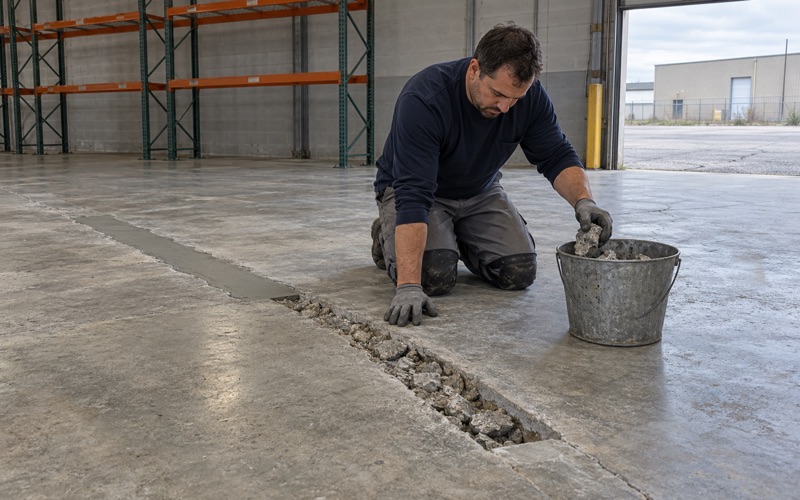
Cracks, spalls and old patches add more of the same. We map each of them before pricing, and if a slab needs repair or replacement rather than a coating, we say so first.
A sealed, rinsable floor
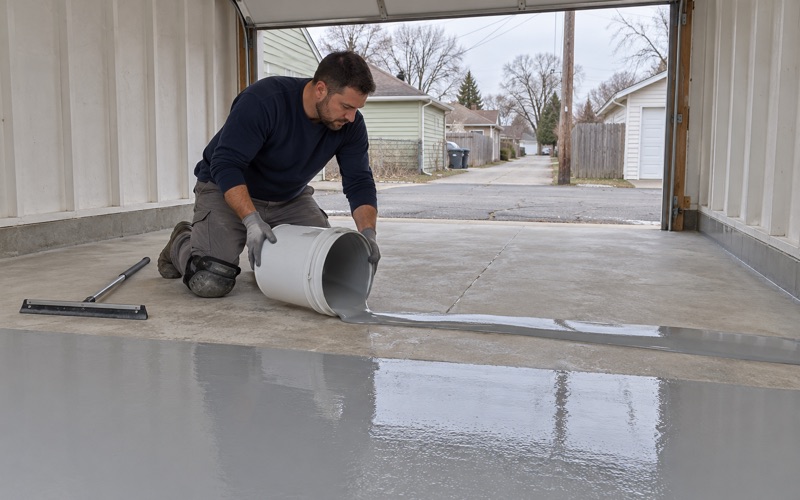
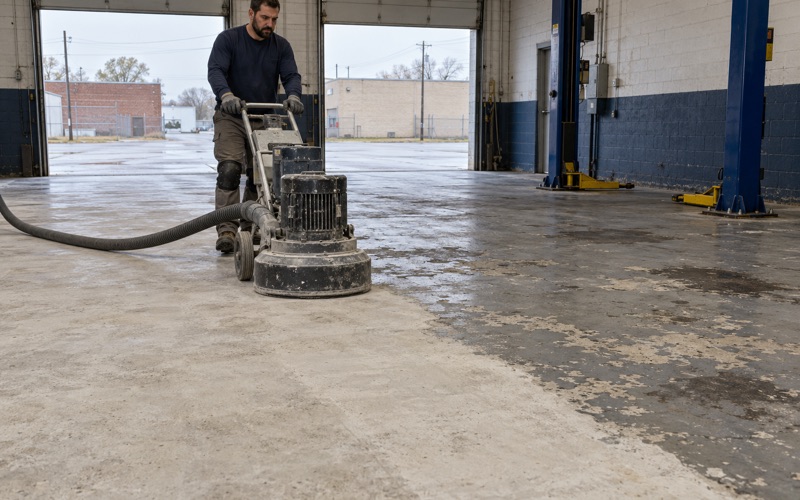
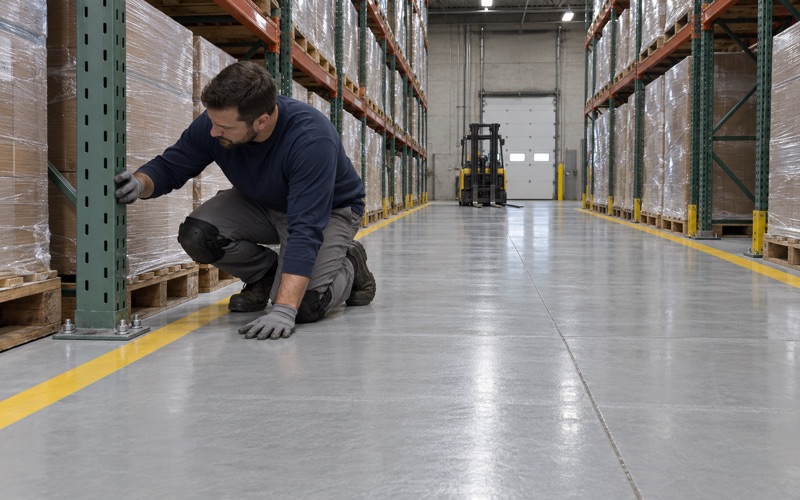
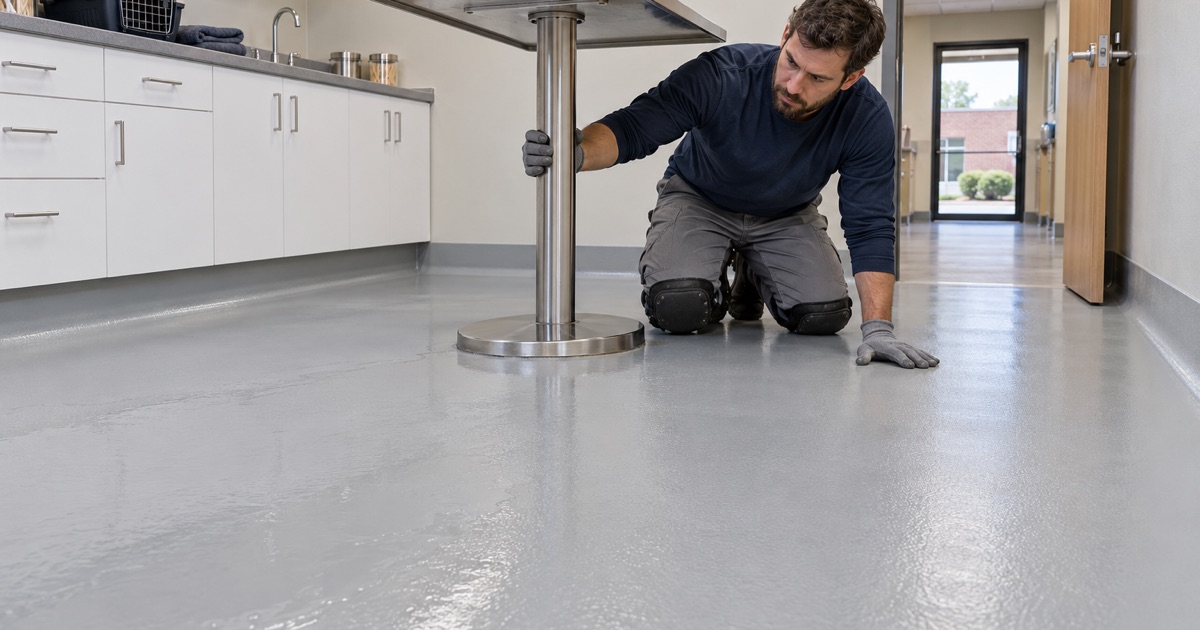
A continuous resin floor turns that porous face into a nonporous one. We open the slab by diamond grinding or shot blasting to a measured ICRI concrete surface profile, never by acid etching, so the primer bonds into sound concrete instead of a weakened skin. Over that we build 100% solids epoxy to the thickness named in the proposal.
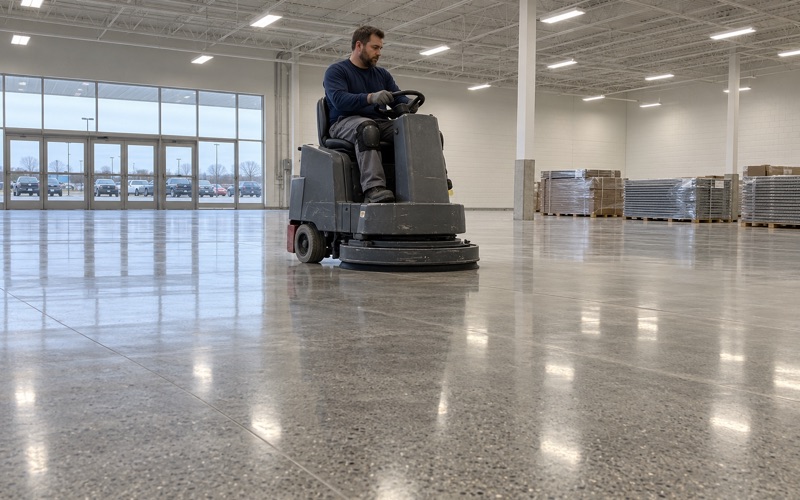
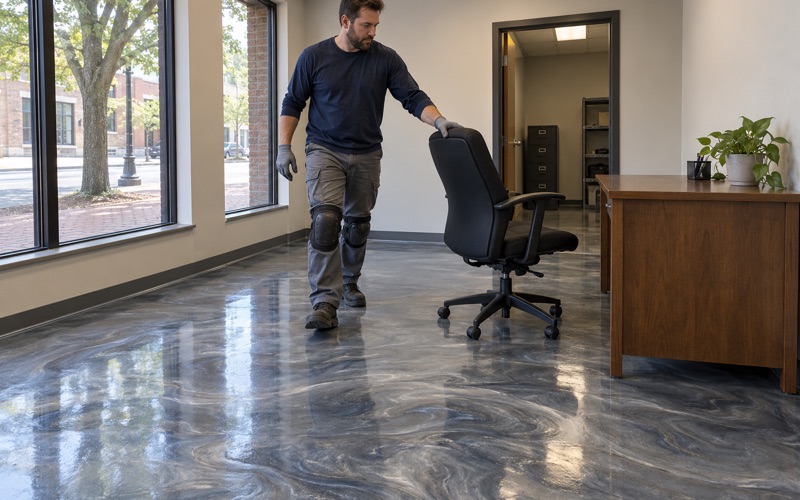
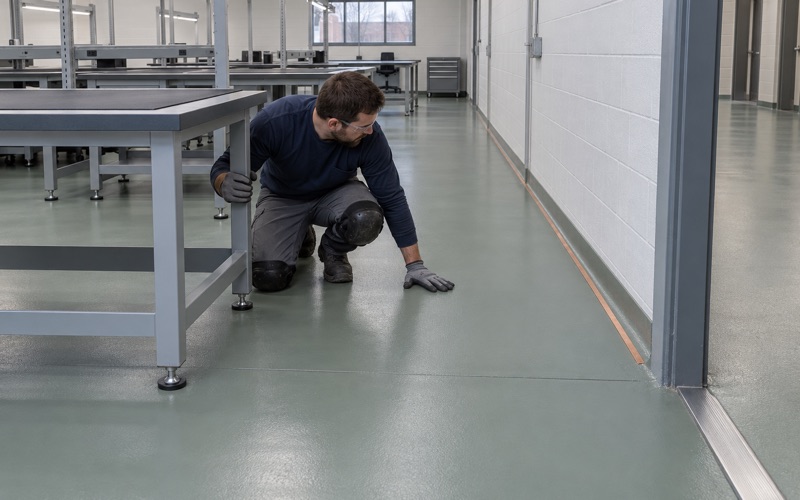
The result holds a disinfectant as a standing film for the full dwell and gives the rinse something smooth to run off. Every proposal states the product line, the coat count and the finished thickness, so the installed floor can be checked against what was promised.
Matching the topcoat and the texture
The last coat is the one the chemicals touch. We check polyaspartic and urethane topcoats against the disinfectant actually in use, whether accelerated hydrogen peroxide or a bleach solution, and we choose accordingly rather than assuming every finish handles every product.
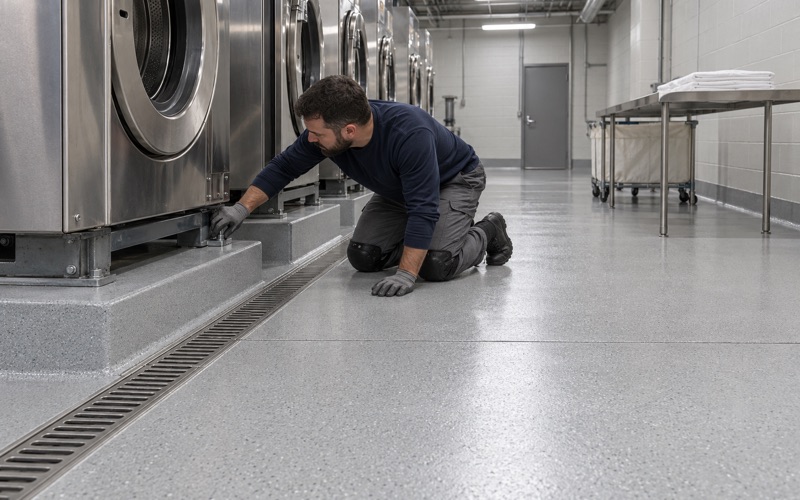
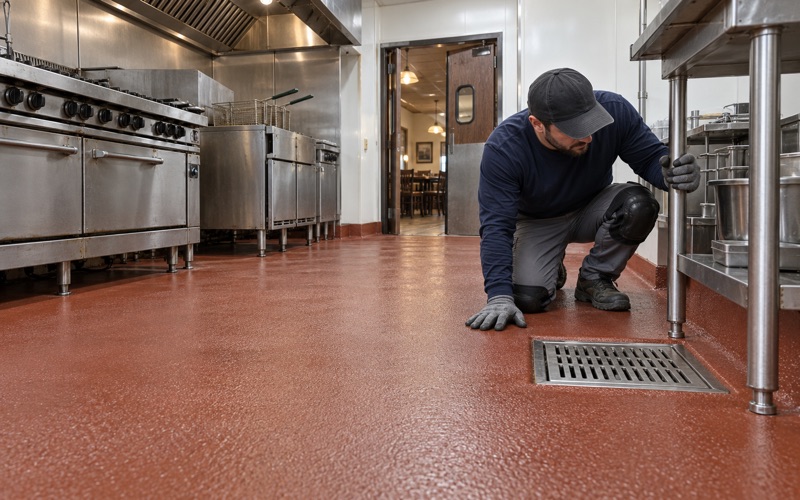
Texture is a balance. A floor that will be wet needs some grip, and we specify it through the broadcast media and the topcoat, but heavy texture holds soil and fights the rinse. For a wash-down space we keep the profile fine enough to clean in one pass.
A New Puppy in a Dyer, IN Garage or Mudroom
The same shelter-medicine guidance advises restricting puppies to easily cleanable and disinfectable areas. For many households in Dyer, IN, that space is an attached garage or a mudroom off it, and in many homes that slab is still bare concrete.
Planning an easy-clean puppy area
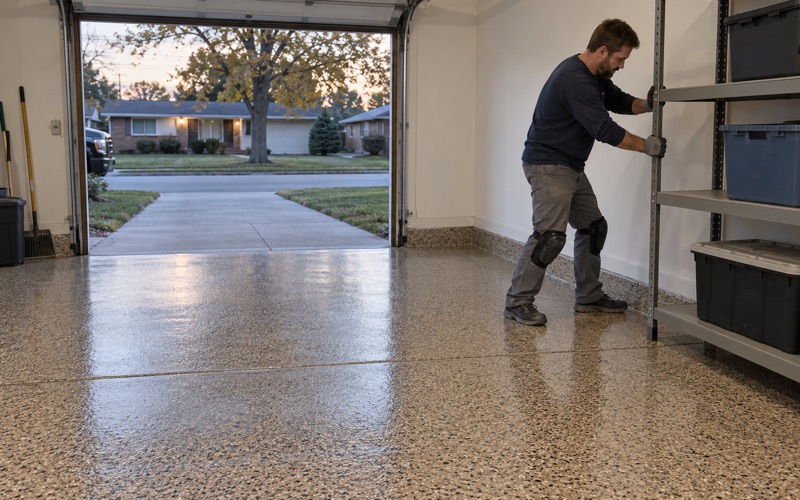
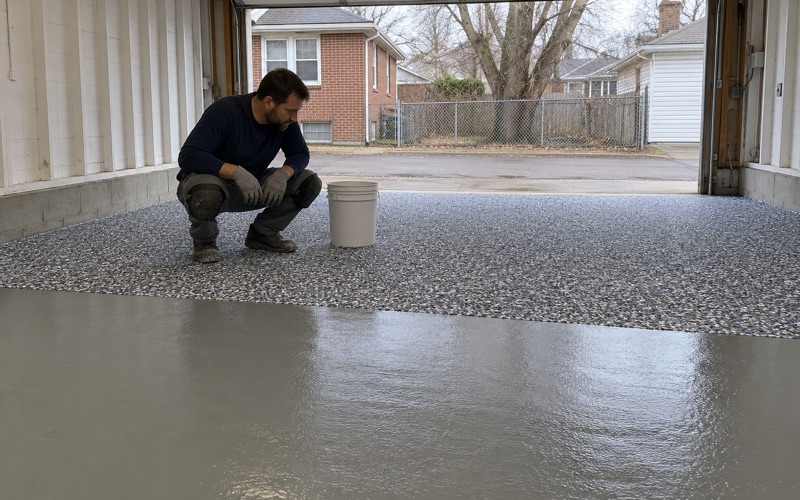
Think about where accidents will happen, where the crate will sit and how the floor will be rinsed. A coated garage floor lets you pick up, wash with detergent and then apply the disinfectant your veterinarian recommends, with the solution staying on the surface instead of soaking in.
A coating does not replace vaccines or the vet’s advice, and it does not kill anything. It simply removes the porous surface that makes each cleaning less reliable while a young dog finishes its shots.
Timing the job around cure and moisture
It is best to coat before the puppy arrives. We schedule cure by slab temperature and dew point rather than by the calendar, and in a cold, unheated garage we will tell you to wait rather than rush a floor that cannot cure properly. Moisture testing, such as ASTM F2170 relative humidity probes, is written into the scope before the price is final, and the proposal names the reading the slab must meet.
We also read the warranty exclusions aloud before the job is sold, starting with moisture, because that is the failure most coating warranties leave out. Knowing that up front is better than learning it when a floor lifts.
Paperwork that comes with working in Dyer
Every contractor working in Dyer registers with the Town of Dyer Building Department each year, with a bond recorded at the Lake County Government Center in Crown Point and liability insurance naming the town. Home jobs get a written contract containing what Indiana’s Home Improvement Contracts Act requires, signed before any grinding starts.
Coatings are chosen inside Indiana’s AIM rule, 326 IAC 8-14, which caps floor coatings at 250 g/L of VOC and binds whoever applies them. Grinding dust is collected by vacuum at the machine, so the room stays clean for the dog that will live in it.
- 20+ Years on Concrete
- Moisture Test in Every Scope
- Free Written Estimates