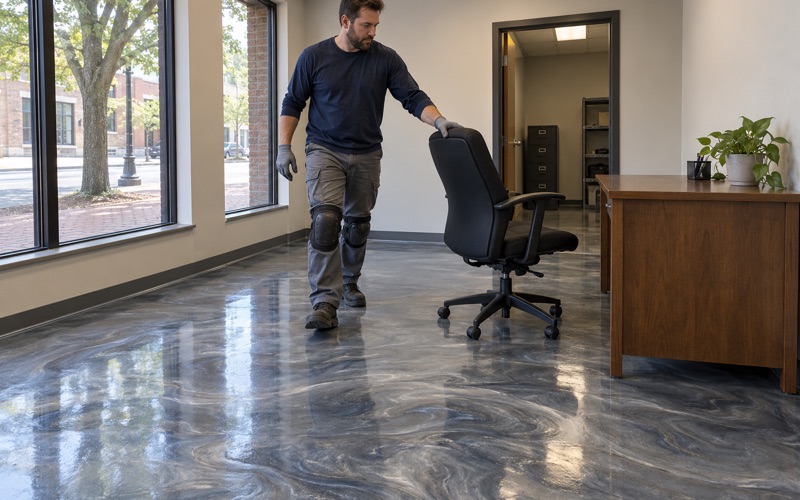
Hammond Epoxy Flooring has spent more than 20 years on epoxy flooring in Evergreen Park and the rest of the ring around Hammond, and the question we get asked most is a simple one: when can we use the floor again? The honest answer comes in two parts. There is the day you can walk on it, and there is the later day the coating has finished curing, and treating those as the same day is how a good floor gets damaged in its first week.
That gap matters most in buildings that never really close, and in homes where the basement or garage is needed back right away. Our scope is written so you know both dates before we start, which rooms come out of service and for how long, and what can and cannot touch the new surface in between. Nothing about the schedule is left to guesswork once the grinder is running.
Every proposal names the product line, the number of coats and the finished thickness, so the floor that goes down can be checked against the paper. The cure times we quote come from that product’s own data sheet, and we read them out to you before the job is sold rather than after.
A Seven-Day Walk-In Clinic on West 94th Street
In May 2025, Midwest Express Clinic announced its Evergreen Park location at 2508 West 94th Street, an address that sits inside the village, in Worth Township. The clinic lists urgent care, pediatric urgent care, women’s health, on-site lab testing and occupational health, including DOT physicals and drug testing. It also says it is open 7 days a week, including evenings.
We have never worked there, and nothing about its floors, finishes or cleaning products is known to us. We use it here because it is the clearest local picture of a problem we plan for in every occupied building: a space that has no closed weekend, and a floor that gets cleaned and disinfected as part of daily routine.
No Closed Weekend to Hide a Floor In
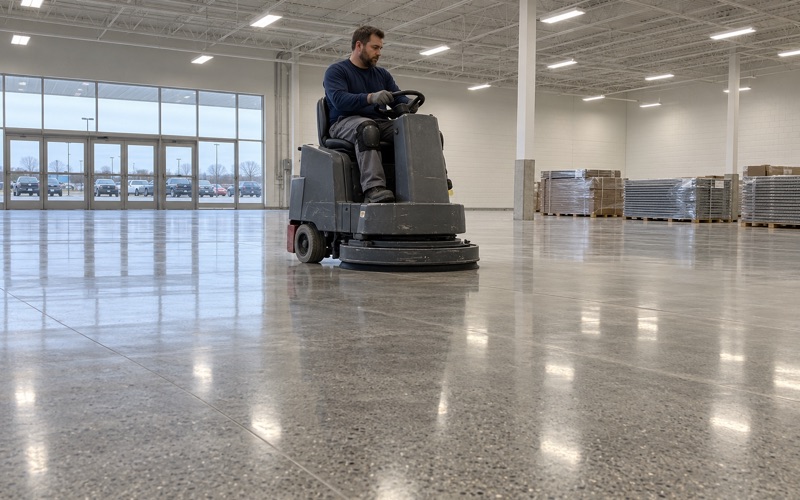
A shop that closes Saturday afternoon and reopens Monday morning gives a coating crew a natural window. A clinic that runs every day of the week, evenings included, offers no such gap. Whatever floor work happens there has to share the calendar with patients, staff, lab work and the cleaning that follows them.
That changes how a job is scoped. Instead of one long closure, the work becomes a sequence of smaller ones, each sized so the rest of the building keeps operating. The question is no longer only how fast a crew can lay the coating, but how long each section stays off-limits to the routines that come after it.
Why Daily Disinfection Changes the Plan
In a clinical space, floors are wiped down with disinfectant as a matter of course, often more than once a day. That is exactly the right practice for the room, and it is also the thing a fresh resin floor is least ready for in its first days.
A coating that feels hard underfoot is still finishing a chemical reaction inside its film. Strong cleaning chemistry put on it before that reaction is done can dull, soften or stain the surface it was supposed to protect. So the schedule for a floor like this has to answer two questions, not one: when people can walk on it, and when the cleaning crew can go back to its normal products.
Looking for epoxy-flooring closer to Lake Station? See Lake Station Epoxy-Flooring.
Walk-On Is Not Cured: The 24-Hour and 7-Day Gap
One manufacturer’s data sheet we have read puts numbers on that gap clearly. For its epoxy system, at 18C (about 64 degrees) and above, it lists foot traffic after 24 hours, light traffic after 48 hours, heavy traffic after 5 days and full chemical cure at 7 days. It also calls for one build coat per day, with overnight drying between coats.
Those are one UK maker’s figures for one product, not a rule for every resin floor. Other systems run faster or slower, and the label on the product going down is the one that governs your job. What the sheet does show well is the shape of the timeline: the floor is usable long before it is finished curing.
What Foot Traffic After 24 Hours Really Means
Foot traffic means people in clean shoes crossing the room. It does not mean rolling carts, dragged furniture, dropped equipment or a bucket of cleaner, and it does not mean the surface has reached the chemical resistance the product is known for. The floor is ready to be walked on, carefully, and that is about all.
We write each of those stages into the scope as separate dates, so the person managing the space knows what each room can carry on day one, day two and day five. When a product’s own sheet lists different intervals, those are the dates we use instead.
Full Chemical Cure Is the Date That Counts
Full chemical cure is the point at which the coating has developed the hardness and chemical resistance the manufacturer stands behind. On the sheet above, that is 7 days. Before it, the film is still vulnerable to the very products a clinic, kitchen or shop relies on to keep the floor clean.
That is why we will never tell a customer a floor is ready for anything overnight, and why we do not promise a cure time of our own. The label sets the cure date, the conditions in the room affect it, and we hand you that date in writing so the cleaning plan can follow it.
Coat Count Sets the Clock
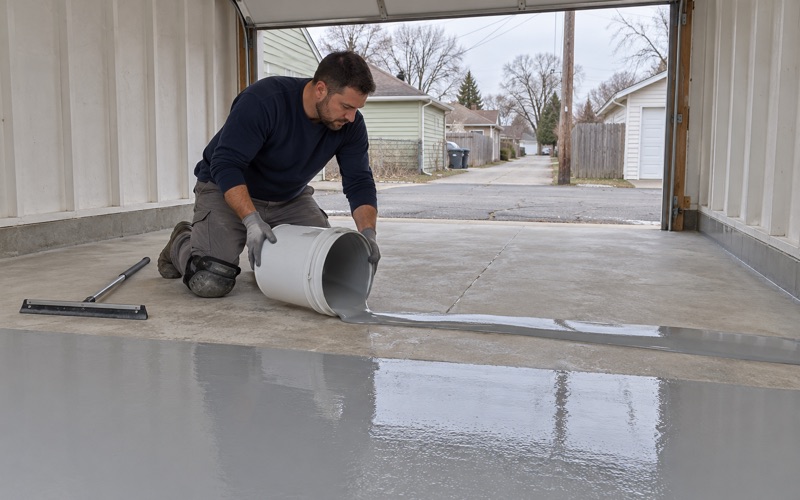
A system that goes down at one coat per day takes as many days to install as it has coats, before any cure time starts. A primer, a build coat and a topcoat is three working days for a single room, and the full chemical cure clock only begins after the last one.
This is part of why every proposal states the coat count and the finished thickness. They are not only a quality check; they are the schedule. A customer who knows the coat count can work out roughly how long a room will be out of normal use before we ever arrive.
Phasing a Floor in a Building That Never Closes
When a space cannot shut down, the floor goes in a section at a time. We map the building into zones, coat one while the others keep working, and only move on when the first is far enough along to carry the traffic it will see. The timeline is longer than a single closure, but no part of the business stops.
For a clinic-style space, that usually means starting with rooms that can be taken offline most easily, then working toward corridors and waiting areas last. Every zone has its own walk-on date and its own full-cure date, and both go on the schedule we hand over.
Room by Room, Not Building-Wide
Phasing only works if the boundaries between zones are planned before work begins. We decide where each section stops, how the edge is finished so the next pour meets it cleanly, and how staff and visitors are routed around the active area without crossing fresh coating.
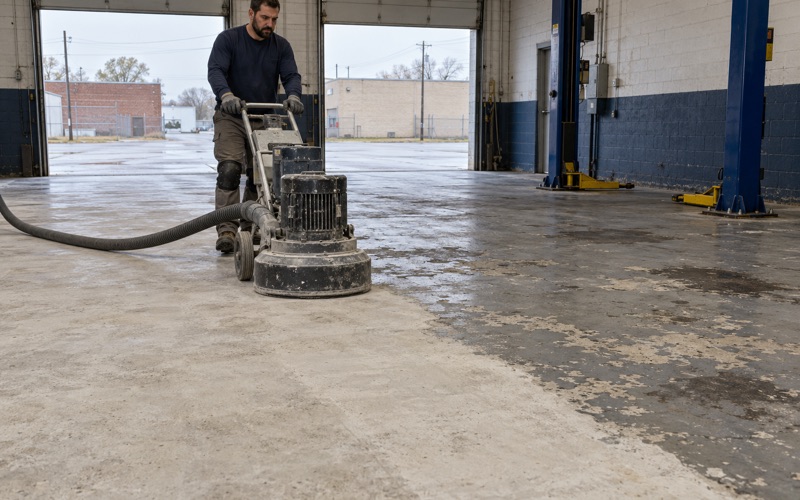
The slab in each zone is opened by diamond grinding or shot blasting, never by acid etching, so the coating bonds to a measured surface profile. Grinding dust is collected at the machine by vacuum instead of being washed toward a floor drain, which matters in a building that stays occupied while the work is going on.
Permits and Paperwork in the Village
Evergreen Park’s Building Department, at 9418 S. Kedzie Avenue, requires a contractor license to be applied for, paid and numbered before any permit issues. Permits are required for any alteration, addition, repair or remodel, and a sworn statement of total project cost goes with the application.
On a property that is not owner-occupied, the village requires a $10,000 cash bond before a permit issues, and commercial slab work must go down over VisQueen and wire mesh. We check the village’s licensing, bond and insurance rules before a job is booked, so the paperwork does not become the thing that holds up a phased schedule.
Moisture and Surface Checks Before Each Zone
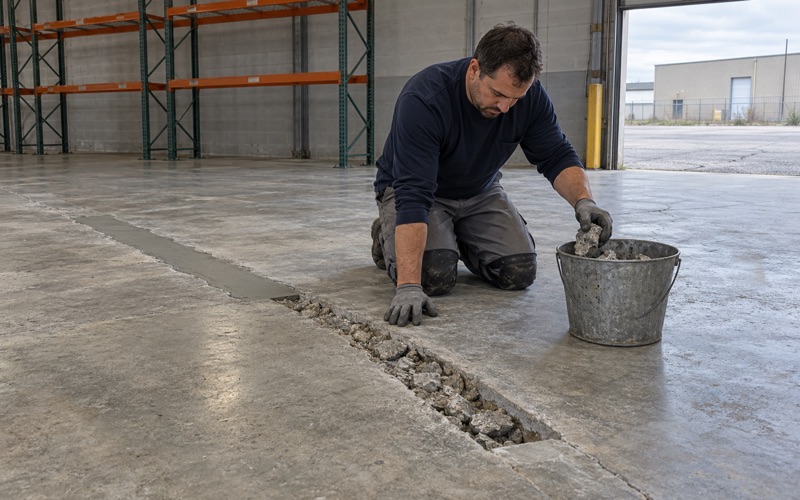
Before any section is priced, we map cracks, spalls, old paint and patched areas, and a slab that should be repaired or replaced is called out first. A coating cannot fix a floor that is failing underneath it, and in a phased job a bad patch found halfway through stalls every zone behind it.
Moisture testing is written into the scope before the price is final. The proposal names the test, whether ASTM F2170 in-situ relative humidity probes or ASTM F1869 calcium chloride testing, and the reading the slab must meet before coating. Moisture is also the first warranty exclusion we read out, because it is the failure most coating warranties leave out.
Neutral Cleaner Until the Cure Date, Then Back to Normal
Between walk-on and full chemical cure, the floor still has to be kept clean. The answer for that window is simple: water and a neutral detergent, applied gently, with no harsh chemistry and no aggressive scrubbing. Spills get wiped up promptly rather than left to sit.
Once the label’s full cure date has passed, the facility’s normal cleaning and disinfecting products can go back on the floor. We write the changeover date into the handover so the cleaning crew is working from a date, not a guess.
Holding Back Disinfectants and Harsh Cleaners
For a clinic or any space that disinfects floors daily, this hold is the most important part of the handover. Newly coated zones get water and neutral detergent only until full cure, while the rest of the building carries on with its usual products. Clear marking of which zones are on the hold keeps the two from getting mixed up.
A coating is a surface, not an infection-control measure. It is not antimicrobial, and it does not replace disinfection in any way. What a well-cured resin floor offers is a seamless surface that stands up to cleaning, and holding the disinfectant back for those first days is how it gets to that point intact.
Using a Basement or Garage the Day After the Last Coat
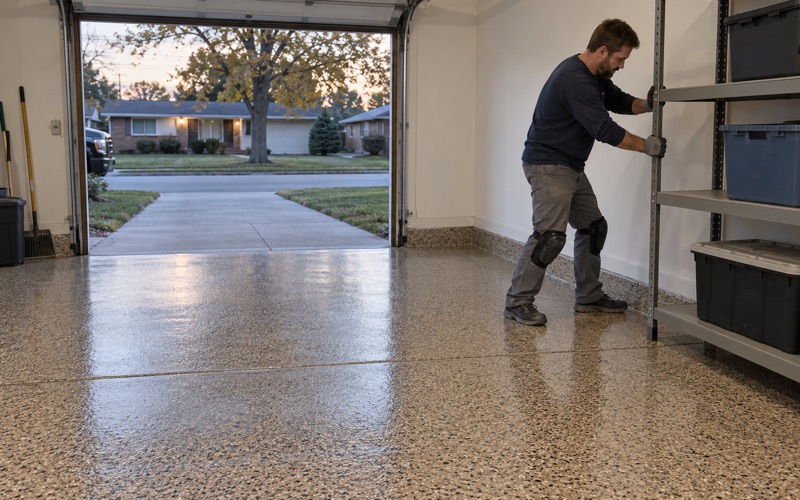
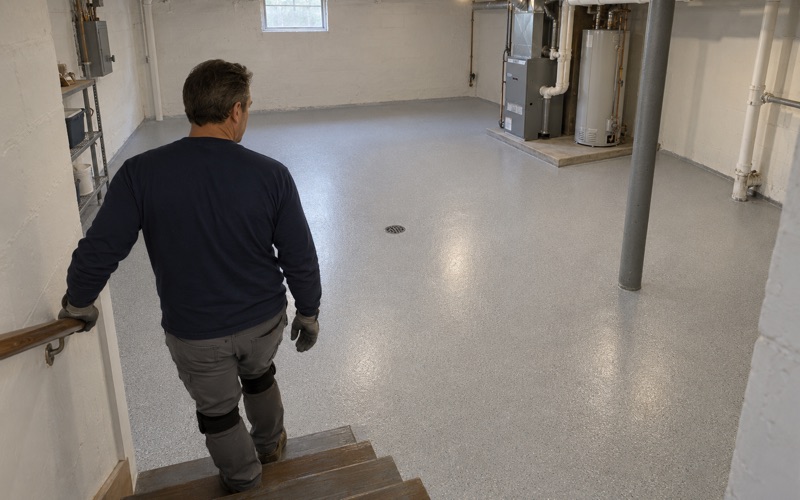
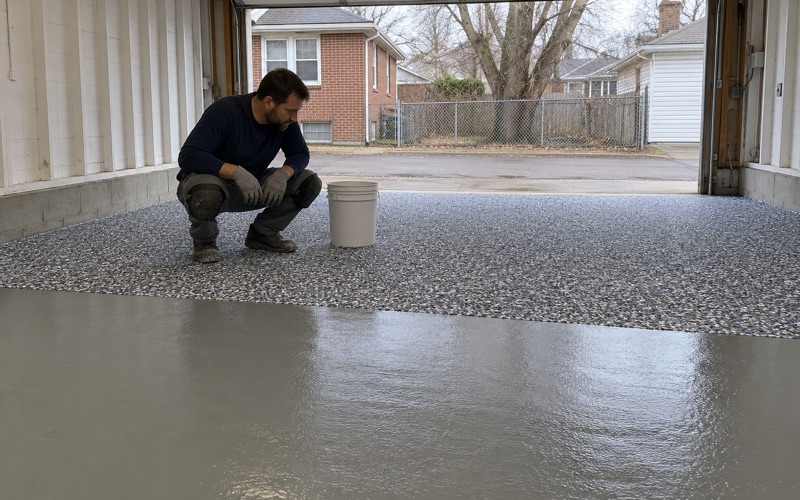
The same rule applies at home, on a smaller scale. A basement or garage coated on Friday may take foot traffic on Saturday under one maker’s figures, but that does not mean it is ready for a parked car, a run of storage shelves or a mop full of strong cleaner. Walk on it when the label says you can, and hold off on the rest until full cure.
That means keeping spills off the floor, putting heavy items back later rather than sooner, and cleaning with plain water if anything needs wiping. For garages, the system we pick is chosen to stand up to the brine and rock salt that tires carry in from December to March, which is one more reason to let it finish curing before winter traffic starts.
Slip Resistance and What the Floor Can Promise
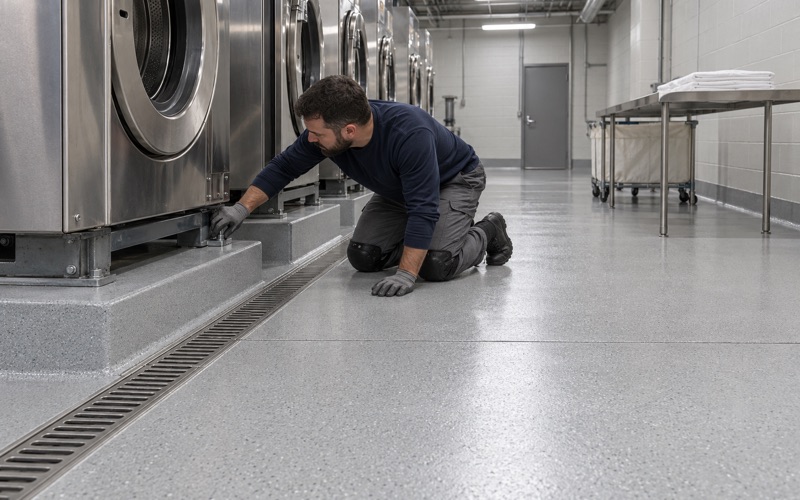
Slip resistance on a resin floor comes from the broadcast media and topcoat we specify, such as a quartz aggregate broadcast or a vinyl flake system, not from a slogan. We name the build in the proposal so the texture you are getting is on paper before the first coat goes down.
We are equally plain about what a coating is not. It is not radon reduction, it is not waterproofing and it is not flood protection, and we never sell it as any of those. What we can promise is a floor installed to the product’s own instructions, with the cure dates written down and a cleaning plan that lets it reach them.
- 20+ Years on Concrete
- Moisture Test in Every Scope
- Free Written Estimates