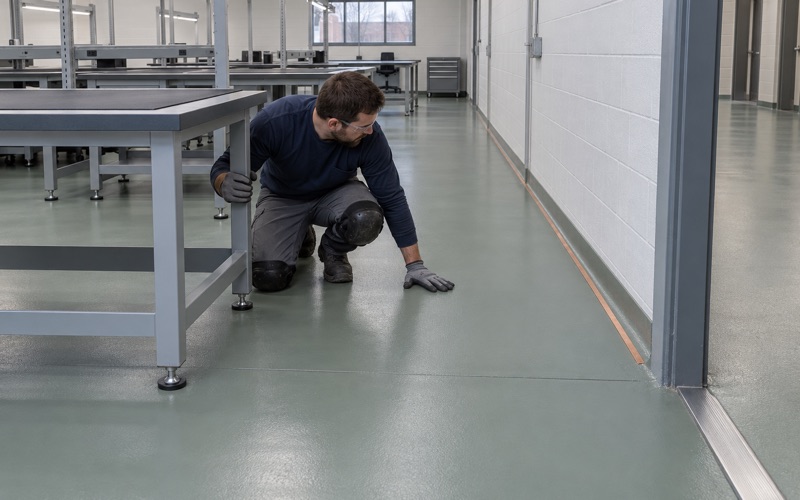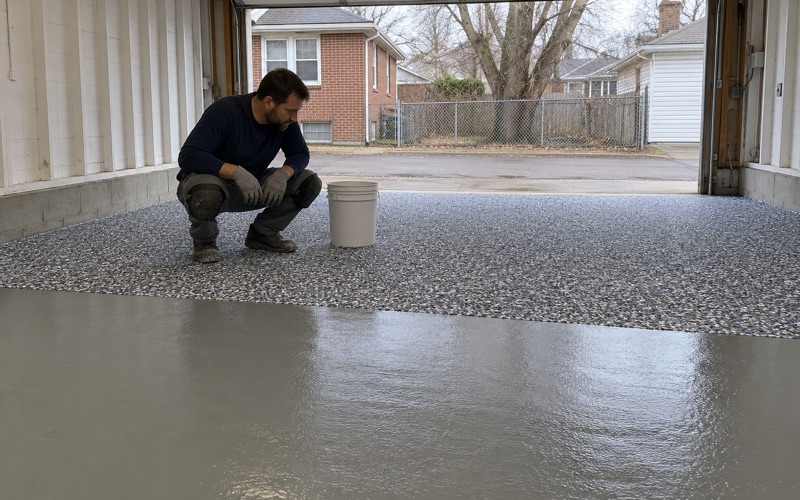
Hammond Epoxy Flooring has spent more than 20 years installing epoxy-flooring in Griffith and the surrounding Lake County towns, and the garage jobs here come with a detail most floor estimates skip: what the vehicle parked on the slab drips when it charges. We plan the coating around the use, not around a color chart.
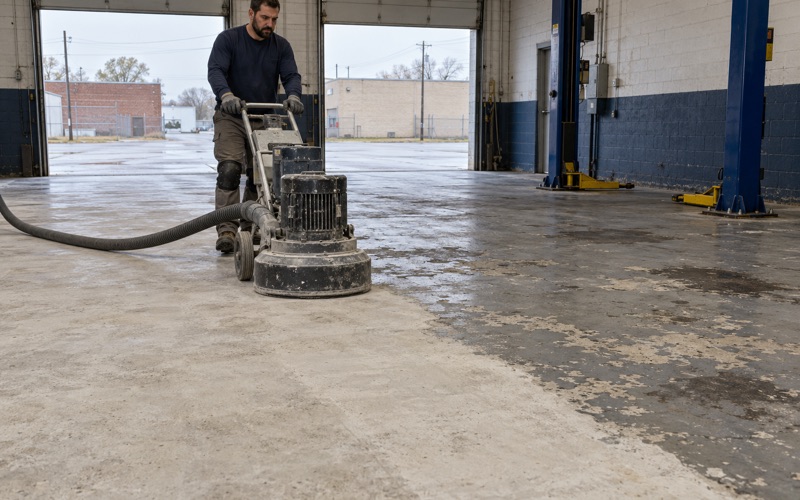
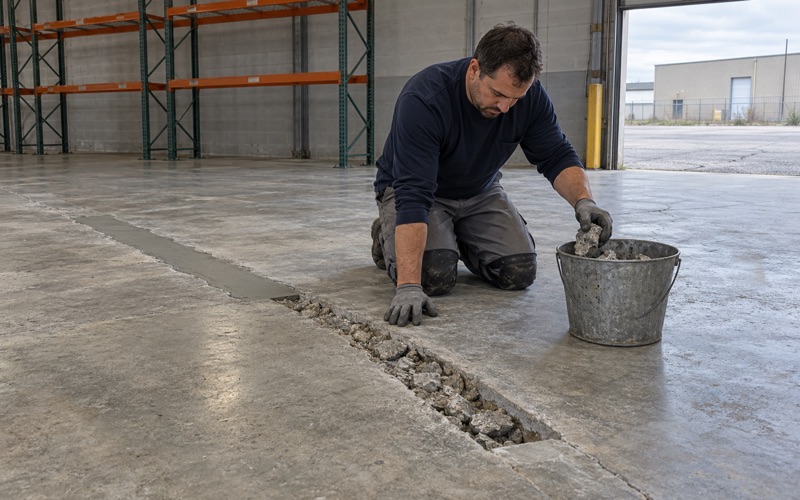
That starts with the concrete. We open it by diamond grinding or shot blasting to a measured profile, test it for moisture before the price is final, and map every crack, spall and patch so a slab that needs repair is named before anyone talks about flake colors.
What you get on paper is just as specific. Our proposal names the product line, the number of coats and the finished thickness, so the floor in your garage can be checked against the document that sold it.
Golf Carts on Griffith, IN Streets
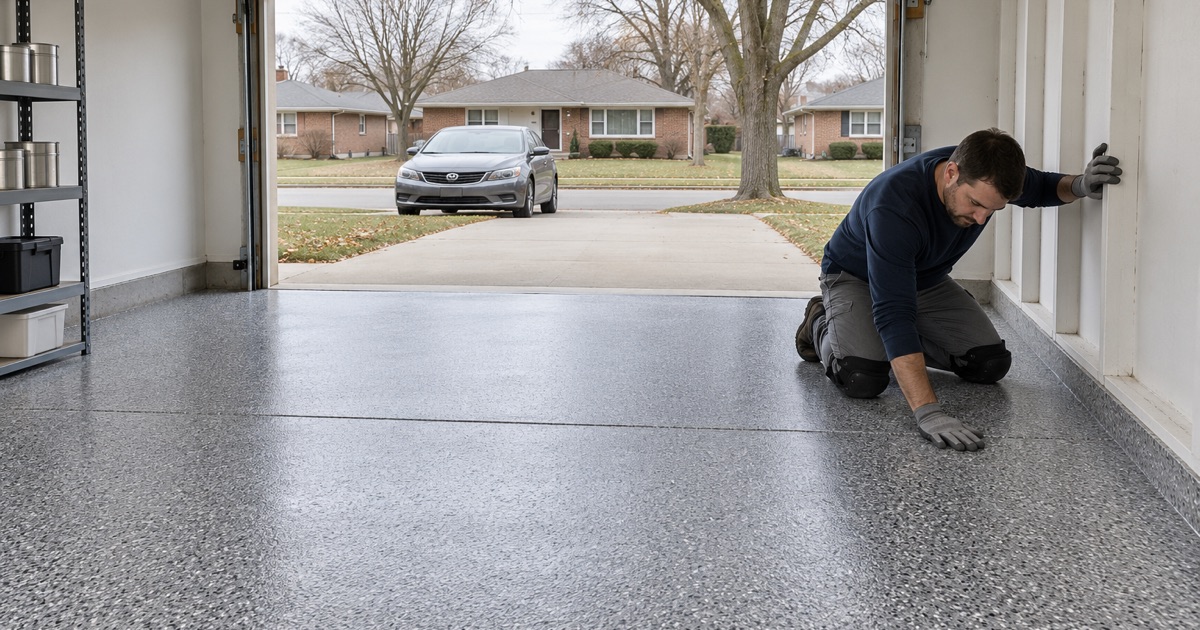
Griffith, IN is one of the towns in the region that lets residents drive golf carts on town streets, and that decision changes what a lot of garages hold. A cart that is street-permitted is a household vehicle, and household vehicles live at home.
What Ordinance 2021-26 asks of an owner
The town issues golf cart permits under Ordinance 2021-26, run through the Griffith Police Department. An owner schedules an inspection, pays a $50 initial administration and inspection fee, and then renews each year for $30, with tags that expire every December 31.
The inspection checks compliance with the ordinance, not the cart’s mechanical condition, and renewals do not require a second inspection. Owners also carry liability insurance at the level Indiana requires for motor vehicles on public highways.
The streets a cart cannot use
Permitted carts may run on town streets posted at 30 mph or less. They stay off sidewalks, state highways and the arterials, including Broad, Main, Cline, 45th (Glen Park), Arbogast, Ridge and Colfax, though they can cross those roads at crosswalks.
That map keeps carts on neighborhood blocks, which is exactly where they get parked at night. The trip ends in a driveway or a garage, and the charger cord comes out.
Where a permitted cart spends the night
Griffith is a town of owners in detached houses, and much of its housing went up in the 1950s and 1960s, so the typical garage slab is decades old. We cannot say how many permitted carts there are or which batteries they use, but a cart kept at home is most plausibly kept and charged in that garage.
Lithium and AGM carts are sealed and do not put liquid on the floor. A flooded lead-acid cart is different, and it is the one this page is about.
Looking for epoxy-flooring closer to Riverdale? See Epoxy-Flooring Services in Riverdale.
Electrolyte, Baking Soda and Rinse Water
The maintenance a flooded battery needs is simple, but nearly every step of it ends with liquid running off the cart. Here is where that liquid comes from, according to the battery maker’s own user’s guide.
What a flooded battery puts on the floor
The Trojan Battery user’s guide says fluid on top of a flooded battery may mean it is being over-watered or overcharged. That fluid is electrolyte, which is dilute sulfuric acid, and anything on top of a pack in a cart has one direction to go.
The same guide says flooded batteries must sit upright, because fluid will spill if a battery is tipped on its side or at an angle. Pulling a pack for service or setting one down off-level is another way electrolyte meets concrete.
The neutralize-and-rinse routine
The guide tells owners to always neutralize small spills with baking soda and water and never to leave an acid spill unattended. For cleaning battery tops it calls for 1 cup of baking soda per gallon of water, followed by a rinse with water and a dry with a clean cloth.
Every part of that routine is wet. The neutralizing solution, the rinse water and whatever electrolyte it carries all run down off the batteries and collect on the slab under the cart.
Why bare concrete keeps the evidence
Uncoated concrete is porous, so a spill on a bare garage floor does not stay on the surface long enough to be fully neutralized. It soaks into the paste and leaves a stain that cleaning cannot reach.
The guide also asks owners to keep the area around batteries clean and dry. On a bare slab that is a harder promise to keep, because the floor holds on to what it absorbs.
A Sealed Floor That Holds a Spill on the Surface
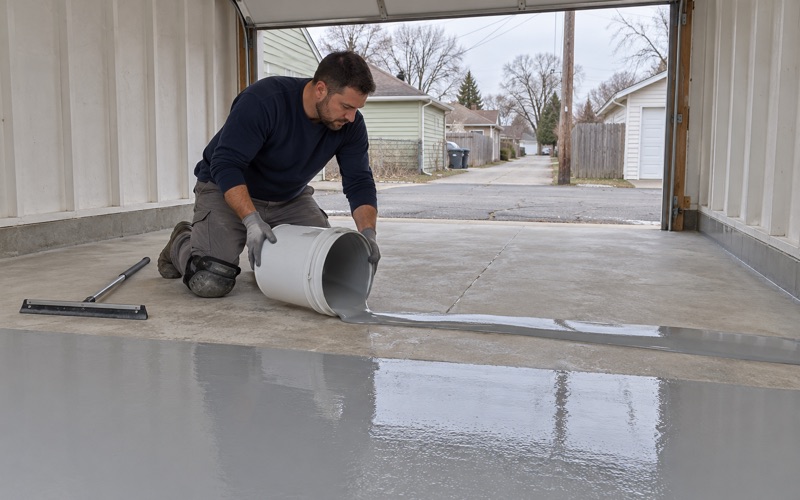
A seamless garage coating changes the cleanup. A spill that sits on a sealed surface can be neutralized with baking soda, rinsed and wiped up, which is the routine the battery maker describes, rather than drawn into the slab.
Checking the system against dilute sulfuric acid
Chemical resistance is a property of a specific product, not of the word epoxy. Before we put a coating under a charging cart, we check that system’s maker resistance data for dilute sulfuric acid and choose the base coat and topcoat from systems that are rated for it.
Systems differ, and a coating that handles road salt well may not be the right pick for a battery corner. If a cart owner tells us the pack is flooded lead-acid, that becomes part of the specification and appears in the proposal.
Opening the slab and testing it first
A coating that is going to see acid and rinse water has to bond to sound concrete. We grind or shot blast to a measured surface profile and never acid etch, because etching leaves residue and an unpredictable profile in an older slab.
Moisture testing is written into the scope, and the proposal names the test and the reading the slab has to meet. Moisture is also where most coating warranties draw their line, so we read the warranty exclusions to you before the job is sold, starting with that one.
Old slabs, old patches and the spot under the cart
Roughly two-thirds of Griffith’s housing was built before 1970, so many garage floors here carry decades of settlement cracks, spalled edges, old paint and patches from earlier owners. A coating bridges none of that well, and the low spot where rinse water collects is often right where the cart sits.
We map those defects before pricing and fill or repair them as part of the scope. If a slab is past repair and should be replaced, we tell you that first, and that replacement is concrete work the town permits separately from a coating.
Texture, topcoat and a floor that sees rinse water
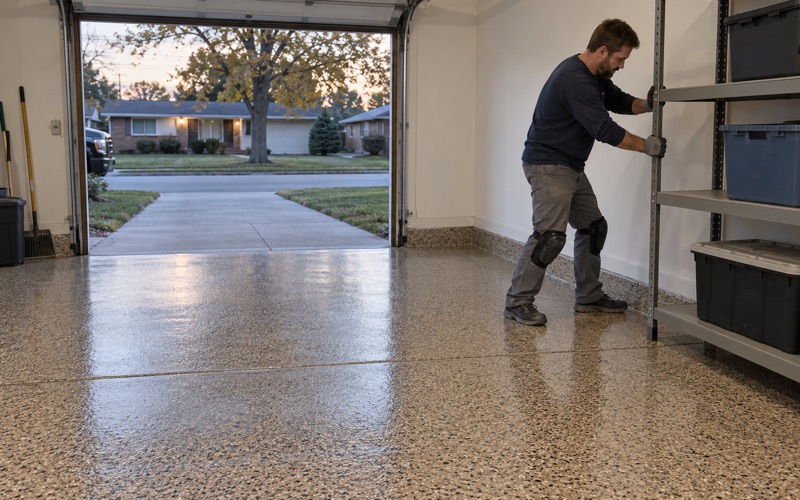
A floor that gets rinsed under a cart is a wet floor some of the time. We set slip resistance by the broadcast media and topcoat we specify, such as a vinyl flake or quartz aggregate broadcast locked in under a polyaspartic topcoat, rather than promising it in a sentence.
The same garage also takes brine and rock salt off car tires from December to March. We pick garage systems that hold up to both, and our grinding dust is vacuumed at the machine instead of being washed toward a floor drain.
Charging Corners, Cold Garages and What a Coating Cannot Do
A good floor is one part of a well-kept charging spot. It is worth being clear about which parts it covers and which it leaves to the owner.
Ventilation is a separate job
The Trojan guide tells owners to charge only in well-ventilated areas, because flooded batteries release gas, particularly while charging. A floor coating does nothing about that gas and is not a substitute for ventilation.
We will coat the corner where the cart charges, but we will not describe the coating as anything other than a floor. Ventilation, charger placement and vent caps belong to the owner and the cart’s manuals.
Setting up the charging corner
The battery guide lists what a flooded-battery owner should keep on hand: acid-resistant gloves, distilled or deionized water and baking soda. A shelf for those beside the cart, off the floor and away from the rinse path, makes the cleanup routine easy to follow every time.
The guide also asks that batteries be kept in a clean, cool and dry place, away from water, oil and dirt. A sealed floor that wipes clean helps with that, and a light-colored finish makes a fresh drip under the pack easier to spot before it dries on.
Winter charging and cure timing
The battery guide warns never to charge a frozen battery, a real consideration in an unheated Griffith garage in January. Cold affects the floor work too, because a coating cures by slab temperature and the dew point at the surface, not by the calendar.
If a garage is too cold for a proper cure, we say so and tell the owner to wait. A coating that blushes or cures soft in a cold slab is a worse floor for acid than bare concrete with a plan to coat it in spring.
Paperwork before the grinder starts
Griffith’s building department does not list a permit for residential floor coverings, but its contractor page says every contractor working for hire in town must hold a Griffith contractor license, even on work that needs no permit, with a recorded bond and insurance naming the town. We check each town’s licensing, bond and insurance rules before a job is booked.
Home jobs also carry a written contract with the items Indiana’s Home Improvement Contracts Act requires, signed before any grinding starts. Our coatings are chosen inside Indiana’s statewide VOC limits of 250 g/L for floor coatings and 340 g/L for industrial maintenance coatings, which bind the applicator.
- 20+ Years on Concrete
- Moisture Test in Every Scope
- Free Written Estimates