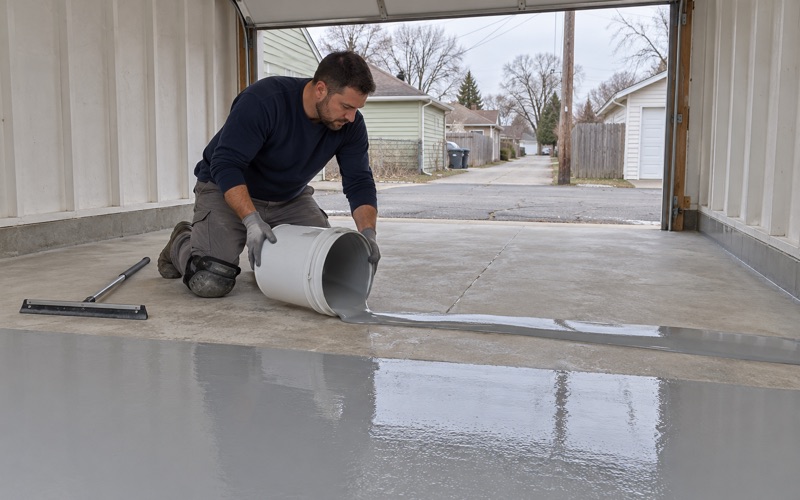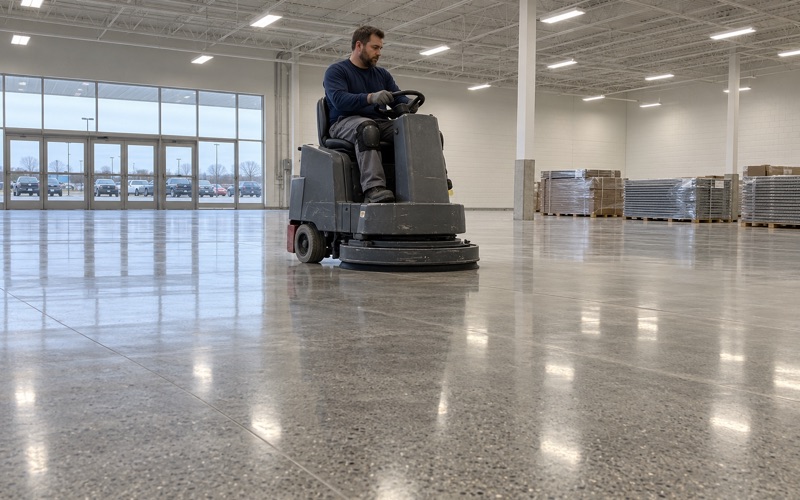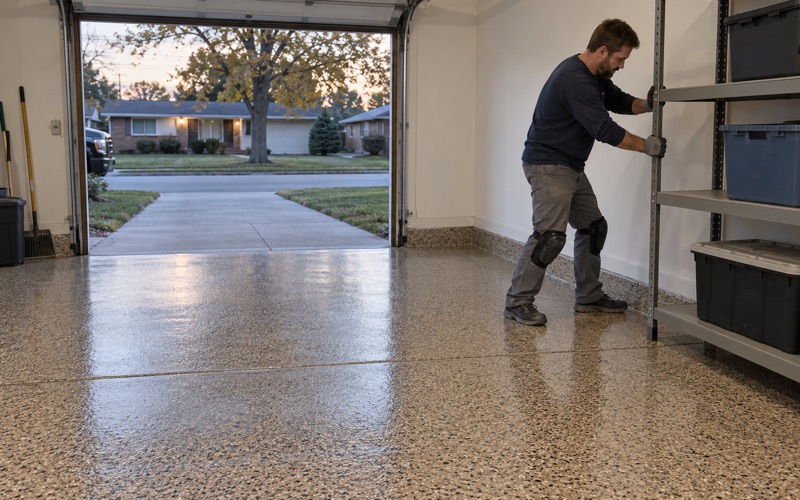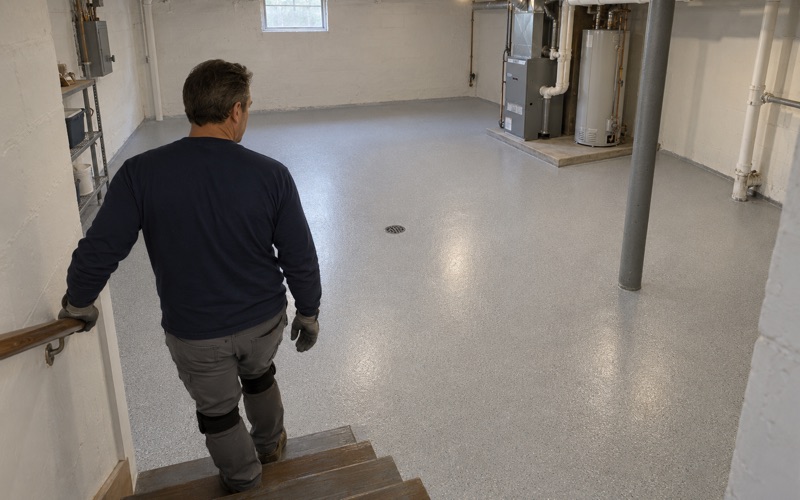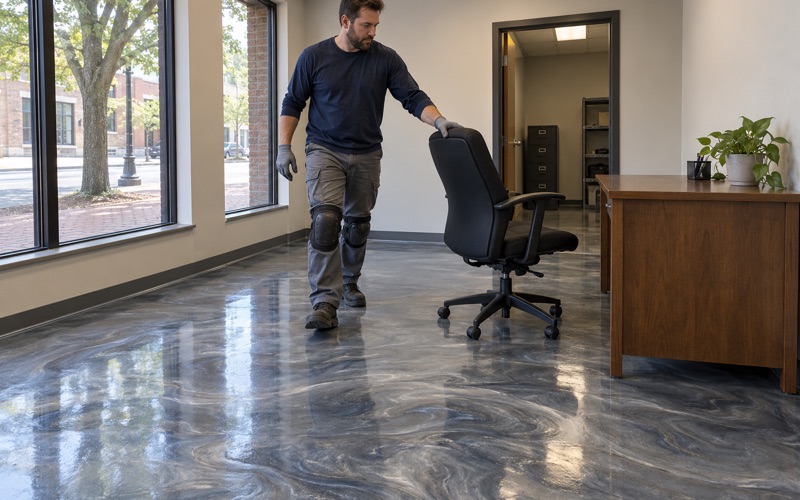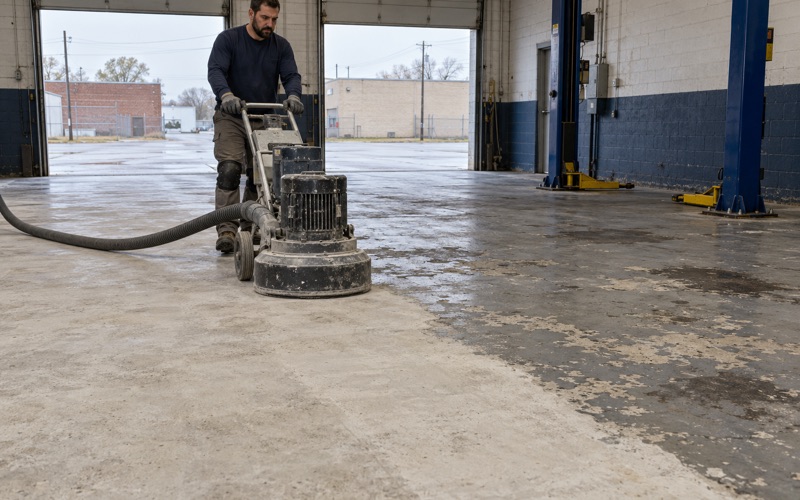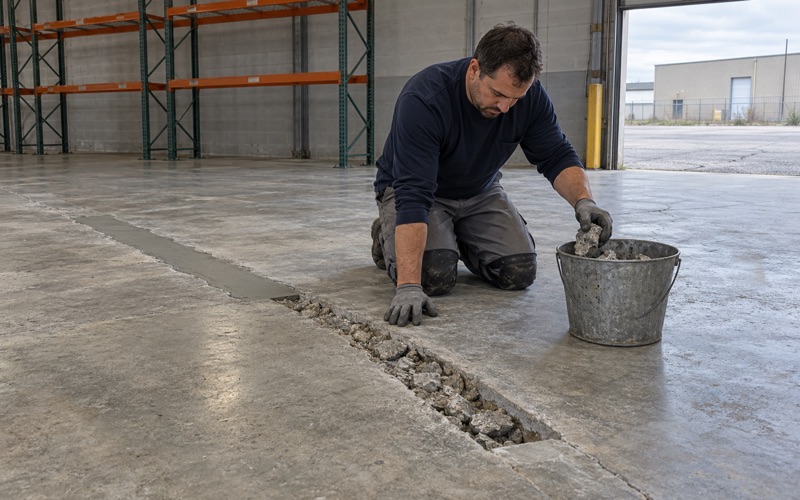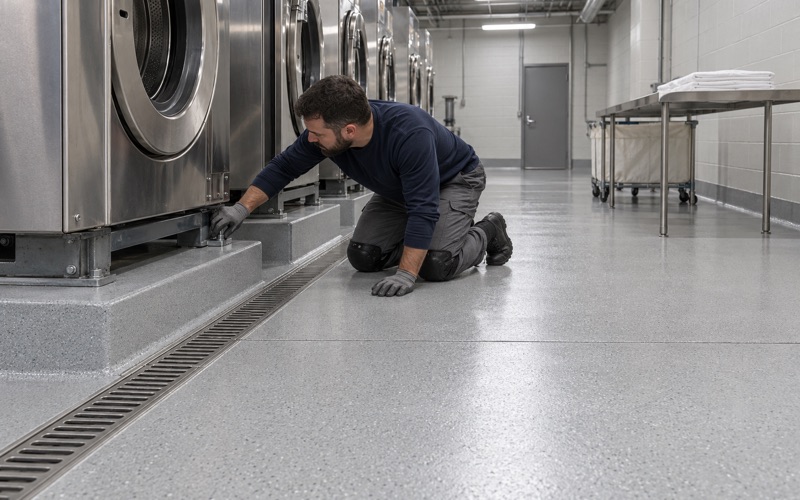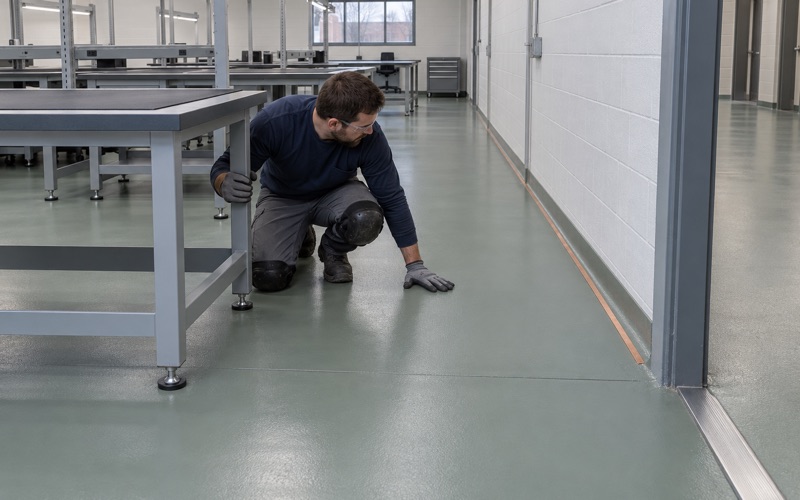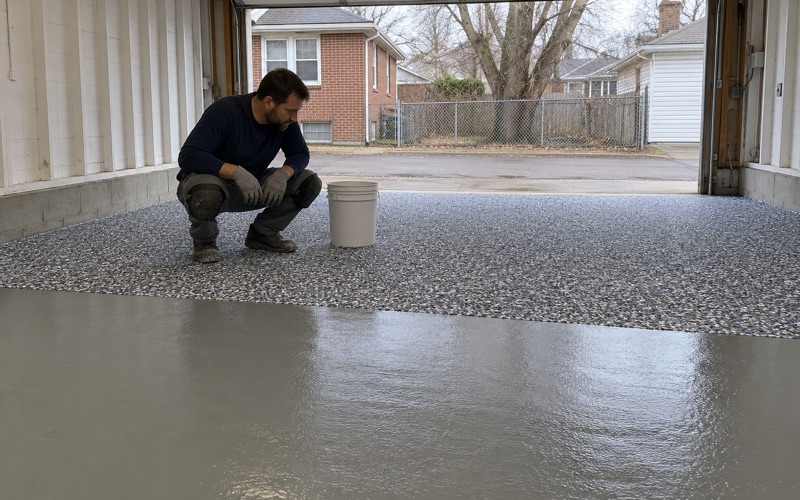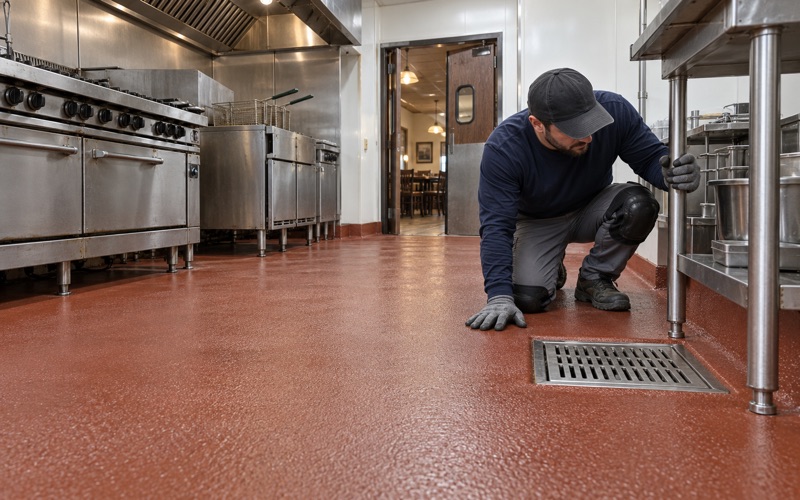
Hammond Epoxy Flooring approaches epoxy-flooring in Hickory Hills the way we have for more than 20 years: the concrete is measured before a drop of resin is mixed. We open slabs by diamond grinding or shot blasting rather than acid etching, so the primer bonds to a profile we can read against the ICRI CSP chart. A resin floor is only as good as the bond under it, and that bond starts with the surface we leave behind.
Before a price is final, our proposal names the moisture test we will run, the reading the slab has to meet, the product line, the number of coats and the finished thickness. That gives a building owner or a homeowner something to check the installed floor against, rather than a brochure. Cracks, spalls, old paint and earlier patches are mapped at the same visit, and a slab that should be repaired first is called out before any coating is discussed.
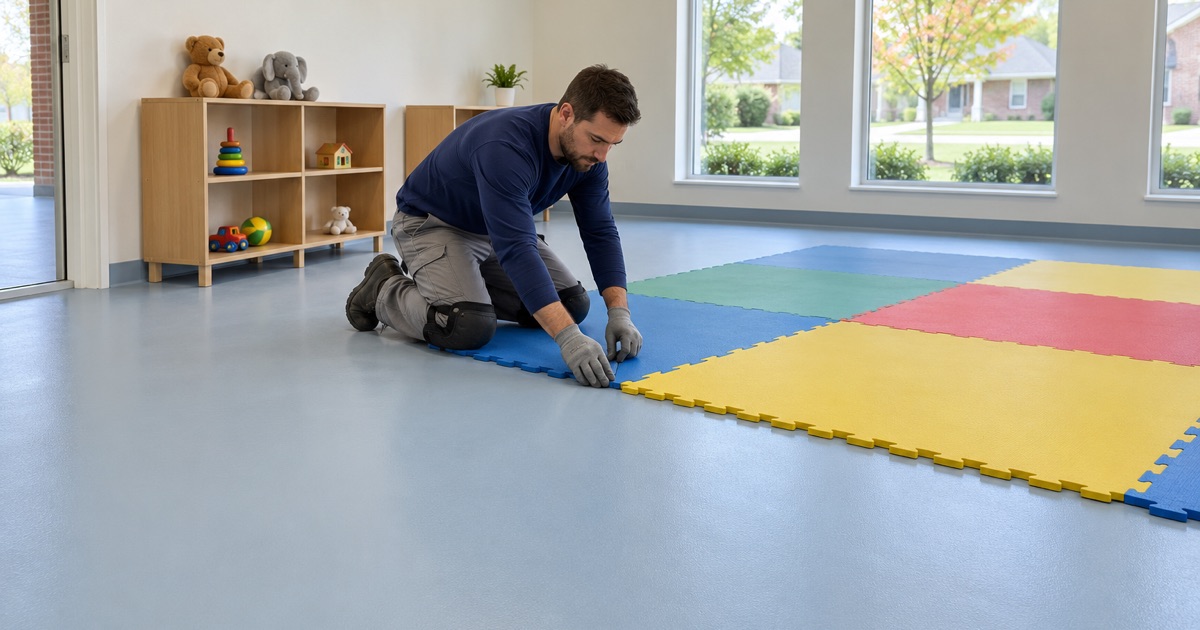
This page is about one kind of room in particular: the ground-floor space where very young children spend their day, and the basement playroom that does the same job at home. Both sit on concrete, both get mopped often, and both depend on a slab that stays dry underneath the finish. The sections below cover what Illinois licensing says about those floors, why moisture testing comes first, and how the work is scheduled.
An Early-Learning Center on 87th Street and the Rule That Names Its Floor
Easterseals and Head Start in Hickory Hills
Hickory Hills, a Cook County suburb of Chicago that counted 14,505 residents in 2020, has an Easterseals Early Learning Center on 87th Street. Easterseals Serving Chicagoland and Greater Rockford lists it among its Head Start and Early Head Start partner locations for children up to age five, and a resource directory describes a free preschool with meals for income-eligible families and 74 funded slots. In April 2023 the organization posted that the center was celebrating its Arab American community.
We have not worked there, have no tie to Easterseals, and have not seen the center’s floors, slab or licensing file. We mention it because it shows plainly what this page is about. A licensed early-learning building sits under a written state standard, and that standard happens to name the floor.
What the Licensing Standard Says About Floors
Illinois’ day care center licensing standard, 89 Illinois Administrative Code 407.370, covers physical plant and indoor space. One line says infants and toddlers shall be housed and cared for at ground level. Another says the floors and floor coverings shall be washable and free from drafts, splinters, and dampness.
Few building rules speak about a floor that directly. Read the two lines together and the ground-floor slab is where the most closely regulated rooms sit, and dampness is one of the three things their floor must be free from. The standard also has a parallel recodification with the same physical-plant wording, and which version governs a given center is a question for the operator and the state.
What the Rule Does Not Ask For
The standard asks for washable, damp-free floors. It does not ask for resin, and no coating makes a center compliant or licensed on its own. Sealed concrete, resilient sheet, tile and a resin system can each be washable, and the right choice depends on the slab and the room.
Our part is narrower and more practical. When an operator is choosing a floor for a ground-level room on concrete, we can say whether that slab will hold a resin system, which test proves it, and what the alternatives are if it will not. That answer comes before any talk of colors or flake blends.
Looking for epoxy-flooring closer to Justice? See Epoxy-Flooring Services in Justice.
Ground Level and Free From Dampness: Why the Slab Is Tested First
What Moisture Does Under a Resin Floor
Concrete laid on the ground passes moisture vapor upward from the soil below it. A 100% solids epoxy on top is far tighter than the slab, so vapor collects at the bond line, pressure builds, and the coating can blister or let go in sheets. A white bloom of efflorescence along the edges can show up well before a blister opens.
A coating does not dry a wet slab, and it does not waterproof one. It sits on whatever the slab is doing underneath. That is why, in an early-learning room on concrete or any room that must stay sound through years of daily mopping, we measure the slab first.
The Tests We Name in the Proposal
For a quick screen we may tape down a plastic sheet under ASTM D4263 and look for darkening or condensation beneath it. A screen is not a number, so the proposal also names a quantitative test: ASTM F2170 in-situ relative humidity probes set into drilled holes, or ASTM F1869 calcium chloride kits that measure the vapor emission rate at the surface.
The reading the slab must meet comes from the product’s own data sheet, and ASTM F710 sets out how resilient-floor installers approach the same question. We write that limit into the scope before the price is final. If the reading misses it, everyone knows before any grinding starts rather than after the first blister.
When the Slab Fails the Test
A failed reading is not the end of the conversation. One route is a moisture-mitigation primer, a resin built to tolerate higher vapor drive, applied after grinding and before the body coats. The other is a different floor altogether, one made to sit over a damp slab without a tightly bonded film.
Which route fits depends on how far over the limit the slab reads and on what the room has to do. A mitigation primer is not a radon barrier or a vapor system for the building, and we never sell it as one. It is a primer that gives the coating above it a fair chance to stay bonded.
Washable Floors, Water-Play Corners and Work Done While Children Are Away
Water Play and Painting Areas
The licensing standard allows carpet to control noise but says it shall not be required in water play, painting, and similar areas. Those corners get wet and stained on purpose, and they are where a seamless, washable surface earns its place. A resin floor with no grout lines and a coved edge at the wall leaves fewer seams for water and paint to work into.
The same corners are where slip resistance matters most, because water ends up on the floor by design. We specify it by the broadcast and the topcoat, such as a fine quartz aggregate broadcast or a textured polyaspartic topcoat, chosen so the floor still mops clean. A smooth high-gloss finish looks tidy and reads as safe right up until the first spill.
Scheduling the Work Around Children
The standard says major cleaning shall not be done while children are present, and floor work is a heavier job than any cleaning. Grinding makes dust and noise, resin gives off odor while it cures, and a fresh coat cannot take foot traffic until it has hardened. So in an early-learning room the grinding, coating and cure are scheduled for times children are away, such as weekends or a planned closure.
We vacuum grinding dust at the machine rather than sweeping or washing it toward a drain, which keeps it out of the rest of the building. Coatings are chosen inside the VOC limits of 35 Illinois Administrative Code Part 223, which bind the applicator. Return-to-service times go in writing, so an operator knows the room will be ready before children come back.
Washable Is a Cleaning Question
Washable means the floor survives the cleaning a room actually gets. The standard says a center shall be cleaned daily and kept in a sanitary condition, which puts detergent and disinfectant on the floor every day. The topcoat has to resist those products rather than dull or soften under them, and a polyaspartic or urethane topcoat over the epoxy body coat is the usual way to carry that resistance.
Drafts and splinters are the other two words in that floor sentence. A resin floor bonded to concrete has no boards to splinter, though it does nothing about drafts, which belong to the building envelope. We say so plainly, because a floor that answers one word of the rule should not be sold as answering all three.
Basement Playrooms in Hickory Hills Homes
Slabs From the 1960s and 1970s
Census figures show that more than half of Hickory Hills housing units were built between 1960 and 1979, with the 1960s the largest single decade. A basement or garage slab of that era generally predates the practice of laying a vapor retarder under the concrete. That does not make every such slab damp, but it does mean nobody should assume one is dry.
Owners occupy 4,005 of the city’s 5,630 occupied homes, and detached houses make up the largest share of its housing. When one of those families turns a basement into a playroom, the floor is a slab on the ground with the same question under it as any classroom.
The Same Test, First, at Home
A basement playroom gets the same order of work as an early-learning room: test, then decide, then coat. We run a moisture test before the price is final, read the result against the product’s limit, and tell you whether the slab will hold a resin floor. If it will not, a moisture-mitigation primer or a different floor is the honest recommendation, and so is fixing any water problem at its source first.
We grind the slab to a measured profile, fill cracks flush, and build the floor with a broadcast that keeps socks and small feet from sliding on a freshly mopped surface. A vinyl flake broadcast also hides scuffs and crumbs between cleanings. No floor coating is ever sold as waterproofing, flood protection or radon reduction, and a basement that takes on water needs that fixed before any resin goes down.
City License, Insurance and the Written Contract
Hickory Hills requires a city contractor license for work in town, at $100 per calendar year from January through December, with no half-year option. A certificate of insurance naming the city as holder goes with the application, and a copy must reach the homeowner or business owner before work begins. The city asks for no bond, and its hauler does not take contractor debris, so the grinding waste leaves with the crew.
We check those rules before a job is booked. Illinois licenses no flooring or coatings contractor at the state level, which makes the city’s own requirements the ones that bind. A home job carries a written contract naming the test, the product line, the coat count and the finished thickness, signed before any grinding, and the warranty exclusions are read out first, starting with moisture.
- 20+ Years on Concrete
- Moisture Test in Every Scope
- Free Written Estimates