
Hammond Epoxy Flooring installs industrial epoxy flooring in Hammond, IN, serving surrounding cities including Griffith, Riverdale, Harvey, Dyer and Homewood. Industrial floors carry forklifts, pallet jacks, hot tires, dropped parts, oils and process chemicals, often around the clock. After more than 20 years on concrete, we design each floor around what actually happens on it, zone by zone, rather than selling one coating for the whole building.
Hammond’s economy runs on plants, rail and logistics. The city’s own employer list includes Unilever’s soap plant, Cargill’s corn-based starch operation, Lear’s seat plant, Meat by Linz’s packaging facility and the Indiana Harbor Belt Railroad, along with distribution and fleet operations across Lake County. Floors in buildings like these need systems matched to wheel loads, chemicals, temperature and cleaning.
Every industrial proposal names the system for each zone, the product line, the coat count and the finished thickness, plus the phasing plan agreed with operations. Slabs are shot blasted or diamond ground, repaired and moisture tested before any coating goes down.
Matching the System to the Floor
Warehouse and Distribution Floors
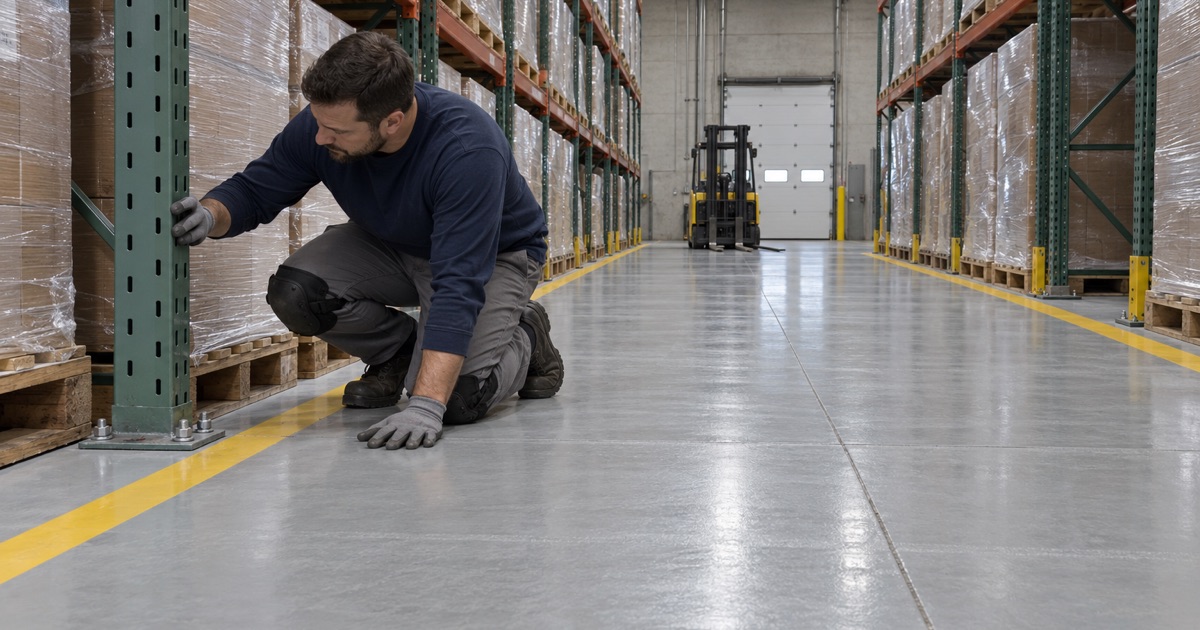
Warehouse floors take constant forklift and pallet jack traffic. Hard polyurethane wheels put heavy loads on small contact areas, and every turn grinds at the surface. A high-build or troweled epoxy in travel lanes, with lighter systems in storage areas, gives durability where it is needed without overspending on racked floor space.
Joints are the weak point. Rebuilt and filled joint edges stop wheels from chipping the slab and the coating at every crossing, which is where most warehouse coatings start to fail.
Production and Food Plant Floors
Food and consumer-goods plants often wash floors down every shift with hot water and sanitizers. Standard epoxy softens under repeated thermal shock, so wet production zones usually get urethane cement, while dry packaging and storage areas can use epoxy. Floors are sloped to drains and finished with cove bases where the plant’s sanitation plan calls for them.
We split the floor by exposure in the scope so each area gets the right system, rather than forcing one product to cover rooms with very different conditions.
Rail, Fleet and Truck Shops
Shop floors take hot tires, heavy equipment, oil and coolant drips, solvents and the brine and rock salt that trucks carry in all winter. We use a thick, chemical-resistant base with a broadcast for grip and a topcoat that resists fuels and fluids, and we detail trench drains and pits so fluids are easy to clean up.
Oil-soaked shop slabs are degreased, ground and tested until they take a primer evenly, because coating over oil that bleeds back guarantees peeling.
Chemicals, Heat and Impact
Chemical Resistance
Every coating has limits. Acids, caustics, solvents, sugars and fats each attack resins differently, so we ask what lands on the floor, at what concentration and temperature, and how often. The proposal names the topcoat chosen for those exposures, and we mark areas where spills need prompt cleanup.
Secondary containment areas around tanks and drums need extra attention, with coatings rated for the stored chemicals and properly sealed joints.
Thermal Shock and Hot Wash-Down
Hot water, steam cleaning and hot process spills expand the coating faster than the concrete beneath it. Repeated cycles crack and lift standard epoxy. Urethane cement is built for that exposure, and we use it wherever hot cleaning or thermal shock is routine.
Cold matters too. Freezer and cooler floors, and dock areas that open to winter air, move through wide temperature swings that stress both the slab and the coating. We pick systems rated for the temperature range in each room and schedule installs in freezers around the time needed to bring them back down.
Impact and Abrasion
Dropped parts, dragged pallets, steel wheels and tools wear and chip thin coatings. In impact zones we use thicker troweled mortars or broadcast systems that absorb abuse, and we can recommend steel plates or wear strips at dock edges and machine bases where nothing will hold up for long.
Damage to an industrial floor is usually concentrated in a few places: dock aprons, turning points at aisle ends, the area in front of a machine and the path a pallet jack takes from receiving. We map those wear points during the walk-through and build them up first, so the floor’s weakest spots get the most material rather than the same coat as everywhere else.
Safety, Rules and Scheduling
Slip Resistance and Striping
Slip resistance comes from the broadcast media and topcoat, not a promise. Wet areas get a quartz broadcast or anti-slip additive sized to the traffic and cleaning. Aisle lines, walkways, forklift lanes and hazard zones are built into the coating, so they wear at the same rate as the floor rather than peeling off the top.
We lay out the striping plan with your safety team before the topcoat, using the facility’s own colors for walkways, forklift lanes, storage and hazard zones. Changing a layout later is possible, but building the right one in from the start costs far less than grinding lines out and starting over.
VOC Limits and Air Quality
Indiana’s 326 IAC 8-14 caps floor coatings at 250 g/L and industrial maintenance coatings at 340 g/L. Hammond is in North Township, inside the Chicago 2015 ozone nonattainment area, while Illinois sites follow Part 223 of Title 35 of the Illinois Administrative Code, with the national rule in 40 CFR 59 Subpart D behind both. These limits bind the applicator, so we choose compliant products for every job.
Phasing Around Shifts and Shutdowns
Plants rarely close for flooring. We schedule around shifts, planned shutdowns, weekends and holidays, isolating each zone with barriers and dust control, and use fast-cure systems so areas return to service on time. Grinding dust is captured at the machine and never washed into trench drains or storm inlets.
The phasing plan is written into the proposal and reviewed with operations and safety staff before mobilization, so everyone knows which areas are closed, when they reopen and how traffic will be rerouted in between.
- 20+ Years on Concrete
- Moisture Test in Every Scope
- Free Written Estimates