Hammond Epoxy Flooring has spent more than 20 years on epoxy flooring in La Grange and the rest of our service area, and floors that dogs walk on all day are a job we scope differently from a showroom floor. Claws drag across a coating every time a dog turns, sits or gets up. The question is not whether the surface will mark, but how the marks will look and what happens when the top layer wears thin.
That changes what we put on top. A hard topcoat, a satin or low-sheen finish, a light texture and a clear wear layer that gets renewed on a schedule do more for a pet floor than a deep gloss ever will. We explain that plan before anyone signs, along with what it takes to keep the floor up over the years.
The same thinking carries from a veterinary exam room to a home garage where the family dogs come in from the yard. Below we walk through the clinic case first, then the topcoat choices, the recoat cycle and how the plan fits a La Grange house.
A Small Animal Clinic and What Claws Do to Floors
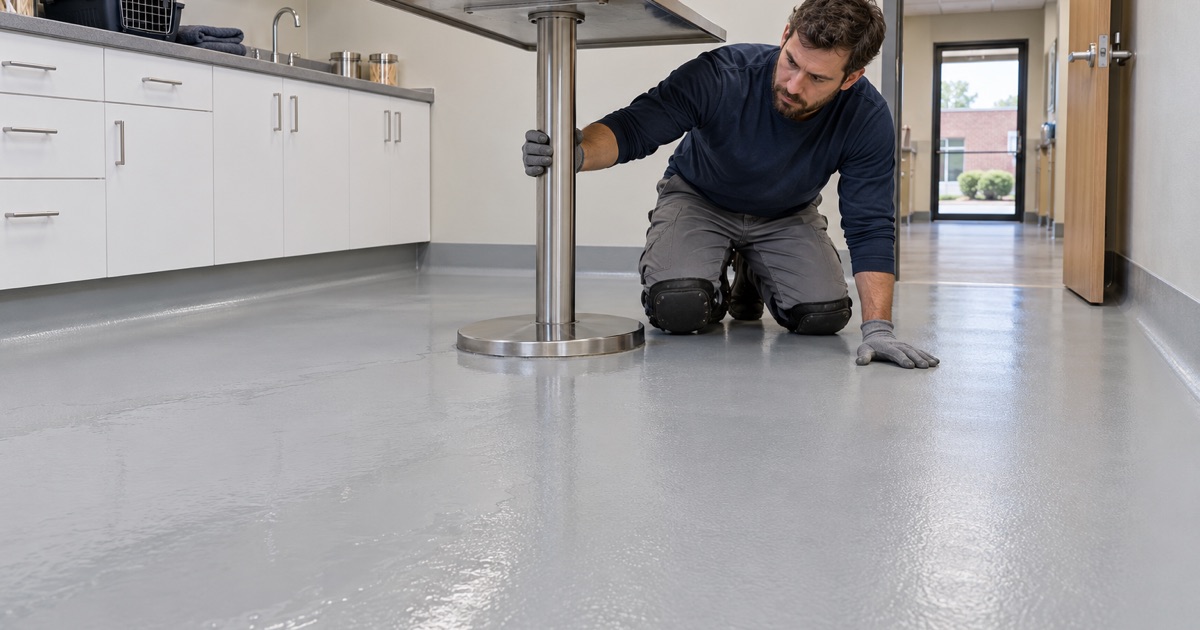
One Doctor on South La Grange Road
Green Paws Veterinary Care sits at 617 South La Grange Road, inside the village limits in Lyons Township. A job posting for the practice describes a small, independently owned, single-doctor clinic equipped with digital radiography, digital dental radiography and a therapeutic laser. It is the kind of building where dogs wait in the lobby, step onto a scale and stand on an exam room floor every working day.
We have no relationship with the practice and have never looked at its floors, so nothing here describes what is installed there. We use it because it is a concrete La Grange example of a working floor that carries paws all day. Any owner of a clinic, grooming room or boarding space faces the same choice about how a coating should age.
What Shelters Report After Years of Dog Nails
Animal shelters outside La Grange have written plainly about coated floors on a 2024 Maddie’s Fund professionals forum. Midwest Animal Rescue & Services said its painted adoption-center floor is “atrociously scratched up” from dog nails, though it did not name the coating. Headwaters Animal Shelter wrote that its original epoxy painted floors failed after five years.
Headwaters added that its clear coat sealer lasts 5 to 7 years depending on wear and tear and “will have to be updated as needed.” Northern Chautauqua Canine Rescue chose polyaspartic and reported that it “Can’t see scratches or damage so far.” These are anecdotes from people who live with the floors, not lab tests, but they point the same way.
No Coating Escapes Claw Marks
No floor coating we install is immune to claws, and we will not describe one that way. Manufacturers market hard, filled polyurethane topcoats for abrasion resistance, and some publish comparisons against standard coatings, but those numbers are the maker’s own claims. What we can promise is a finish chosen to hide fine scratching and a plan for when the wear gets deeper.
That honesty matters most at the color layer. Fine scratches in a clear topcoat read as a soft haze, while a scratch that cuts through to a pigmented coat shows as a bright line. The goal on a pet floor is to keep the damage in the clear layer, where it can be renewed, and away from the color underneath.
Looking for epoxy-flooring closer to Burr Ridge? See Epoxy-Flooring in Burr Ridge.
Hard Topcoats, Low Sheen and a Little Texture
A Hard, Filled Wear Coat
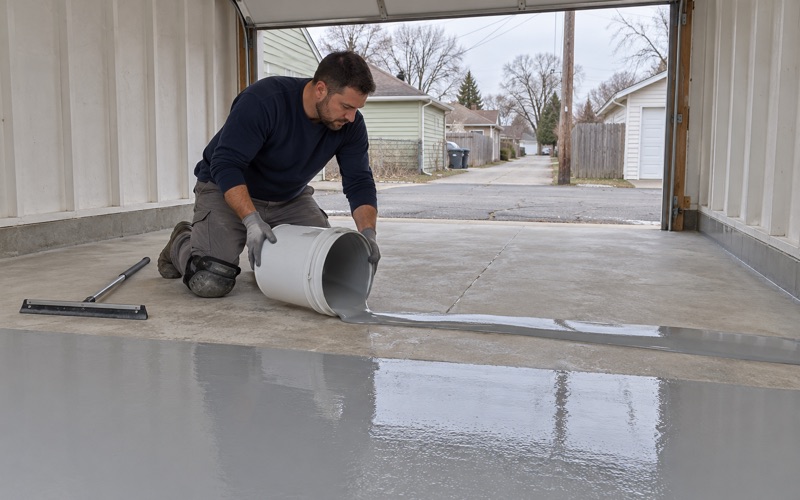
The topcoat carries the claw traffic, so it is the layer we spend the most time choosing. Over a 100% solids epoxy base we typically look at a hard polyurethane or polyaspartic topcoat, sometimes with a fine filler meant to raise abrasion resistance. The proposal names the product line, the coat count and the finished thickness, so the floor that goes down can be checked against the paper.
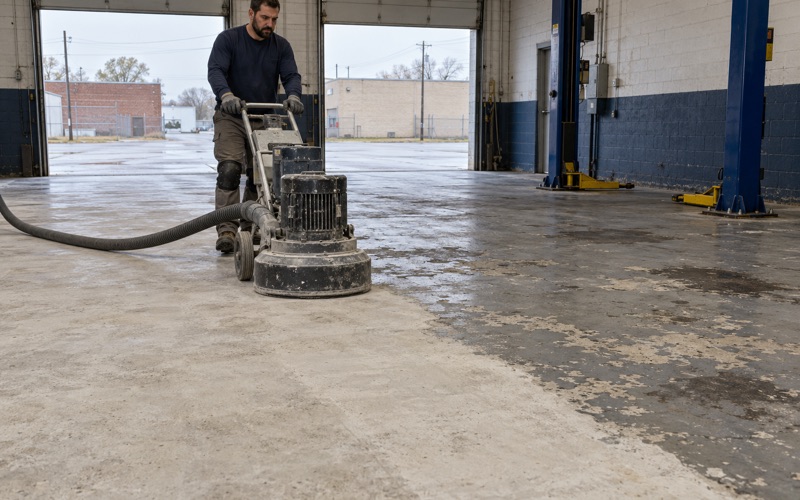
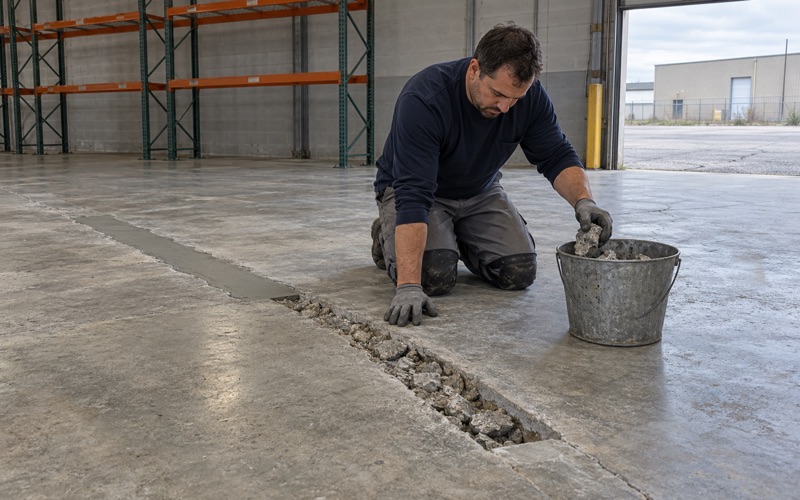
Before any coating, the slab is opened by diamond grinding or shot blasting to a measured ICRI CSP profile, never by acid etching. A topcoat is only as durable as the bond beneath it, and a scratched floor that also peels is two problems at once. Cracks, spalls and old paint are mapped first, and a slab that needs repair is named before the price is set.
Satin Instead of Mirror Gloss
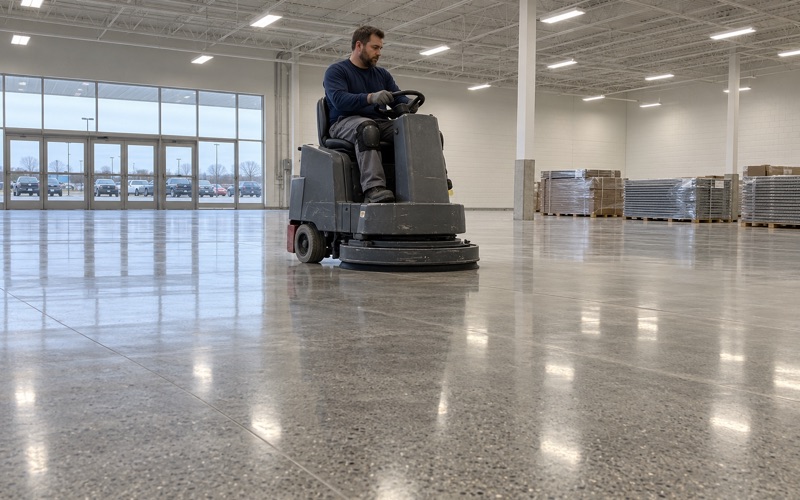
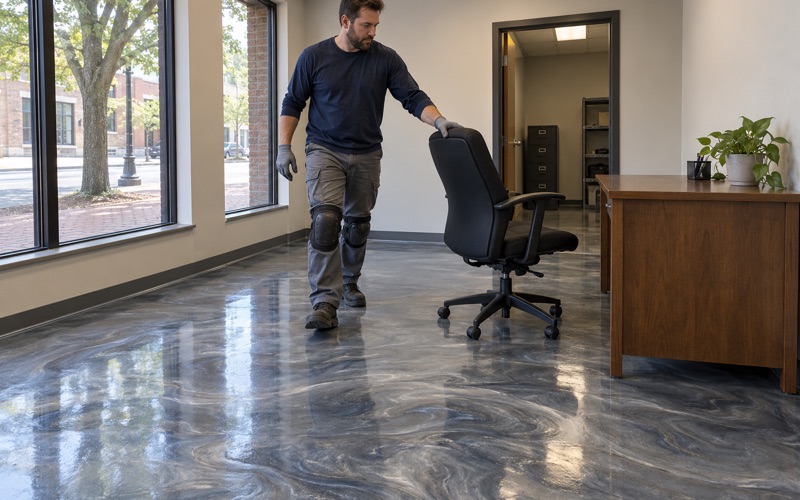
A high-gloss finish looks striking on the day it cures and shows fine scratches quickly under dog traffic. Light catches each mark at a low angle, which is exactly how a person looks across a lobby or exam room floor. A satin finish or other low-sheen topcoat scatters that light, so the same fine scratching reads as normal wear rather than damage.
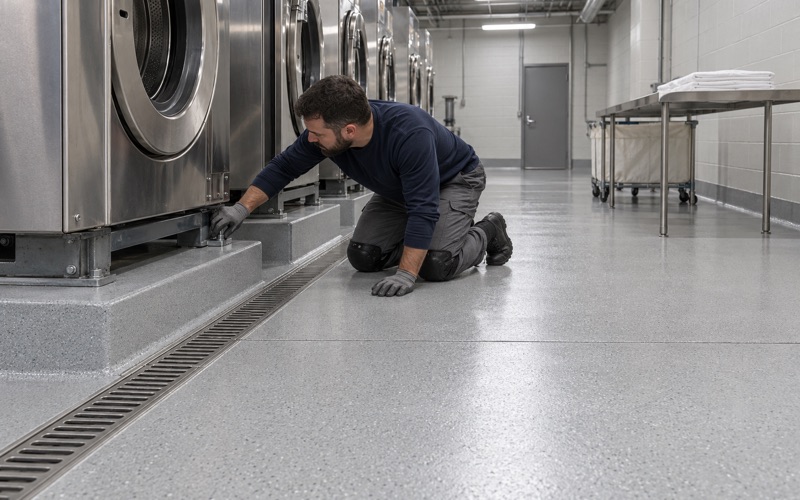
Color helps too. Mid-tone grays and vinyl flake blends hide marks and tracked-in grit better than a solid dark color or a pure white. We show samples under the room’s own lighting when we can, because sheen behaves differently under clinic fixtures than it does in daylight through a garage door.
A Light Texture Without a Dirt Trap
A fine texture in the topcoat breaks up the glare that makes scratches visible, and it gives the surface a less slick look. We set it through the broadcast media and the topcoat chosen, so slip resistance is a written specification rather than a slogan. The texture is kept light enough that a mop still glides and hair does not collect in it.
Texture also changes how a floor wears. A coarse grit stands up above the clear coat and takes the first abrasion, while a fine one stays buried in the film where it protects the layer below. We choose the grade for the room’s actual traffic and record that choice in the proposal.
The Clear Coat as a Wear Layer You Plan to Renew
Screening and Recoating Before Claws Reach the Color
We treat the clear topcoat as a sacrificial layer, there to be worn so the color coat beneath it is not. When it dulls and the haze of fine scratches thickens, the surface is cleaned, lightly screened with an abrasive pad and given a fresh clear recoat. That is a far smaller job than grinding a failed floor back to bare concrete.
Timing is the whole trick. A recoat bonds well to a sound clear layer that has only been scuffed, and poorly to a floor that has worn through in patches to the pigment. Waiting until scratches show color usually means a bigger repair in the busiest lanes, such as the path to the scale or the doorway into an exam room.
Setting a Recoat Schedule
The Headwaters figure of 5 to 7 years for a clear coat is one shelter’s experience, not a rule, and a busy clinic lobby may need attention sooner than a quiet back hallway. We suggest a check at a set interval after installation, comparing the high-traffic lanes with the edges of the room. The wear pattern tells us when the recoat is due.
Cure timing for a recoat follows slab temperature and dew point rather than the calendar, the same as the original floor. For a clinic that is closed some days of the week, that often means working on those days so the surface can cure before animals return. We plan the schedule around the cure, not the other way around.
What the Proposal Spells Out
Our proposal names the topcoat, its sheen, the texture grade and the expected recoat interval as a range we explain rather than a promise. Warranty exclusions are read out before the job is sold, starting with moisture, which most coating warranties leave out. Claw scratching in the clear layer is normal wear, and we say so up front rather than after the first complaint.
Moisture testing is written into the scope before the price is final. The proposal names the test, such as an ASTM F2170 relative humidity probe or an ASTM F1869 calcium chloride test, and the reading the slab must meet. A topcoat chosen well for claws will still fail if vapor pushes it off from below.
Dogs, Garages and Mudrooms in La Grange Homes
Older Slabs Are Tested First
La Grange is mostly owner-occupied, at 81.5 percent of occupied units, and only 121 detached houses are rented, so the person deciding on a garage or mudroom floor is usually the household that lives with the dogs. More than a third of the village’s housing, 2,237 units, was built in 1939 or earlier, and nearly two-thirds predates 1960.
Those older slabs all predate ASTM E1745, first published in 1997, which defines a modern under-slab vapor retarder. A basement or garage floor in an older house is tested for moisture before it is coated rather than assumed dry. The village’s own permit page lists no permit for replacing existing flooring, though it requires one to add, alter or enlarge a garage.
Garages Where Dogs and Salt Both Come In
A garage that doubles as the dogs’ entrance takes claws and road salt at once. Brine and rock salt carried in on tires from December to March attack a weak coating, and dog nails then scratch through softened spots faster. We pick garage systems to stand up to that salt, then finish them with the same hard, low-sheen clear coat a clinic would get.
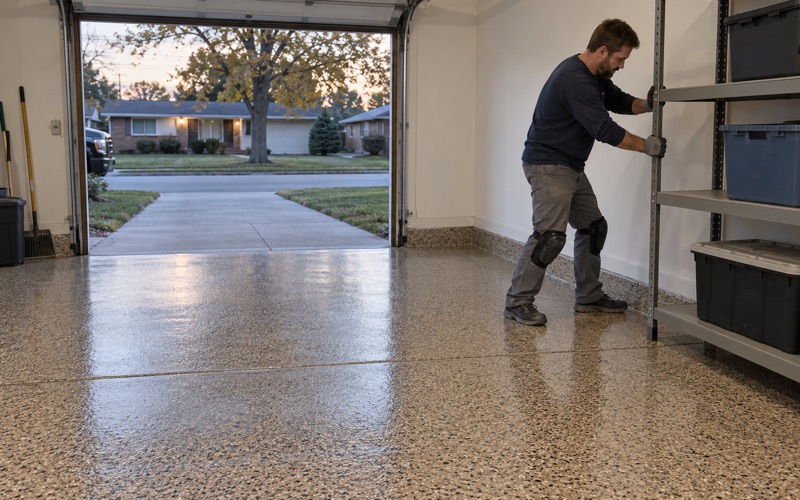
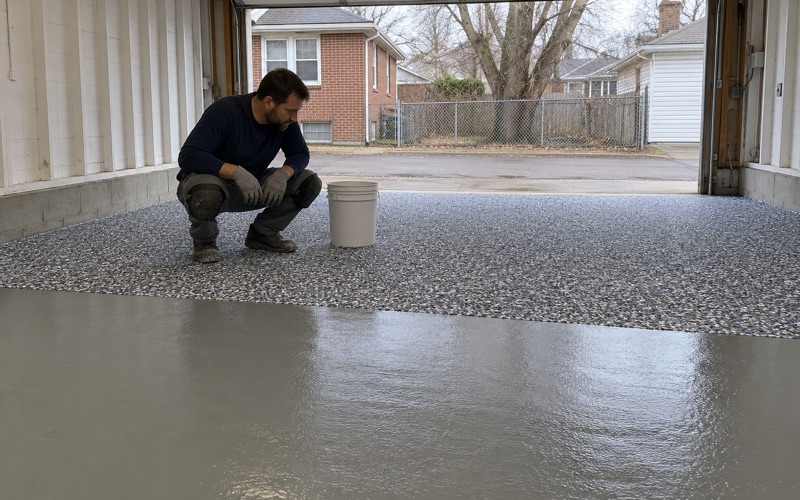
A cold, unheated garage is told to wait for warmer slab conditions rather than coated on a calendar date. Grinding dust is vacuumed at the machine instead of washed toward a floor drain or out to the street. A vinyl flake broadcast under the clear layer hides both claw marks and the grit dogs carry in from the yard.
Mudrooms, Basements and Day-to-Day Care
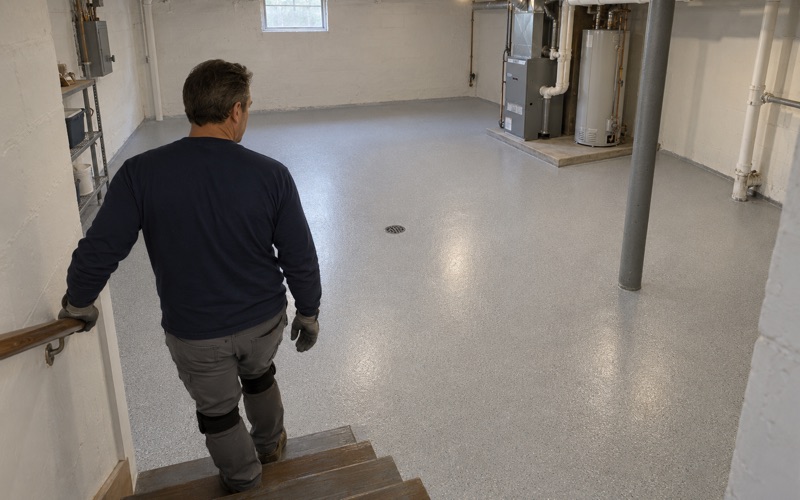
Mudrooms and finished basements where dogs sleep take the same topcoat plan on a smaller scale. A clear wear layer over flake or a solid color can be screened and recoated as a much smaller job than the first install, and a satin sheen keeps it from looking tired between visits. A floor coating is never sold as waterproofing, radon reduction or flood protection.
Cleaning is part of the plan in a home as much as in a clinic. Neutral cleaners keep the clear coat intact, while harsh products and abrasive scrubbers can wear it faster than claws do. Between recoats, a quick look at the back door and the path to the food bowls tells a homeowner when the haze of scratches is thick enough to call us.
- 20+ Years on Concrete
- Moisture Test in Every Scope
- Free Written Estimates