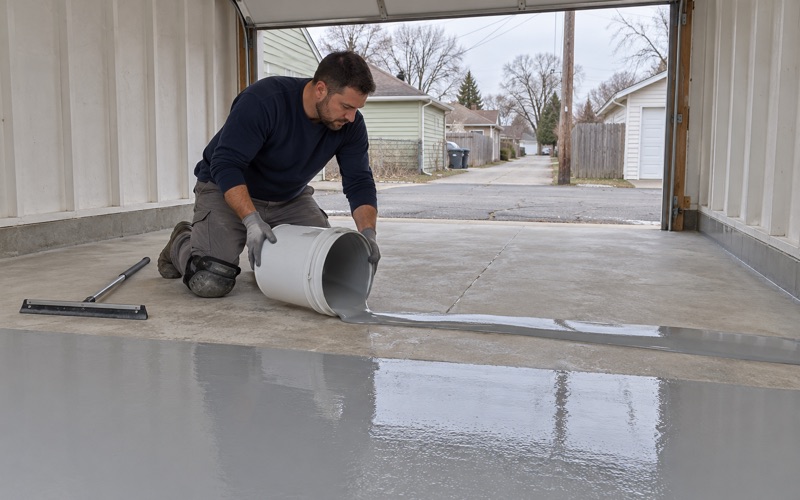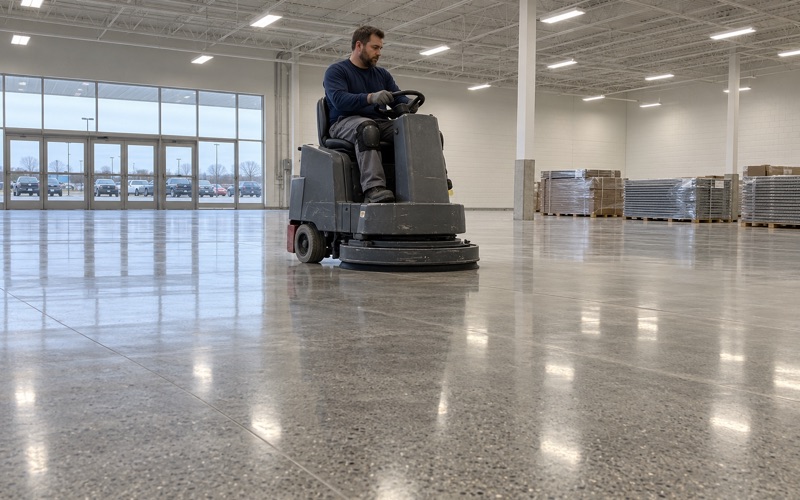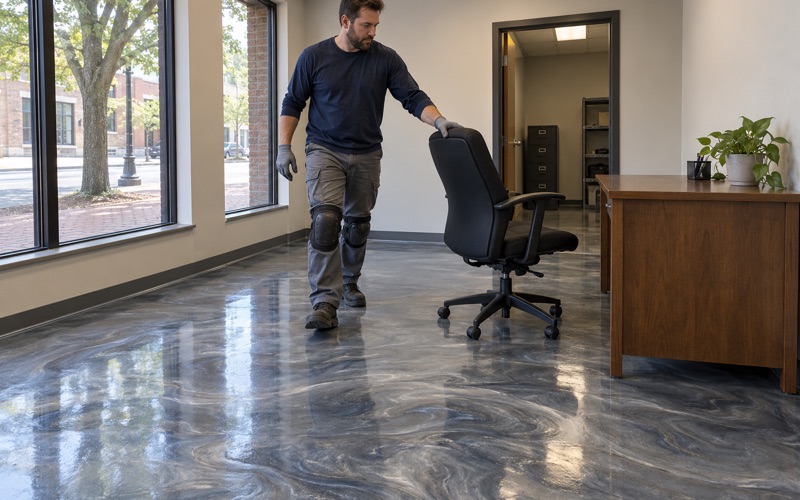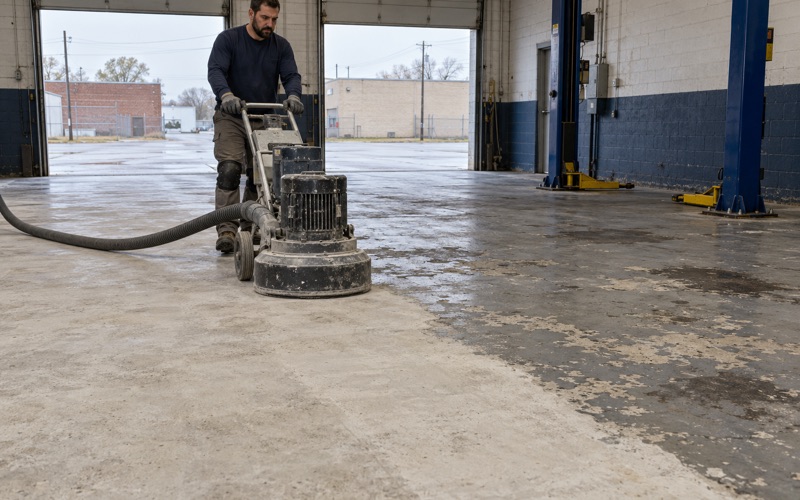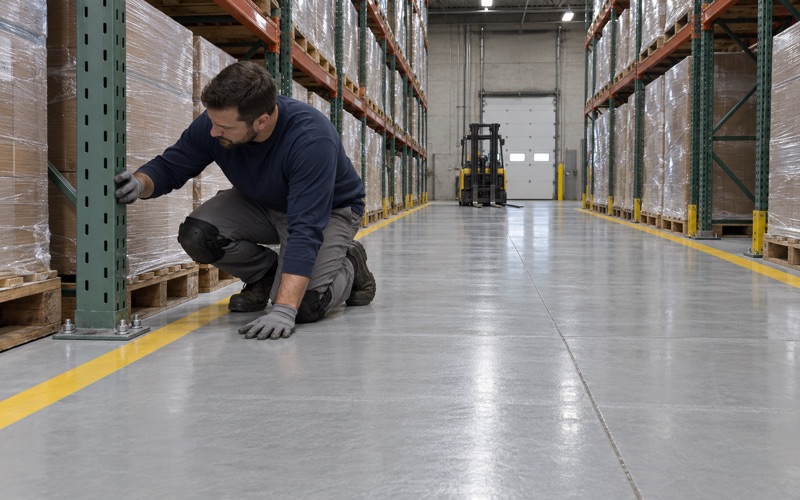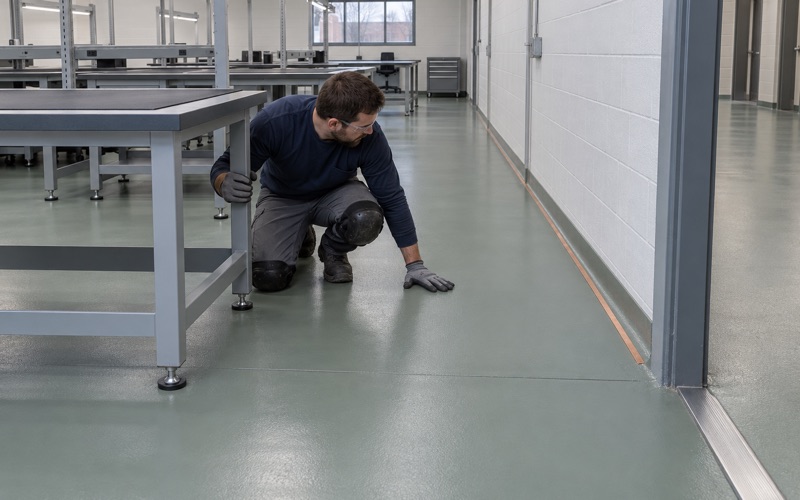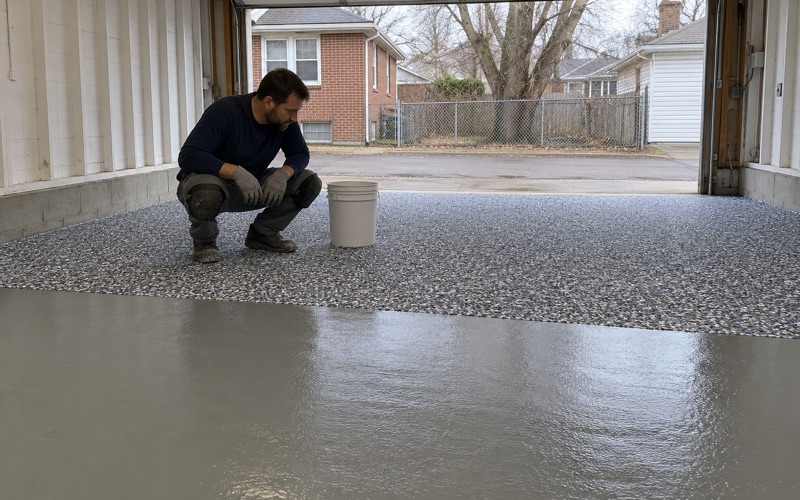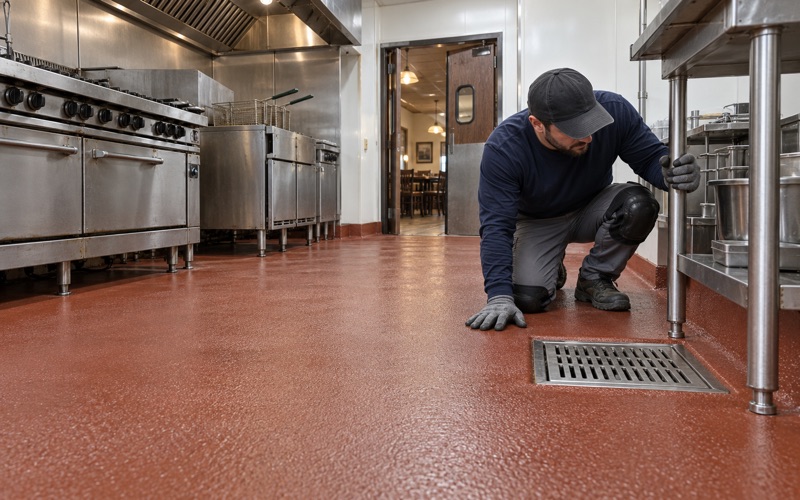
Hammond Epoxy Flooring brings more than 20 years of slab work to epoxy flooring in Palos Hills, and every job we price starts with the concrete rather than the color chart. We open the slab by diamond grinding or shot blasting, never by acid etching, so the primer and the 100% solids epoxy bond to a measured ICRI concrete surface profile. That profile is what the whole floor hangs on.
Before a price is final, moisture testing goes into the written scope. The proposal names the test, whether an ASTM F1869 calcium chloride kit or an ASTM F2170 in-situ relative humidity probe, and the reading the slab has to meet before we coat it. It also names the product line, the coat count and the finished thickness, so you can check the installed floor against the paper.
This page looks at one floor problem the city makes easy to picture: candle wax and the lamp oil that travels with it. A sealed resin floor does not make wax vanish, and we never sell it that way. What it changes is how the wax comes off, which is worth understanding before you choose a finish for a prayer space, a hall or a hobby room.
A Gold Dome on Roberts Road and Candles at the Door
Saints Constantine and Helen
Drive down Roberts Road and the gold dome of Saints Constantine and Helen Greek Orthodox Church is hard to miss; The Reporter called the parish known for that easily recognizable dome. The parish was officially organized on April 25, 1909, moved through four Chicago locations, and has been in Palos Hills for 50 years at 11025 South Roberts Road. Its campus also holds Graven Hall, the Demets Auditorium and the Koraes School.
We mention the church as a neighbor, not a client. We have no relationship with the parish, have never worked there, and have not seen its candles, stands or floors. It is simply the clearest local example of a floor question that also turns up inside plenty of Palos Hills homes.
Candles lit on entering and before the icons
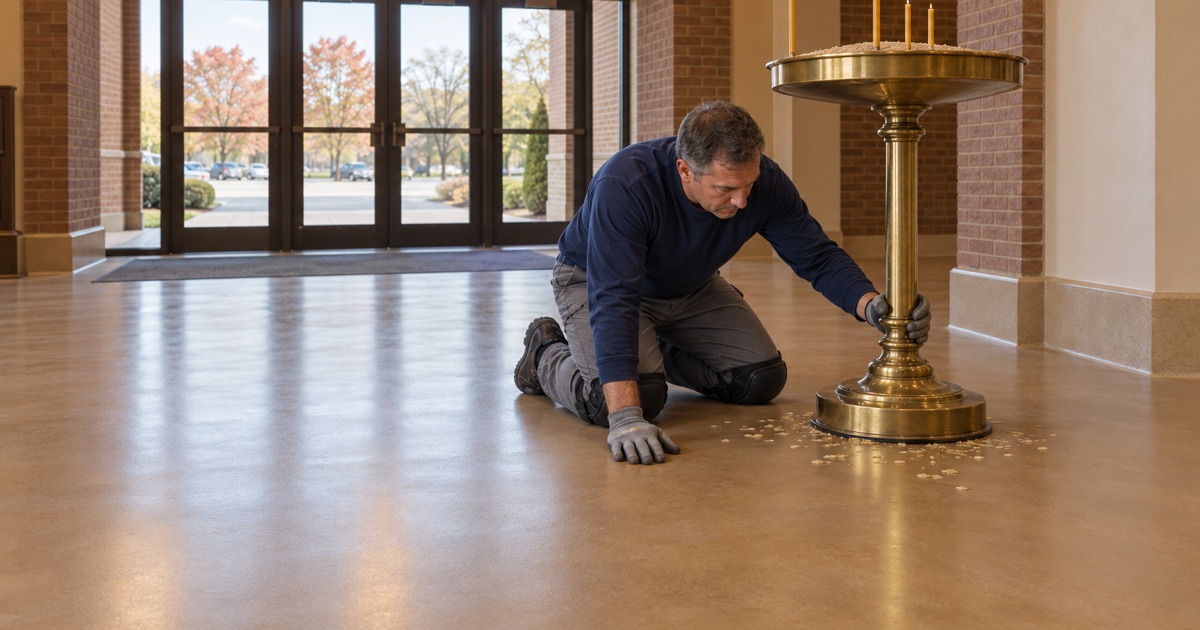
Orthodox practice, as OrthodoxWiki describes it, has the faithful often accompany their prayers with the lighting of a candle as they enter a church or stand before a shrine. Candles may also be lit on candle stands before icons throughout the nave. The same source says those stands are frequently a type of sand box, set up that way to make them easier to use and keep up.
The source is specific about the candle itself: traditional beeswax, or cups of oil with floating wicks, and it notes that non-beeswax candles are frowned upon. Whether this particular parish uses beeswax tapers or sand-filled stands is something we have not read. We describe the custom only as far as the source does and no further.
Where the wax lands, and the lamp oil with it
A monastery cleaning guide written for church caretakers says most wax collects around the large candle stands. It explains that candlesticks are coated with lamp oil to make wax easier to remove, and that the oil can drip to the floor as well. Clergy and altar servers carrying candles leave drops of their own along the way.
The guide’s answer was practical: a replaceable sheet of linoleum under each candlestick, and metal sheets over sections of floor when crowds are large. That tells you the drips are routine weekly housekeeping, not a rare accident. Any floor near a candle stand should be chosen on the assumption that wax and a little oil will land on it, week after week.
Looking for epoxy-flooring closer to Bridgeview? See Bridgeview Epoxy-Flooring.
Cold, Brittle and Scraped: Wax on Sealed Resin Versus Bare Concrete
What porous concrete and open grout do with a drip
Bare concrete is full of tiny pores, and the grout lines between tiles are open channels. A warm drip of wax that lands on either one gets pressed in by the next pair of shoes, then the next, until it sits below the surface rather than on top of it. Drawing it back out usually takes heat or solvent, and a shadow can stay behind.
Soft finishes bring their own limits. Hardwood-floor guides prefer gentle, non-abrasive removal so the finish is not scratched, which makes every cleanup slower. On a floor that collects drips every week, slow cleanup turns into a standing chore that never quite finishes.
Why a sealed, non-porous floor changes the job
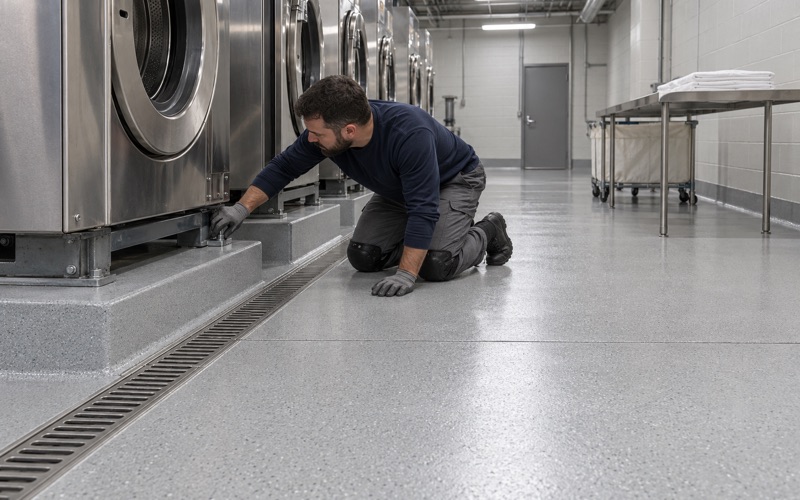
Beekeeping guidance makes a simple point: beeswax has a low melting point, and when cold it becomes brittle and is easier to scrape off. On a sealed, non-porous resin floor there are no pores for a drip to be driven into, so the wax stays on the surface. Once it has cooled, it lifts with a plastic scraper, and the lamp oil film wipes up with detergent.
That is the honest claim: easier removal, not immunity. No coating is wax-proof or stain-proof, and we will not tell anyone to take a heat gun or a solvent to a coated floor unless the maker’s data sheet says that chemical or temperature is safe for the topcoat. A plastic scraper and a detergent wash are the tools we expect a caretaker to reach for.
Choosing the topcoat and texture for a candle area
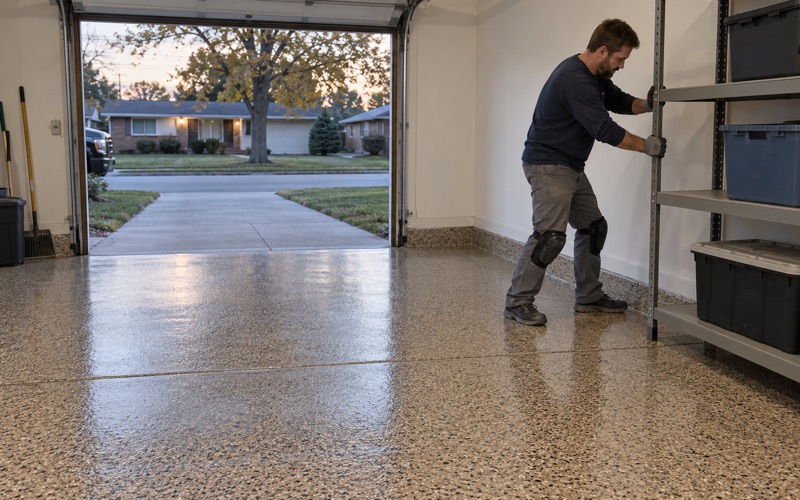
The topcoat is where the cleaning happens, so we pick it for that work. A polyaspartic or polyurea topcoat over a 100% solids epoxy body coat gives a hard, tight surface that tolerates scraping and detergent. Slip resistance comes from the broadcast media and the topcoat, usually a fine quartz aggregate, and we write both into the proposal rather than promising a slip-free floor as a slogan.
Texture is a trade-off near candle stands. A heavy grit grips well, but it also gives wax more edges to cling to, so a finer broadcast under the stands and a coarser one at a wet entry can make sense in the same room. We make no fire-safety or heat-resistance claim about candles on any coated floor.
Icon Corners, Prayer Candles and Candle-Making at Home
The icon corner and household prayer candles
The same behavior holds in a Palos Hills house with an icon corner or a shelf of prayer candles. A small drip on a sealed lower-level or family-room floor lifts cleanly once it has cooled. On carpet, bare concrete or open tile grout, the same drip tends to get worked in and becomes a cleaning project.
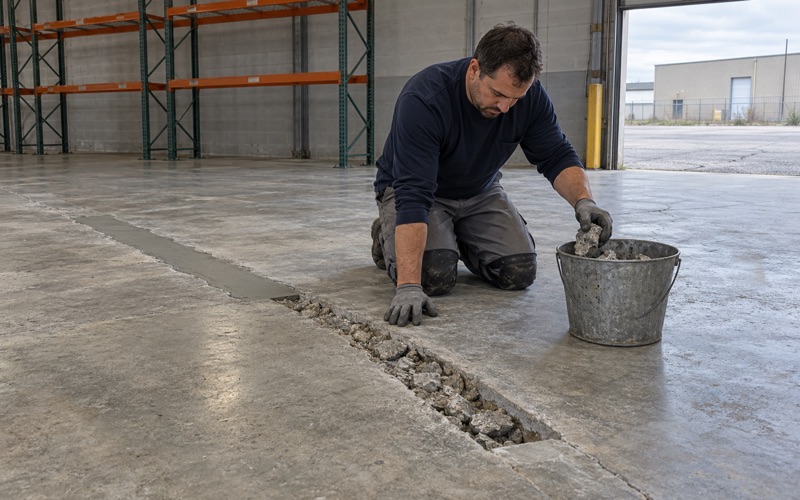
Most of the city’s housing went up in the 1970s and 1980s, so a slab under that corner may carry old paint, patches or adhesive from earlier owners. We map cracks, spalls, old paint and patched areas before pricing. If a slab should be repaired or replaced before any coating, we say so first, not after the grinder is running.
A candle-making bench in the basement
Candle-making at home puts melted wax, dye and trimmed wick ends on the floor around the bench, often far more than a prayer corner ever will. A sealed resin floor lets cooled spills come up with a plastic scraper instead of being ground into raw concrete. We still describe that floor as easier to clean, never as immune to wax.
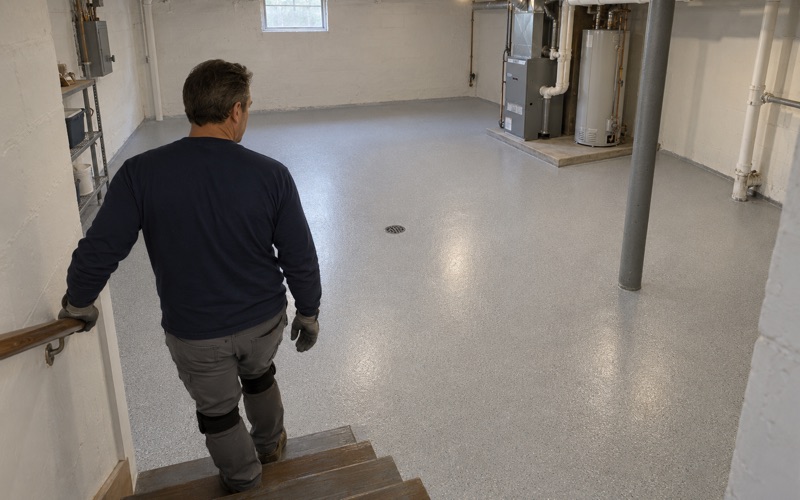
A basement brings moisture into the decision. A floor coating is never sold as waterproofing or flood protection, and we say that plainly in a city where Roberts Road north of 103rd Street and the streets beside it flood. Before pricing a below-grade room, the moisture test and the reading it must meet are written into the scope.
Townhomes and condominiums with shared decisions
Palos Hills banned apartments until 1963 and then allowed unit subdivisions, and today 1,757 owner households live in buildings of three or more units, more than the renters in such buildings. A storage-room or common-area floor in one of those buildings is often an association’s decision, not one owner’s. In the city’s 945 owner-occupied attached units, one floor job can touch a neighbor’s wall line.
For an owner in that position, we put the scope, product line and finished thickness in writing so a board can review it before anyone agrees. Home jobs carry a written contract, signed before any grinding starts. That paperwork is also what lets a neighbor see exactly what will happen on the other side of a shared wall.
Doing the Work Under Palos Hills Rules
Registration, bond and permits
The City of Palos Hills Building Department handles contractor registration. A general contractor registers for $50, good for two years, with a $25,000 surety bond and a certificate of liability insurance; a subcontractor registers for $25, good for one year, with a $10,000 bond. Illinois licenses no general, flooring or coatings contractor, so the city registration and bond are the binding requirements.
The city’s permit page requires registered contractors on commercial property, while a homeowner doing his or her own work signs a hold-harmless agreement. We check those rules before a job is booked. Every permit the city issues asks for the Real Estate Index Number from the tax bill, so it helps to have that number ready.
Coatings inside Illinois VOC limits
We choose coatings inside the VOC limits Illinois sets for floor and industrial maintenance coatings in 35 Illinois Administrative Code Part 223. Those limits bind the applicator, not only the manufacturer, so the product named in the proposal is one we can legally put down here. Grinding dust is vacuumed at the machine instead of being washed toward a floor drain or a storm inlet.
Cure timing follows slab temperature and the dew point spread at the surface rather than the calendar. A cold, unheated garage or storage room is told to wait for better conditions. Amine blush and a soft film are what a rushed cure in a cold room tends to leave behind.
Cure time before the candles come back
Published cure schedules vary by product: one epoxy lists 24 hours to foot traffic and seven days to full cure, and a polyaspartic topcoat is commonly given five to seven days to full hardness. Those schedules assume about 70 degrees and 50 percent relative humidity and run longer in cold or damp conditions. We set the return date for furniture, stands and candles by the product sheet and the slab.
For a prayer room or hobby space, that usually means planning a week of light use, then a first cleaning with plain detergent. We also read out warranty exclusions before the job is sold, starting with moisture, the failure most coating warranties leave out. You should know what the warranty does not cover before any grinding begins.
- 20+ Years on Concrete
- Moisture Test in Every Scope
- Free Written Estimates