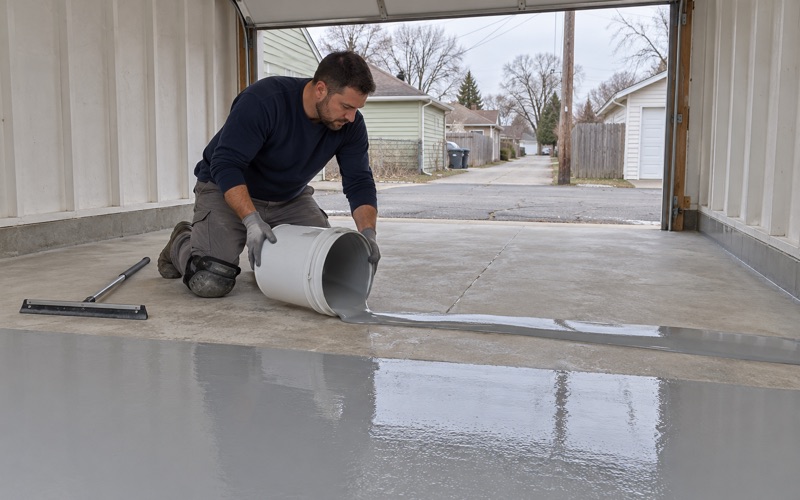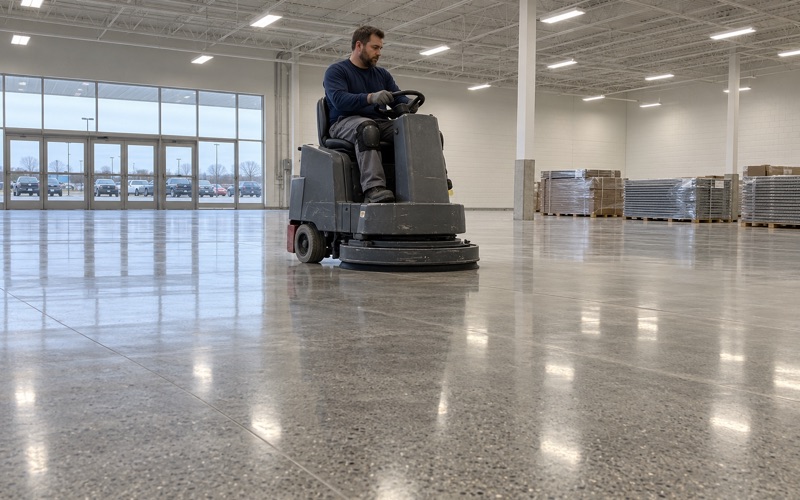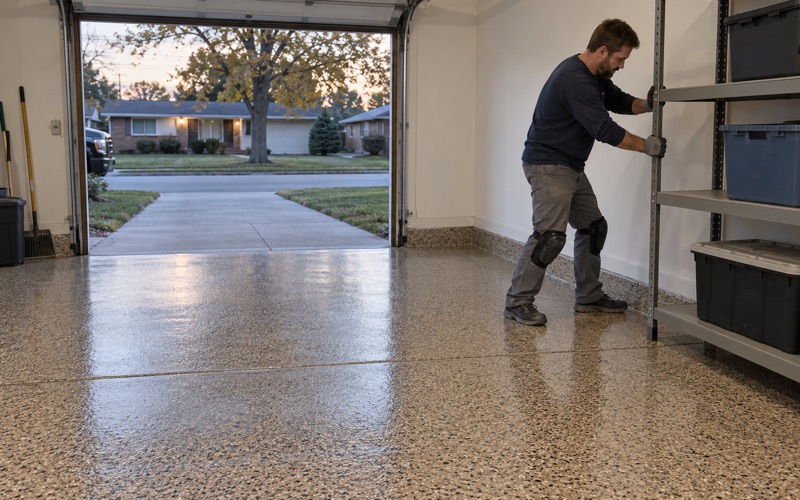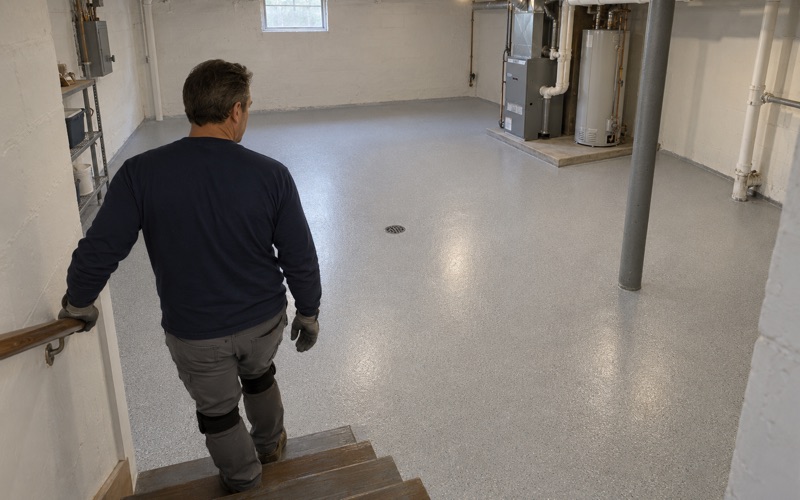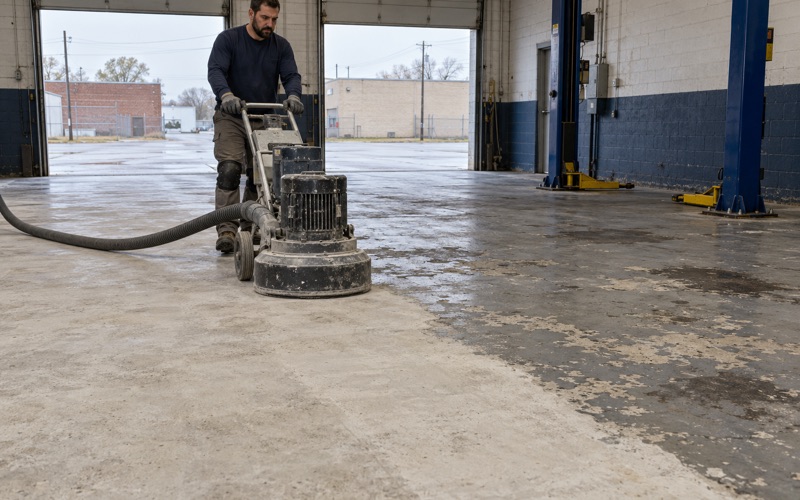
Hammond Epoxy Flooring has spent more than 20 years on epoxy flooring in Riverdale and the towns along the state line, coating garage slabs, basements and working shop floors. Every floor starts the same way: we open the concrete with a diamond grinder or a shot blaster to a measured profile, because acid etching leaves a surface nobody can check.
Before a price is final, the proposal names the moisture test we will run and the reading the slab has to meet. It also names the product line, how many coats go down and the finished thickness, so you can hold the installed floor against the paper.
This page covers something most coating contractors skip: what happens after we leave. A resin floor is only as good as the way it is cleaned, and one of the most familiar shop cleaning products was never made for it.
A Sweeping-Compound Maker on Emerald Avenue
NO-DUST, made in the village
Frank Miller & Sons sits at 13831 S. Emerald Avenue, and trademark records list the company as owner of the NO-DUST mark for floor sweeping compounds that absorb dust, filed in 1981. EPA’s records carry the plant as a maker of polishes and sanitation goods. A safety data sheet for its oil-based sweeping compound, sold in red or green, gives a Riverdale address.
We have no connection to the company, and we have not read its current product line. We mention it because the colored, slightly oily granules most people picture when they hear sweeping compound are made right here in the village, and the question of where they belong comes with them.
What oil-and-sand compound was made for
A traditional sweeping compound is sawdust or similar filler carrying sand and mineral oil. The oil grabs fine dust so it rolls up ahead of the broom instead of rising into the air, and the sand adds weight and a little scrubbing action on rough concrete.
A cancelled Canadian standard, CAN/CGSB-25.12-95, described exactly where that kind of product belongs. It was written for wood, steel and other floorings that are ‘not varnished, sealed, painted or waxed’, and only where the sand or mineral oil will not harm the floor. We cite it for what it says about the product, not as a rule anyone in Illinois has to follow.
On a dusty, uncoated slab that combination earns its place. It is inexpensive, it keeps the air clearer while a shop is cleaned, and the oil that stays behind soaks into raw concrete rather than sitting on it. The trouble only starts when the slab has a finish on top.
The floors that standard leaves out
The same document kept oil-based compound off floors of asphalt, rubber or vinyl tile, and off unfinished wood that is going to be finished later. The logic is consistent: anything with a surface finish, or anything that will get one, should not be soaked in oil and dragged across with sand.
That list reads like a description of what we install. A coated garage or shop floor has a finish by definition, and on many floors it is a gloss finish.
Looking for epoxy-flooring closer to Harvey? See Harvey Epoxy-Flooring.
Why a Coated Floor Is the ‘Sealed, Painted’ Floor
Mineral oil on a smooth topcoat
A 100% solids epoxy body coat under a polyaspartic or urethane topcoat is not porous the way bare concrete is. The oil in a traditional compound has nowhere to soak in, so it stays on top as a thin film.
On a smooth topcoat that film is slick, and it is worse when the floor is damp from snowmelt or a hose. The oil is also a contaminant: if the floor is ever recoated, a film nobody can see is a bond problem waiting under the new layer.
Sand against a gloss finish
The grit that helps an oily compound work on raw concrete is a fine abrasive on a coating. Pushed back and forth every week, it dulls a gloss topcoat in the traffic lanes long before the coating is worn through.
The damage shows first where the broom works hardest: the path from the overhead door to the workbench, the strip in front of the service counter, the corner where the dustpan always lands. A floor that looked even on day one ends up with matte paths and shiny edges.
Bare concrete in the back shop
None of this makes the red or green compound a bad product. On uncoated concrete, such as a storage room, a loading area or a back shop nobody plans to finish, it does the job it was made for.
When we coat only part of a building, we say plainly where the coating stops. The oily compound stays on the bare side of that line, and the coated side gets a different broom routine.
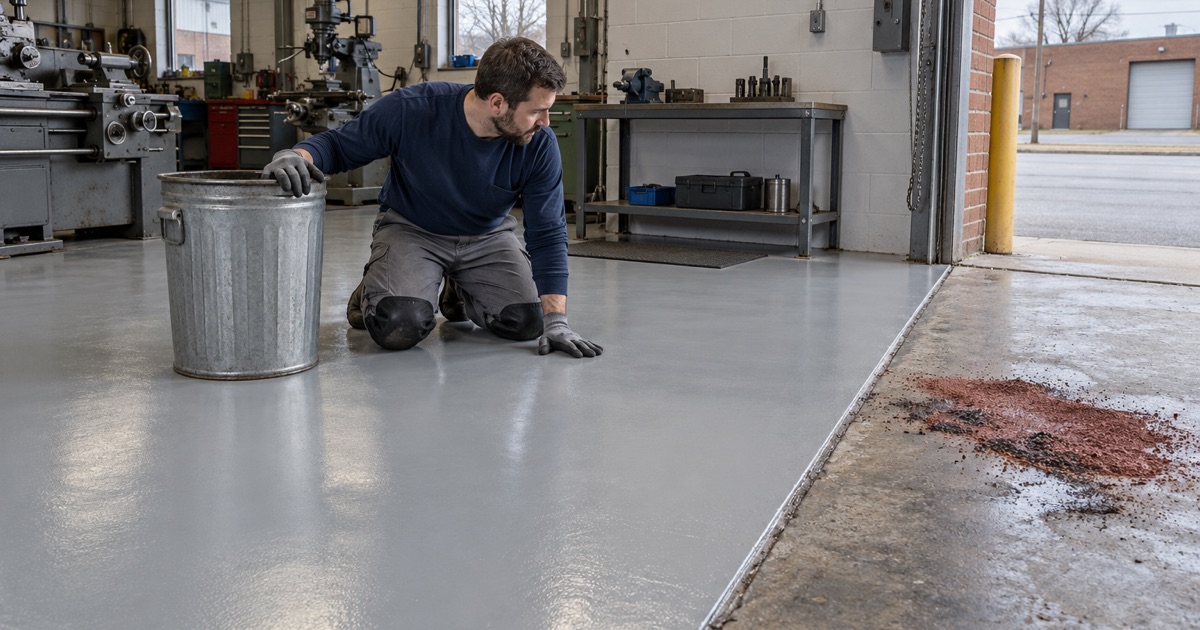
The mistake we see is a single bucket of compound and a single push broom serving both halves of a building. Keep separate brooms for the bare and coated areas, and the oil and sand from one side never ride over to the other.
Oil-Free Compound or a Dust Mop on a Coated Floor
Grit-free compound for finished floors
Sweeping products made for finished floors are sold as their own class. One example, Uline’s No-Grit Green Sweep, is described as an oil-free formula that contains no wax or oil, made of water and sawdust, and listed as safe on finished and unfinished concrete.
A compound like that keeps the dust-control benefit, damp sawdust holding fines ahead of the broom, without leaving oil on the topcoat or sand under the bristles. If a shop needs a sweeping compound at all, that is the kind we point to.
When a dust mop is enough
On a home garage or a clean light-duty shop, a wide dust mop usually does the whole job. It pulls grit off the coating before tires and boots can grind it in, and it needs no product at all.
Wet cleaning, when the floor needs it, is a mild cleaner and water, not a solvent and not a degreaser strong enough to dull the finish. We leave written care notes with every job, and they name the coating that is on your floor.
The cheapest protection sits at the doorway. A mat inside the overhead door and at each walk-in entry catches grit off tires and boots before it reaches the topcoat, which means less abrasive material for any broom or mop to drag around later.
Choosing the topcoat with the broom in mind
How a floor will be cleaned is part of how we specify it. A full vinyl flake broadcast or a quartz aggregate broadcast gives texture and hides fine wear, while a smooth high-gloss finish looks sharp but shows every scratch the broom leaves.
Slip resistance is set by the broadcast media and the topcoat we choose, and we put both in the proposal. A floor that will be swept daily in a dusty shop is not built the same as a showroom garage.
For a working shop we often lean toward a textured quartz system or a satin topcoat, which tolerates daily sweeping and hides light scuffing. For a home garage that mostly sees a dust mop, a flake floor under a clear polyaspartic topcoat is a common choice. Either way, the proposal says which one you are getting.
Coating and Sweeping a Garage Floor in Riverdale
The village describes itself as mostly industrial and landlocked, and its houses share that ground with working shops and plants. That mix is why the same sweeping question comes up in a house garage and in a commercial back room here.
Older houses, older slabs
Riverdale is a village in Cook County, home to 10,663 people at the 2020 census, and it shares its name with the bordering Chicago neighborhood. Most of its housing is older: nearly three-quarters of the homes predate 1970, and about a third were built in the 1950s alone.
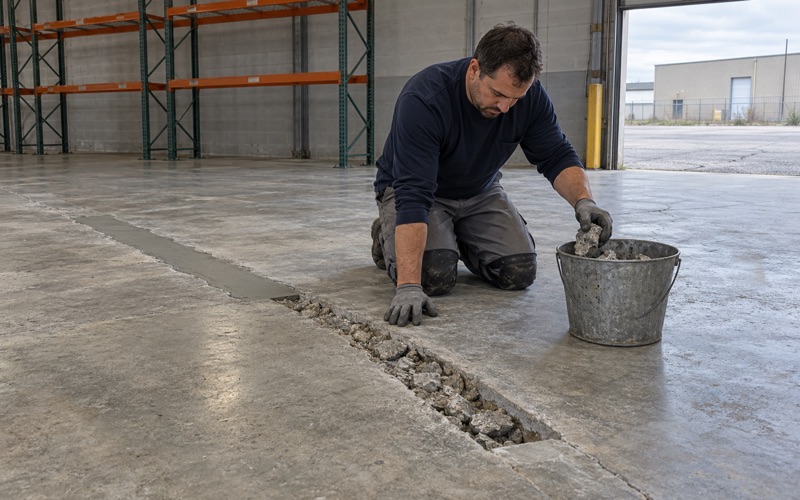
A 1950s garage or basement slab may have no vapor retarder under it, old paint on top and decades of patches. We map the cracks, spalls, paint and patched areas before pricing, and if the slab should be repaired or replaced, we say so before we sell a coating.
A quick ASTM D4263 plastic sheet test can flag a damp slab early, but it is a screen, not a number to price against. The proposal names the measured test and the threshold the slab must meet, and where a reading misses it, a moisture-mitigation primer goes into the scope before anything else is promised.
Basements that have taken water
The village names flooding north of 138th Street and east of School Street, seepage in basements and sewage backups on the northeast side, and it records its northeast sewer separation work as completed. Water in a basement is a plumbing or drainage problem first.
A floor coating is never sold as waterproofing, flood protection or radon reduction. We test moisture with ASTM F2170 in-situ relative humidity probes or ASTM F1869 calcium chloride testing, and we read the warranty’s moisture exclusion to you before the job is signed.
What we settle before booking
The village requires contractors to register with it before working in Riverdale and pulling permits, and we check that, along with bond and insurance, before a date goes on the calendar. Home jobs carry a written contract, prepared with Illinois’ Home Repair and Remodeling Act in mind, signed before any grinding starts.
Grinding dust is vacuumed at the machine rather than washed toward a floor drain. Cure timing follows slab temperature and the dew point spread at the surface, so a cold, unheated garage is told to wait, and the coatings we use sit inside Illinois’ VOC limits under 35 Ill. Adm. Code Part 223.
- 20+ Years on Concrete
- Moisture Test in Every Scope
- Free Written Estimates